



Giles
Dexter Political reporter
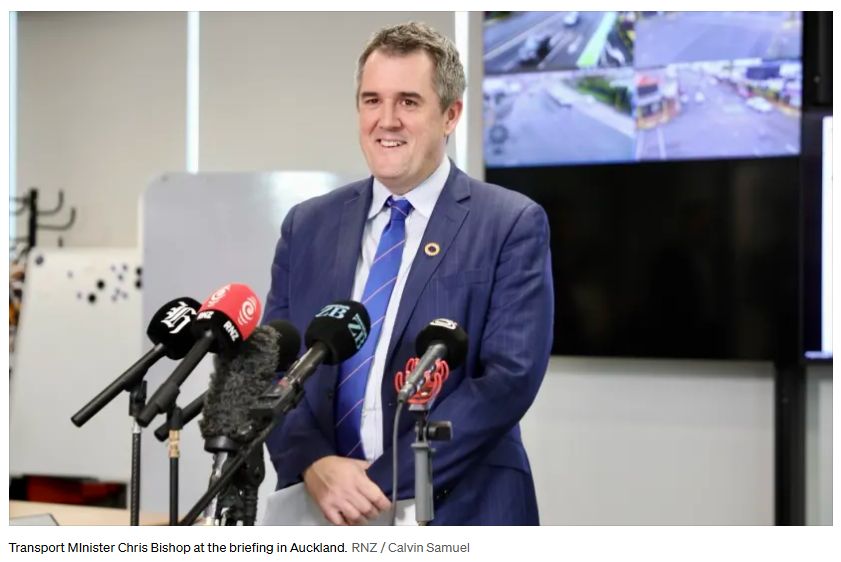
The
New Zealand Transport Agency has published its Major
Transport Projects Pipeline, laying out the phases it
plans to implement the Roads of National Significance and
public transport projects.
The Roads of National
Significance (RONS) have been a key transport priority for
the government, but it has been dogged by questions over
their costs and their implementation.
The latest
update shows five projects have been put into a slow lane,
with their implementation dates unclear.
Describing
the pipeline as an attempt to “recalibrate people’s
expectations”, Transport Minister Chris Bishop acknowledged
not all projects could start immediately, and it took time
to get projects ready for construction.
He conceded
National’s 2023 commitments were “very ambitious”, but the
world had also changed since then too.
“In our
defence, things have changed in the last couple of years.
One is the global economy and the New Zealand economy has
been buffeted around by Donald Trump’s tariffs last year and
obviously, most recently, the fuel crisis this year as well.
And that has materially changed the circumstances and
changed the economic situation.”
He said the
construction sector had been keen to see a pipeline so it
had more clarity on what was coming to market and
when.
Advertisement – scroll to continue reading
“The pipeline
shows why a phased approach to delivering the Roads of
National Significance is important,” he said.
He
expected that by early next year, six RONS would be under
construction.
Four are already under construction:
(Ōtaki to north of Levin, the Hawke’s Bay Expressway,
Takitimu North Link Stage 1, and SH29 Tauriko West), one is
due to start by the end of the year (Northland Expressway
Stage 1), and another has procurement underway (Cambridge to
Piarere).
A further 10 RONS were preparing for
construction and route protection, and either ready for
implementation or awaiting funding.
These included
Belfast to Pegasus, which had been granted provisional
consent. Takitimu North Link Stage 2 has received consent
through the government’s Fast Track programme.
Five
projects in slow lane
Five projects were continuing
more slowly, and still in the investment case
phase.
These were: the Hope Bypass Stage 2, Sections 2
and 3 of the Northland Expressway (excluding the
Brynderwyns), Auckland’s East West Link, Mill Road
(Alfriston to Drury), and Petone to Grenada.
Bishop
said NZTA had taken into account near-term deliverability
and benefit-cost ratios, as well as ensuring there was a
regional spread, when deciding which projects to
prioritise.
Timings on when exactly those projects may
progress further was not made clear, but Bishop said the
government remained committed to the RONS
programme.
“They are significant projects. Multi-year,
multi-billion dollar investments that will be economy
enhancing and productivity enhancing for growth around the
country.”
Bishop said phasing the programme was
because the wider transport network also needed
investment.
“I think people are pretty realistic and
reasonable. They know it takes time to build projects, and
they expect things to happen in stages.”
Based on
previous estimates, it would cost $56 billion to deliver the
programme in full over 20 years.
The Infrastructure
Commission has previously said that funding those RONS in
the same way other roads are funded would require a 70
percent increase to fuel excise and road user charges.
Bishop has been reluctant to pursue this, preferring to make
the RONS user-pays.
He said fuel excise duty had
fallen in real terms by 21 percent since the last increase
in 2020. Construction costs, not helped by the war in the
Middle East, had risen significantly in the same
period.
He repeated the government was “unlikely” to
raise the fuel excise duty next year, but a decision would
be made in the next few weeks.
NZTA
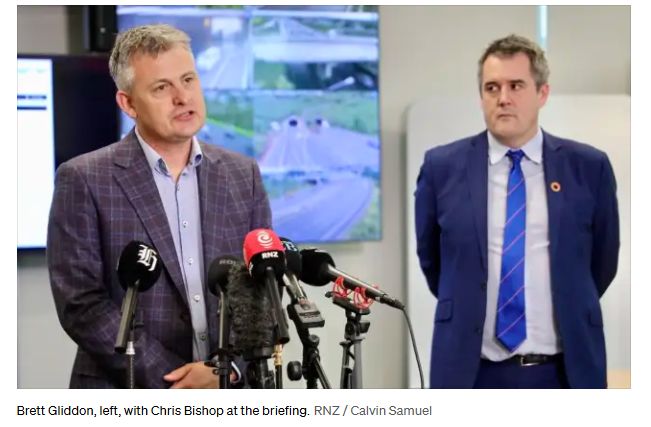
chief executive Brett Gliddon said it was “no secret” there
were pressures on the National Land Transport Fund, which
meant the agency had to make strong prioritisation
decisions.
“It doesn’t solve every problem, and
there’s a lot of hard trade-offs. But we have to manage
those within the funding constraints that we’ve got, which
is what we’re trying to do.”
Labour calls it a
wishlist, not a plan
Labour said the government had
shown many of its flagship projects were still years away,
with some only proceeding as funding became
available.
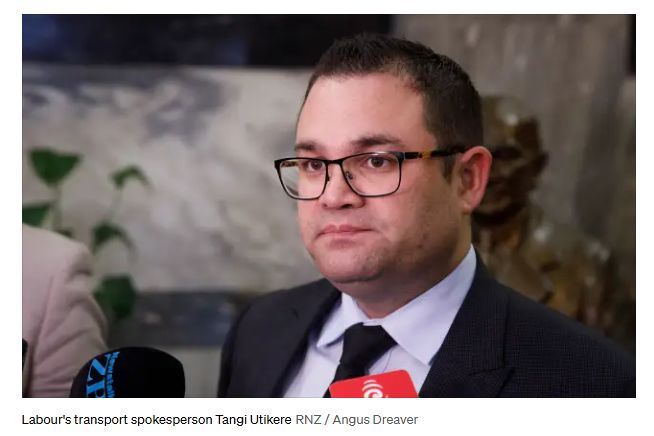
“That’s
not a transport plan, that’s a wishlist. National promised
communities these projects would be delivered. Now it’s
quietly admitting many have no funding to get built,” said
Labour’s transport spokesperson Tangi Utikere.
Utikere
said the government had handed industry caveats, phases, and
projects that may or may not happen.
“They
over-promised, under-budgeted and are now walking back the
certainty they sold at the election.”
Anticipating the
opposition’s criticism, Bishop said he would not take
“lectures” from Labour on roading.
“They cancelled all
of the roads that were being built. We’re now getting on
with the job of rebuilding the pipeline that they smashed
during their time in government.”
Asked by RNZ whether
Labour would commit to seeing the projects through, Utikere
said he would need to look at the costings, but accepted
certainty was important.
“Where delivery is underway,
where contracts are in place, where funding is secured, we
will honour those. What today’s announcement is about is
actually a realisation for the government that when they
went to the last election, they didn’t have all those ducks
in a row, and this has created more uncertainty for the
industry.”
‘Pipe dream’ – Greens
The Green
Party’s transport spokesperson Julie-Anne Genter said
putting projects into a slow-lane was an admission the
government’s numbers for the RONS did not stack
up.
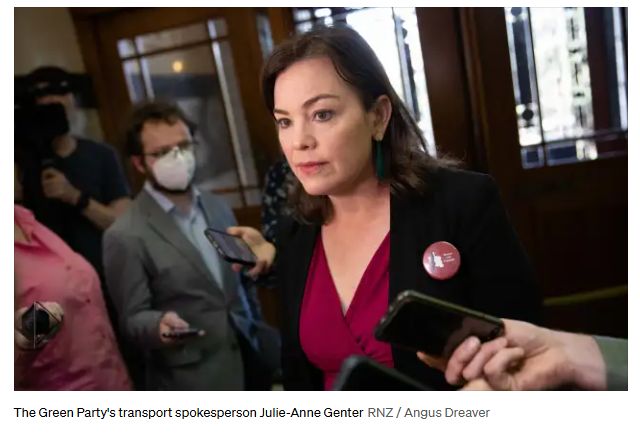
“After
years of pressure to front up on how it would pay for its
roading wish list, the government has released less a
pipeline and more a pipe dream with no clear way to fund its
mega-projects,” she said.
Genter wanted to see mass
transit for Wellington, Christchurch, Hamilton, and Tauranga
in the pipeline.
“Every dollar sunk into a low-value
motorway is a dollar not spent on the things that actually
get people moving: reliable buses and trains, safe streets,
and a roading network that doesn’t wash out every time it
rains.”
Infrastructure New Zealand praises clear
signals
Infrastructure New Zealand said breaking the
projects into phases was a sensible approach.
Its
chief executive Nick Leggett said the sequenced pipeline
provided certainty to the sector, allowing businesses to
invest in people, equipment, and capability with greater
confidence.
“It’s encouraging to see the different
stages of these projects made visible. That kind of clarity
matters for our sector, but we must remember a project is
only truly real once funding is committed and it is ready
for
delivery.”
New Zealand’s public broadcaster, providing comprehensive NZ news and current affairs, specialist audio features and documentaries.
Radio New Zealand is a Crown entity established under the Radio New Zealand Act 1995. Radio New Zealand News are vital elements in our programming, providing impartial news and information to New Zealanders every day. Radio New Zealand (RNZ) provides listeners with exciting and independent radio programmes in accordance with the Radio New Zealand Charter.

