

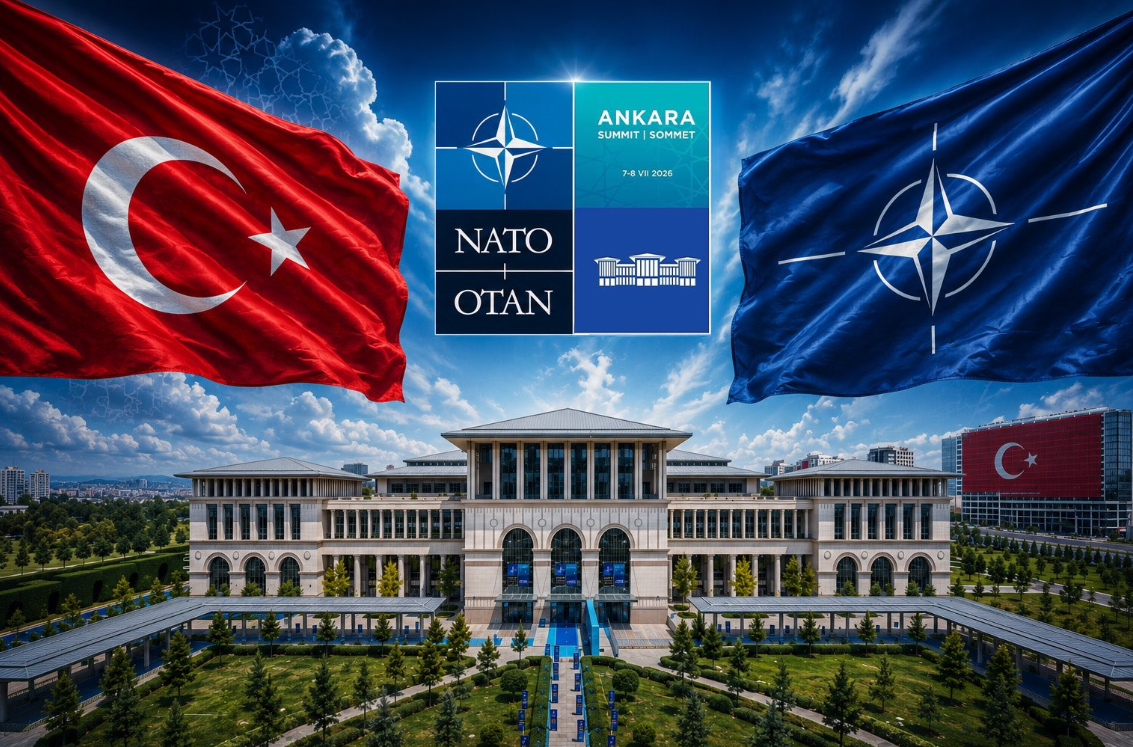
Government critics have raised concerns over Georgia’s repeated absence from NATO’s annual summit key agenda and meetings, as Georgian Dream Foreign Minister Maka Botchorishvili heads to the Turkish capital to take part in an “Ankara Allies” event on the summit’s sidelines.
Ankara, Turkey, is hosting NATO’s annual event on July 7-8, with the forum focusing on improving defense funding, stepping up the defense industry, and supporting Ukraine while bringing together officials from NATO, Allied, and partner countries.
Among officials from non-member countries to hold or attend official meetings as part of the summit are reportedly Ukrainian President Volodymyr Zelenskyy, South Korean President Lee Jae Myung, as well as defense or foreign ministers from Australia, New Zealand, Japan, Bahrain, Kuwait, Qatar, and the United Arab Emirates, and EU officials: European Council President Antonio Costa and European Commission President Ursula von der Leyen.
Georgia, a longtime close partner of the Alliance, has not been reported as participating in any major official meeting or dinner at the summit, marking the second consecutive year of such absence. Georgia was represented by then-Foreign Minister Ilia Darchiashvili at the 2023 Vilnius Summit and the 2024 Washington Summit.
The recent omissions come amid a broader trend of Tbilisi being left out of key international platforms, as concerns have grown over the country’s democratic backsliding and isolation from traditional Western partners.
In his 2025 annual report, NATO Secretary General Mark Rutte said elements of NATO-Georgia cooperation had been “reprioritised” following Georgia’s 2024 parliamentary elections and “their aftermath,” while speaking to reporters, he added that NATO had “serious worries” about developments in Georgia and called on the government to return to a “pro-EU, European-forward-looking approach.”
Georgian Foreign Ministry, however, announced on July 6 that Minister Maka Botchorishvili will be taking part in the “Allies in Ankara” event in the Turkish capital, organized by the Republic of Türkiye Directorate of Communications, the Foundation for Political, Economic and Social Research (SETA), and the Munich Security Conference (MSC). The event, taking place on the sidelines of the summit, covers roundtables, panel discussions, and other formats on “the most pressing topics in defense policy.”
Critics Raise Alarm Over ‘Exclusion’
Critics from political and professional circles have raised concerns that Georgia, which has traditionally used such summits to advance rapprochement with the Alliance and strengthen prospects for cooperation, has been gradually excluded from NATO platforms, a trend they say began with the 2024 Washington Summit.
According to the former Defence Minister and founder of the think tank Civic Idea, Tinatin Khidasheli, the move not to invite Georgia was “consistent” with a practice established after the 2024 NATO Summit in Washington, when, she said, “the Georgian government was excluded from partnership events due to democratic backsliding.”
She added that NATO–Georgia relations have been “effectively frozen” under Georgian Dream and that, accordingly, invitations are no longer extended, further warning that analytical publications ahead of the summit, as well as the summit’s agenda and discussion rounds, make no mention of Georgia.
Diplomatic Society of Georgia (DSC), a group uniting Georgian Dream-critical former diplomats and career diplomats who left the service or were dismissed amid the Georgian Dream’s foreign policy shift, also noted that the shift traces back to the Washington Summit communique, which featured Georgia only in the context of its occupied territories, but omitted references to “membership, integration, and reforms.” Georgia has “no longer featured” at the 2025 Hague and 2025 Ankara Summits, DSC said.
According to the group, against this backdrop, Botchorishvili’s participation “in the Summit’s parallel event” cannot be considered as “the same political and diplomatic accomplishment as participation in the NATO Summit’s official formats.”
“The political weight and influence on decision-making of such so-called side events cannot compare to those of the summit’s official frameworks, where Allied leaders and partners discuss issues of strategic importance,” DSC said, noting that “it was in these [official] formats that Georgia participated for years, when it constituted an important part of NATO’s political agenda.”
Earlier, the opposition Droa party raised concerns about Tbilisi’s role, noting that “Georgia is no longer invited to venues where regional peace issues are decided, where matters critical to our security are discussed, and where Georgia should be represented at the highest level by any government concerned with the country’s security, the restoration of its territorial integrity, and long-term peace.”
GD Calls Criticism ‘Propaganda Campaign’
Giorgi Volski, Deputy Speaker of the disputed parliament, dismissed the criticism as “mass propaganda campaign,” claiming that “no non-member country was invited” to the Ankara Summit.
“Previously, there was a format under which, whenever the NATO Summit convened, meetings were also held with partner countries. Now, no such parallel forum takes place; instead, during the same period, the Munich Security Conference format is being held in Ankara, where the foreign minister has traveled and is scheduled to deliver a speech.”
Asked to comment on the invitation to the Ankara summit, Georgian Dream parliamentary majority leader Irakli Kirtskhalia said on July 6, “When we are not invited somewhere, we give very little thought to the matter.”
Also Read:

