



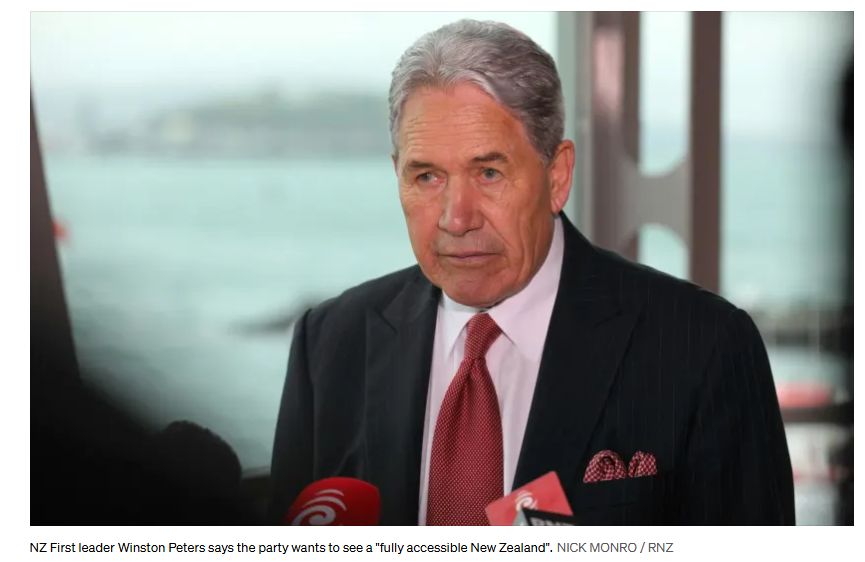
New
Zealand First says it will establish legally recognised
accessibility standards to ensure disabled and access needs
people have an “equal opportunity to achieve their goals and
aspirations”.
The party will introduce legislation to
ensure a “fully accessible New Zealand”, noting the existing
accessibility framework is “fragmented” across multiple
laws, policies, and agencies, with many accessibility
expectations remaining “voluntary or inconsistently
applied”.
New Zealand First’s proposed Accessibility
Standards Legislation would “establish a framework for
creating legally recognised accessibility standards and a
complaints mechanism to improve compliance and
accountability”, leader Winston Peters said.
In a
policy announcement on Wednesday, ahead of visiting the
Disability Expo 2026 being held in Manukau, the party noted
the barriers that continue to affect many New Zealanders in
their daily interactions with public services, transport,
communications, banking, education, justice services, and
essential utilities.
It also noted the issue extended
beyond disabled people to include older New Zealanders,
people recovering from injury, veterans, and others with
access needs.
It referenced the 2023 Household
Disability Survey that found 17 percent of people living
in New Zealand households were disabled, representing
approximately 851,000 people, including 98,000
children.
Advertisement – scroll to continue reading
Peters said accessibility could be built in
from the beginning when schools, hospitals, social housing
developments, footpaths and so on were being designed from
scratch.
“This is when standards do the most good and
cost the least.”
He said the absence of clear national
standards meant accessibility was often addressed only after
complaints arose, resulting in a reactive rather than
preventative approach.
“Better accessibility supports
workforce participation, productivity, customer access,
independent living and stronger communities. Its benefits
extend to older people, families, carers, businesses and the
wider public.”
Peters also noted the financial
benefits in closing the disability employment gap , saying
it would add more than half a billion dollars to
GDP.
NZ First Accessibility Standards Legislation
will:
- Enable Ministers to direct the development
of sector-specific Accessibility Standards covering
services, facilities, infrastructure, and public-facing
organisations - Require consultation with disability
organisations, service providers, the Disability Rights
Commissioner, and the Human Rights Commission when
developing standards - Allow standards to require
organisations to prepare and publish Accessibility Plans
outlining how they will meet accessibility
requirements - Require entities subject to standards
to maintain accessible feedback processes, allowing users to
raise concerns and recommend improvements - Establish
a formal complaints mechanism through the Human Rights
Commission for alleged non-compliance with accessibility
standards - Require accessibility standards to be
reviewed regularly to ensure they remain effective and
proportionate while avoiding undue hardship on affected
organisations - Strengthen public awareness, guidance,
education and compliance support through the Human Rights
Commission and Disability Rights
Commissioner.
New Zealand’s public broadcaster, providing comprehensive NZ news and current affairs, specialist audio features and documentaries.
Radio New Zealand is a Crown entity established under the Radio New Zealand Act 1995. Radio New Zealand News are vital elements in our programming, providing impartial news and information to New Zealanders every day. Radio New Zealand (RNZ) provides listeners with exciting and independent radio programmes in accordance with the Radio New Zealand Charter.

