

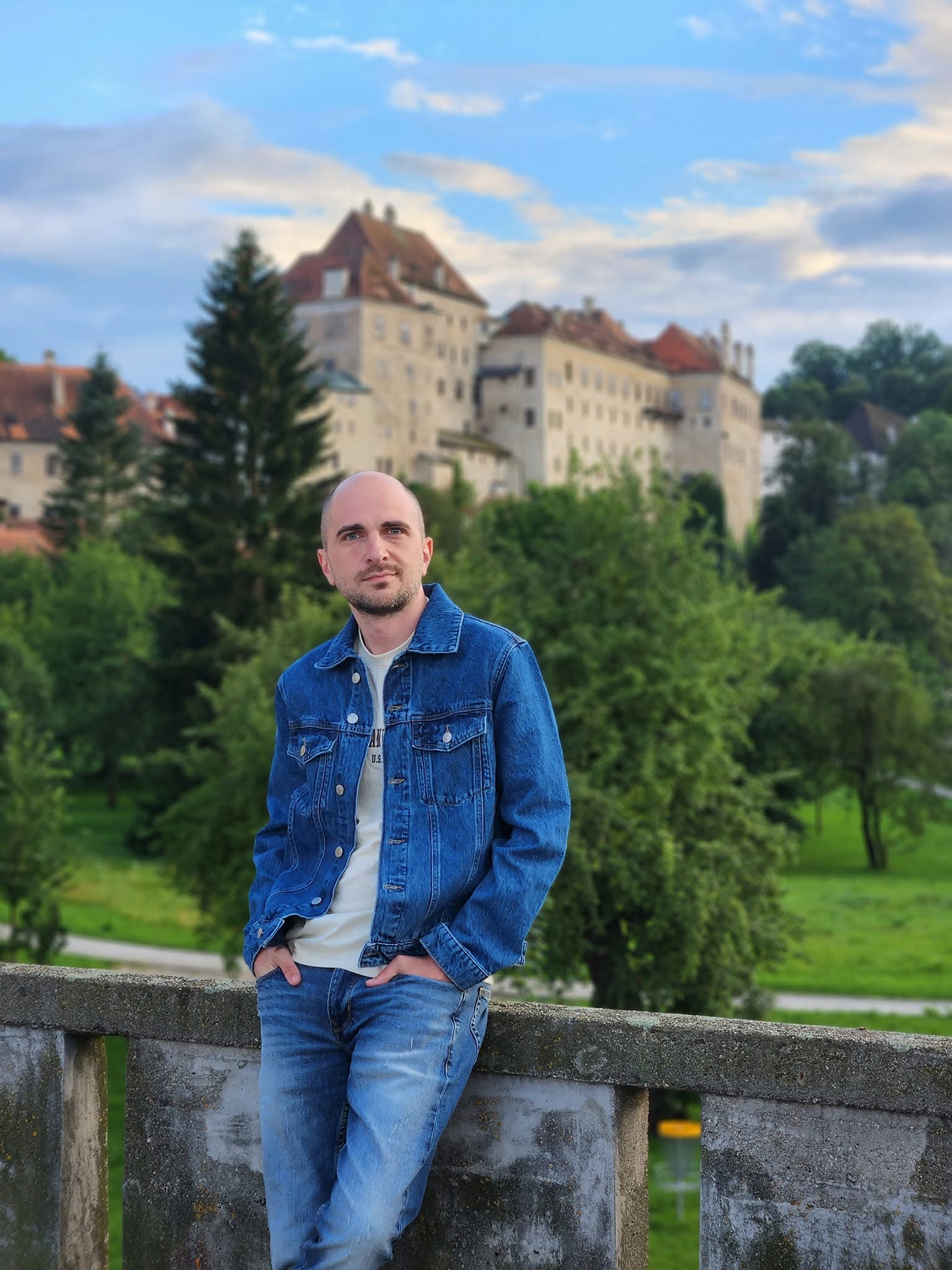
Blogger and anti-government activist Tornike Razmadze said he has become the target of a discreditation campaign involving AI-generated videos portraying him as a drug dealer, fabricated social media posts advertising his phone number for marijuana sales, and allegations linking him to a Facebook page that spread false information about a deadly building collapse in Batumi, in western Georgia.
Other bloggers and government-critical figures expressed solidarity with Razmadze, warning of dangerous effects such campaigns may have. The apparent discreditation efforts follow similar campaigns against other government-critical figures led by pro-government media and public figures, including the ones preceding physical threats and violence against those targeted.
The claims about Razmadze’s alleged involvement in drug dealing followed the circulation of two videos on Facebook and TikTok. One appeared to show him asking a drug dealer for work as a courier, while another – removed from the platform since – depicted him placing a narcotic substance in the entrance of an apartment building.
Myth Detector, a Georgian fact-checking platform specializing in disinformation and manipulated media, found that both videos were AI-generated. In a November 23 report, the platform said visual inconsistencies and AI-detection tools confirmed that the videos had been artificially created.
Separately, on the same day, Razmadze published a screenshot of a post in the Facebook group “Didi Dighomi – Dighomi Group,” in which an anonymous participant advertised marijuana for sale and provided what Razmadze identified as his phone number as a contact.
“The attack on me has taken the form of a criminal offense; it is no longer just propaganda,” Razmadze wrote, adding that an unknown person, apparently a prospective buyer, had sent him the screenshot via WhatsApp. He said he could no longer find the original post in the group.
Razmadze, who was fined over offensive remarks that he said targeted Kremlin propagandist Margarita Simonyan in October, believes that those Simonyan remarks, as well as his political blogs and vlogs on Facebook, which reach hundreds of thousands of people, made him a target.
Batumi Disinformation Controversy
Separately, pro-government media outlets, including Rustavi 2 and TV Imedi, linked Razmadze to a Facebook page called Pirveli Ambebi (translated as “First News”), which presented old footage of a residential building collapse in Batumi as breaking news and spread false information about the victims. Razmadze has denied any connection to the page.
“Opposition-supporting activist Tornike Razmadze, speaking to Kurieri, claims he has no connection to the fake Facebook account that spread the video and information alleging that hundreds of people were trapped under the rubble after a building collapsed in Batumi, and that 30 people died at the scene. While denying this, the activist himself confirms that the fake account is a page supporting the opposition and often shares his video addresses,” Rustavi 2 said in its 9 p.m. Kurieri newscast.
Responding to the pro-government outlets’ allegations, Razmadze wrote: “I have not spread any such information. As I saw, an old video of a building collapse in Batumi was shared on the page that also shares my videos. I will surely consult lawyers and demand accountability from this propaganda channel for broadcasting such a lie.”
“All of this is a continuation of the disinformation campaign being waged against me in recent days,” he added.
The Ministry of Internal Affairs also addressed the controversy, rejecting the information circulated about the Batumi collapse and warning that it could cause public panic.
“We categorically state that the circulated information is false, does not correspond to reality, and serves to cause panic in society. We want to emphasize that the Facebook page ‘Pirveli Ambebi’ has repeatedly spread false and unverified information of a sensitive nature, thereby misleading the public,” the ministry wrote.
Speaking to RFE/RL’s Georgian Service, Razmadze suggested that “if an actual investigation were launched and they [authorities] retrieved the data from that [Facebook] page, it would turn out that I didn’t publish that post, and that’s not what they want.”
Solidarity From Other Online Personalities
Razmadze is also one of the hosts of The Hot Seat, a YouTube political talk show, as well as one of the founders of the local fan club of Barcelona football club. Following the latest allegations against him, several fellow online personalities, including YouTubers and sports commentators, have publicly expressed solidarity with Razmadze.
Tato Batsikadze, a prominent Georgian sports commentator and YouTuber, described the campaign as an attempt to destroy the reputations of people critical of the government, arguing that Razmadze had become a target because of his outspoken views.
“A propaganda machine of this scale, aimed at destroying people’s reputations and almost physically destroying them, spending thousands of dollars on all this and trying to ruin anyone who isn’t a regime’s loyal slave and who bothers the regime… and Tornike really bothers the regime,” Batsikadze wrote.
Another YouTuber, Giorgi Kalatozi, also expressed concern about the campaign, noting that Razmadze was among the first to face the use of increasingly sophisticated technologies for discreditation.
“Those on the side of propaganda should think about what is happening around Tornike Razmadze. Tornike is practically one of the first to be confronted with the latest modern technologies. Perhaps consider what a trauma this is for a person, and what danger you are putting him in. Perhaps it is time to end the policy of making yourselves dumb and blind,” Kalatozi said.
Broader Trend
Razmadze’s case comes amid other incidents in which government-critical public figures have faced hostile campaigns in pro-government media, sometimes followed by direct consequences.
On July 22, stand-up comedian and anti-government protester Onise Okriashvili was physically assaulted near his apartment in Tbilisi, following several days of negative coverage by pro-government media over a joke involving acclaimed 20th-century Georgian writer Nodar Dumbadze. Okriashvili and his supporters said the media had deliberately misrepresented the joke, which they described as part of a hypothetical discussion intended to illustrate the absurdity of insulting the writer.
In September, a planned concert by government-critical Georgian musician Alexander Kordzaia, known professionally as Kordz, in the central Georgian town of Gori was cancelled over “security considerations.” The cancellation followed days of criticism by ruling party figures and pro-government media targeting the musician, as well as the event’s European sponsors and organizers.
Also Read:

