


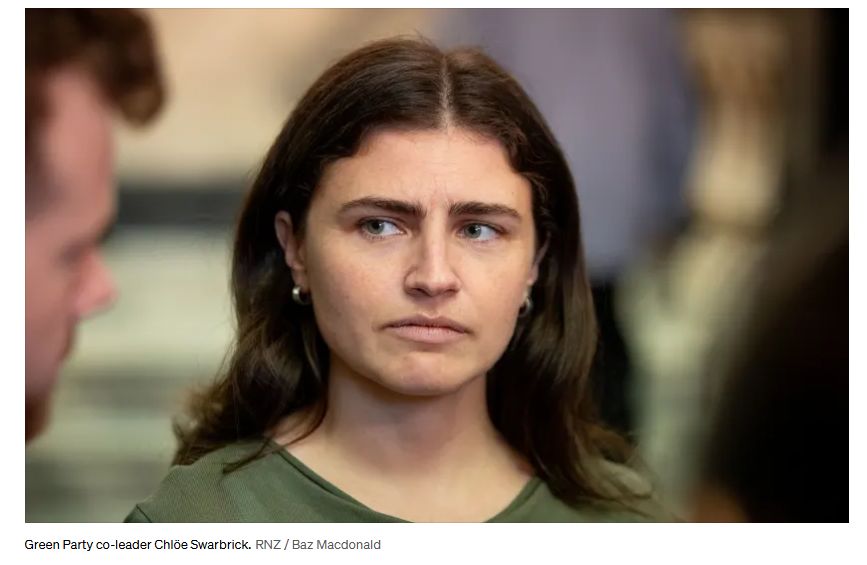
Green
Party co-leader Chlöe Swarbrick has expressed
disappointment over the collapse
of UN climate talks, but believes it would have been
worse if an agreement that glossed over fossil fuels went
ahead.
COP31 in Türkiye ended with no consensus,
after the final draft deal avoided any mention of the fossil
fuels driving global warming.
The European Union and
several other nations objected to the draft, while a
spokesperson for caretaker climate change minister Simon
Watts said New
Zealand was “ready to support a consensus” on the
draft.
Swarbrick told Morning Report that
such an agreement would have been a “sham”, and called on
the government to take more leadership.
“It is a bad
thing that we didn’t see an agreement reached, but I think
it would have been worse if we had an agreement that was
effectively a sham agreement, where we glossed over the
major driving force of climate change in the 21st century,
that being fossil fuels.”
Advertisement – scroll to continue reading
Swarbrick said the
government and Watts needed to “get off the fence” and
support those who wanted to see the inclusion of fossil
fuels in the agreement.
“The minister’s basically said
that he would turn up and agree with whatever was agreed to.
He’s not demonstrated that there would have been any
leadership whatsoever demonstrated.”
‘Informal’ talks
while country waits for votes
Swarbrick remained
confident there was still a pathway to power for the
left-bloc, ahead of the Electoral Commission releasing the
final votes on Friday.
On the preliminary count, the
coalition holds a slim majority.
But Swarbrick said
there was a “high likelihood” that there could be a one or
two seat majority for a four-party coalition of Labour, the
Greens, Te Pāti Māori, and Opportunity – noting there was
“genuine alignment” on things like cost of living and the
climate.
“Myself and Marama [Davidson] have had our
consistent and frequent engagements with Chippy. We met with
him just after the election, as we did with Debbie
[Ngarewa-Packer] and Rawiri [Waititi] from Te Pāti Māori.
And we have had some informal conversations, notably, again
informal, no one is negotiating at this point in time,
because nobody knows how the chips are going to fall, but I
have had those conversations with Qiulae
[Wong].”
Swarbrick said the Greens and Opportunity
both wanted to “get big money out of politics” and bring in
a donations cap.
“That’s something that has far
greater alignment, obviously, with those of us on the left,
who are very genuinely and clearly interested in cleaning up
politics. Whereas I think you’d only have to look at the
public statements from those on the right to see their
active and explicit disinterest.”
While the Greens had
their best result ever, questions remain over how many of
their policies they could secure, with Labour resolute on a
capital gains tax being the only tax on the
table.
Swarbrick said it would be a matter “of
collaboration, of compromise, and ultimately of working
together” to get policies over the line.
“If you were
to take just Labour’s fiscal plan as it was and presented
throughout the election campaign, then we would not have the
necessary investment to fix, for example, even just the
emergency department crises. So very clearly, that is one of
the things that we will be talking to the Labour Party
about. We need to be willing as a country to have a far more
sophisticated and a far more honest and common sense
conversation about debt and about
taxation.”
New Zealand’s public broadcaster, providing comprehensive NZ news and current affairs, specialist audio features and documentaries.
Radio New Zealand is a Crown entity established under the Radio New Zealand Act 1995. Radio New Zealand News are vital elements in our programming, providing impartial news and information to New Zealanders every day. Radio New Zealand (RNZ) provides listeners with exciting and independent radio programmes in accordance with the Radio New Zealand Charter.

