

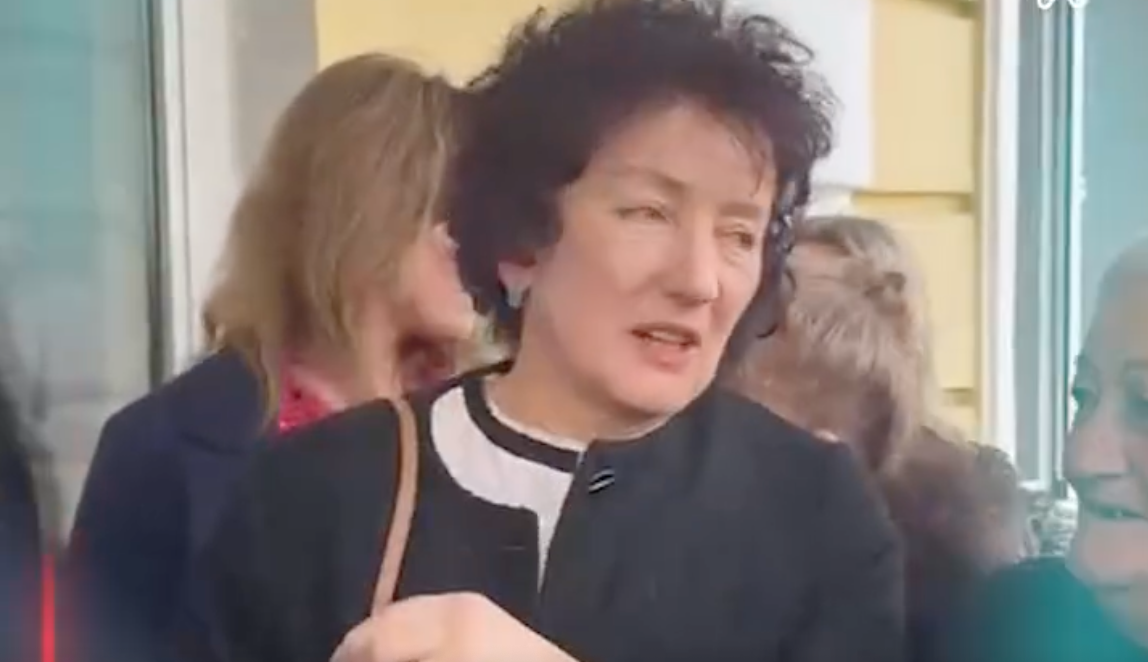
Maia Kokhtashvili, a neurologist from the Akhmeta municipality in Georgia’s eastern Kakheti region who was arrested in September over a forged prescription for a psychotropic drug, will not go to prison and can continue practising after reaching a plea agreement with prosecutors.
Key points
- The Telavi District Court approved the plea deal on 3 November and fined Kokhtashvili GEL 50,000 (about USD 18,500).
- The fine is the same amount her supporters raised through crowdfunding within an hour to pay her bail after her arrest.
- She was released from the courtroom after the ruling, greeted by family members and supporters.
- Her arrest drew criticism from Akhmeta residents and the medical community, who raised concerns that she had been entrapped. The authorities say she broke the rules on prescribing psychotropic medication.
The plea agreement
The plea deal was reportedly proposed by Kokhtashvili’s lawyer and accepted by prosecutors. Plea agreements in Georgia require the defendant to plead guilty. Under the agreement she avoids a prison sentence and keeps the right to continue her professional activities.
The arrest and the charge
The Finance Ministry’s Investigation Service reported Kokhtashvili’s arrest on 11 September on allegations of issuing a false prescription for psychotropic medication. The next day the court released her on GEL 50,000 bail, which supporters, including people from her local community, raised in a show of solidarity.
The Investigation Service alleged that she abused her professional position by unlawfully preparing and issuing a fraudulent prescription that allowed a person to buy a psychotropic substance. The authorities released footage, with her image blurred and her voice altered, allegedly showing her offering a patient the chance to phone for a prescription, in what they described as a breach of the stricter rules on prescribing psychotropic drugs.
Kokhtashvili was charged under Article 268, Part 2, of Georgia’s Criminal Code, which covers issuing a forged prescription or other document for the purchase of a psychotropic or potent substance, by use of an official power. The offence carries a fine or three to six years in prison, with or without a one-year suspension from professional activities or holding office.
What the doctor said
Media reported that Kokhtashvili told the court she had “to break the law” after a man approached her saying his bedridden grandmother, who lived in a remote village, needed the medication. She said she felt uneasy about not helping because he had already paid the registration fee.
Reaction to the case
The arrest prompted widespread condemnation from Akhmeta residents and the medical community, amid concerns that the doctor had been entrapped by an “agent provocateur” who took advantage of her compassion. Medical professionals warned that the case could set a troubling precedent and undermine trust between doctors and patients. Others linked the prosecution to her family members’ outspoken criticism of the government, including their participation in ongoing anti-government protests. The authorities have presented the case as enforcement of the prescribing rules.
The new prescribing rules
The case comes after tighter rules on psychotropic prescriptions were introduced in April. Prescriptions must be renewed every 14 days, patients must appear in person or send an authorised representative to obtain prescriptions and buy the medication, and daily dosage limits apply.
Read more: More Georgia news

