


Lillian
Hanly Political Reporter
Negative
campaigning has surged since 2020, with National and Labour
each devoting more than half their Facebook posts to
attacks, new research shows.
An analysis of 2222 posts
made by political parties and their leaders between 5
October and 1 November deemed National to be the most
negative campaigner.
National published 371 negative
posts, about 66 percent of its total, followed by Labour
with 214, or about 51 percent of its total.
Victoria
University of Wellington political scientist Dr Mona Krewel
said that was a “massive increase” since 2020, when about 13
percent of the posts analysed were negative.
New
Zealand First, ACT, the Greens, Opportunity and Te Pāti
Māori were all below 40 percent this election, with Te
Pāti Māori the lowest at 16 percent.
The research,
by the university’s Internet, Social Media and Politics
Research Lab, also revealed differences in who the two major
parties were attacking.
Labour’s criticism was almost
“exclusively focused” on Christopher Luxon and National,
with less than 4 percent of posts dedicated to the minor
coalition partners, ACT and NZ First.
National’s main
target was the Labour Party, but it directed 100 negative
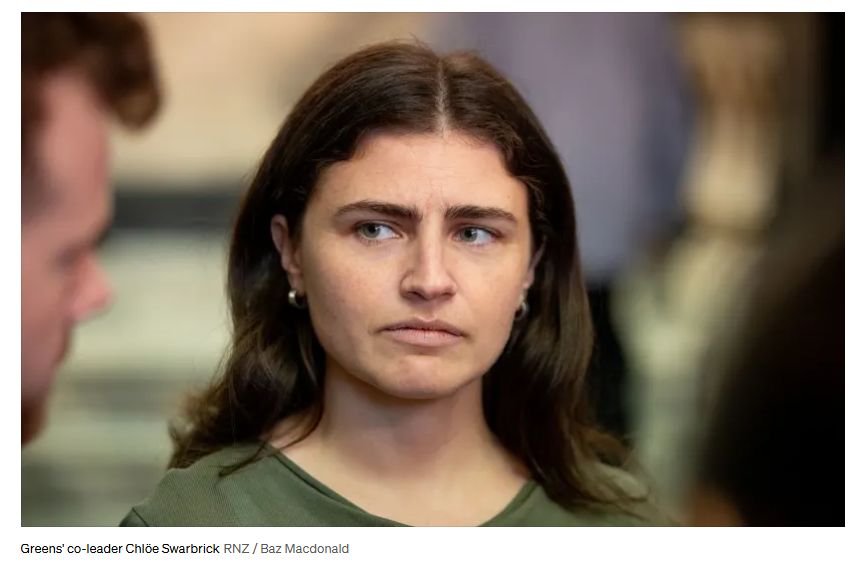
posts at Greens’ co-leader Chlöe Swarbrick, compared with
87 aimed at Labour leader Chris Hipkins.
‘They have
made her the bogeyman of the election’ –
Krewel
Advertisement – scroll to continue reading
Krewel said National’s intense focus on
Swarbrick was unusual for a governing party.
“Chlöe
Swarbrick should not be their go-to target.”
She said
incumbent governments usually ran more positive campaigns
and focused their attacks on their main political
rival.
Instead, National had repeatedly warned
Swarbrick could become finance minister under a Labour-led
government, despite
Hipkins insisting Barbara Edmonds would get the
job.
Krewel described the attacks as largely
“fearmongering”, more reminiscent of American political
rhetoric – though not to the same degree.
“They have
made her the boogeyman of the election.”
She queried
whether the strategy was working given posts targeting the
Greens’ co-leader attracted, on average, more angry emoji
reactions than posts targeting Hipkins.
Swarbrick
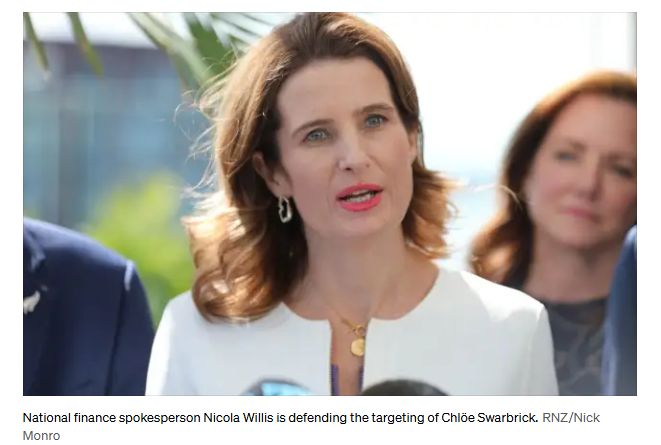
accused National on Monday of effectively
cyber-bullying her, but National finance spokesperson
Nicola Willis defended the party’s approach.
In a post
on social media, Willis said the Greens’ polling strength
would give them “huge leverage” in coalition negotiations
with Labour.
“In other words, Labour cannot form a
government without giving the Greens what they want,” Willis
wrote.
Long-time National campaigner and volunteer
Brigitte Morten agreed the historically low combined support
for Labour and National had changed the dynamic between
major and minor parties.
Morten, managing director of
Franks Ogilvie, said Hipkins would therefore find it harder
to reject the Greens’ more “radical” demands in coalition
talks.
She said negative campaigning attracted more
attention: “No campaign can avoid putting out those negative
messages.”
But former National government press
secretary and political commentator Ben Thomas was sceptical
whether the attacks were helping the party.
He
described the intense focus on Swarbrick as “bewildering” in
the final stretch of the campaign.
“There is a sense
that National are kind of throwing things at the
wall.”
Thomas said National was clearly trying to
“scare or unnerve” centrist voters who might be considering
Labour, but he doubted Swarbrick was a particularly
frightening figure to middle New
Zealand.
New Zealand’s public broadcaster, providing comprehensive NZ news and current affairs, specialist audio features and documentaries.
Radio New Zealand is a Crown entity established under the Radio New Zealand Act 1995. Radio New Zealand News are vital elements in our programming, providing impartial news and information to New Zealanders every day. Radio New Zealand (RNZ) provides listeners with exciting and independent radio programmes in accordance with the Radio New Zealand Charter.

