

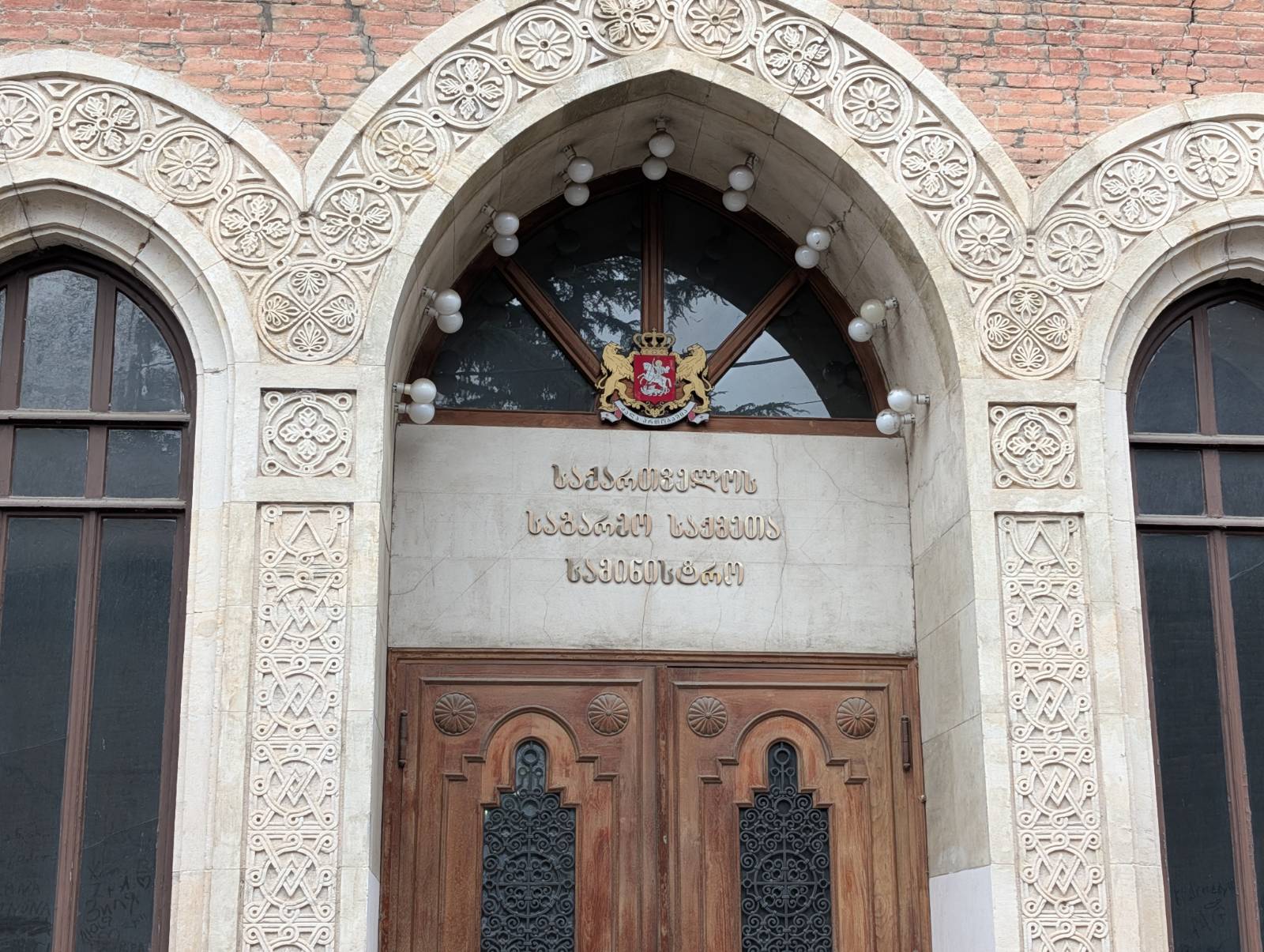
The Georgian Foreign Ministry said the European Commission’s November 4 annual enlargement report contains “factual inaccuracies” and “mistaken assessments” that, it argued, reinforce “anti-Georgian narratives,” noting that the absence of relevant meetings “significantly limits” the Commission’s ability to make an “objective” assessment.
“It is alarming that, with factual inaccuracies and mistaken assessments, the European Commission’s report helps to reinforce anti-Georgian narratives, which in turn reduces the space for constructive engagement and dialogue between the EU and Georgia,” the ministry said in a statement on November 4.
“During the reporting period, the EU side again held no meetings under the Association Agreement with the Georgian side at any level, under the pretext of the suspension of dialogue with the Georgian side based on the European Council conclusions of June 27, 2024,” the ministry added, noting that this “significantly limits” the European Commission’s ability “to objectively assess progress.”
The statement followed the Commission’s publication of the 2026 Enlargement Report and a communication on enlargement policy the same day. The reports said Georgia’s accession remains “de facto halted” and noted “continued backsliding” on democracy and fundamental rights, reiterating Georgia remains an EU candidate “in name only” and “continues to forego the benefits” of candidate status. It also said Georgia’s failure to address democracy concerns puts “at risk the visa-free regime more generally.”
The statement also took note of the Georgia-focused report’s mention of a “hostile anti-EU rhetoric,” describing it as an attack on freedom of expression.
“Evaluating as hostile rhetoric the responses by Georgian politicians to actions directed against Georgia by various actors is an attack on the principle of freedom of expression,” the ministry said, adding that it “serves to undermine trust and damages the foundations of the partnership between Georgia and the EU.”
It also said the report relies on “selective analysis” and contributes to attempts to politicize legal issues, which it says “undermines the principle of the rule of law and constitutes an open attempt to interfere in the country’s internal affairs.”
Arguing that, with respect to Georgia, the report “has largely been used to voice biased assessments and reinforce political speculation,” the ministry pledged to still examine the report in detail and “submit substantiated comments to the European Commission.”
The ministry concluded the statement by expressing “readiness to engage in open and constructive dialogue with the European Union on the basis of mutual respect.”
The ministry’s response echoes remarks by Prime Minister Irakli Kobakhidze at the Euronews EU Enlargement Summit in Brussels on November 3, where he dismissed European assessments of Georgia’s democratic record, invited Commission representatives to a “public debate,” and said Georgia still wants to join the EU “with dignity.”
Also Read:

