



Kaya Selby
RNZ Pacific journalist
A
recent Employment Court ruling is being hailed as a
milestone in legal protections for migrant
workers.
Labour Inspectorate v Top Produce Ltd and
and Bhatia v Khanna, the judgement
for which came out on 8 October, decided that migrant
workers could challenge fees paid overseas to secure jobs in
New Zealand.
The case followed a now-defunct
kiwifruit-growing firm in the Bay of Plenty that was accused
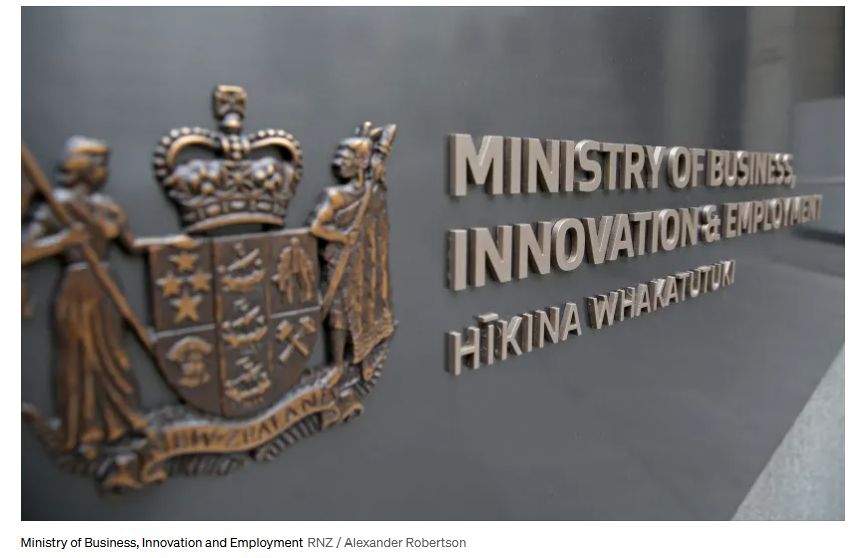
by the Ministry of Business, Innovation & Employment
(MBIE) of soliciting payments from incoming migrant workers
in exchange for a position.
“The issue, as counsel for
the Labour Inspector observed, is one of significant
importance, impacting a particularly vulnerable sector of
the workforce,” the judgement read.
It found that to
make such payments was and would be in breach of Section 12A
of the Wages Protection Act 1983 – overturning a previous
ruling from 2003.
Lisa Meto Fox, an employment lawyer
based in South Auckland, said she felt deeply encouraged by
the decision.
“These bad-faith actors were making a
lot of money. We’re talking up to $60,000 per worker per job
in New Zealand,” she said.
Advertisement – scroll to continue reading
“This decision … is
really important because what it does is it closes a
loophole that these bad-faith actors were
exploiting.”
She said that the decision had prompted
discussions in the legal community about how the judgement
may be carried forward.
In that sense, she said
workers under the Recognised Seasonal Employer (RSE) Scheme,
who are often saddled with costs of their own, could be a
future focus.
“The law in this area needs to be
expanded further to make it unlawful to be required to pay
for recruitment expenses such as flights, visas, vaccines,
insurance – that would be consistent with international
human rights law.
“The employer should be paying for
recruitment fees and related costs, but at the moment, RSE
workers do pay for all of those things, and it is a
significant portion of their income earned in New
Zealand.”
Modern-day bondage
The court heard
that the employer’s solicitations – which may be typical of
numerous employers in New Zealand – were informal, conducted
over the phone or via text, with little to no protection for
the worker.
“The geographical location of a premium
payment is not an accident; it is a calculated feature of
the exploitation model, designed to evade domestic
regulation and to trap vulnerable workers in debt bondage
before their employment even begins.
“Payments are
commonly made by bank deposit to the employer’s offshore
accounts, or to accounts held by the employer’s relatives,
in order to avoid tracing.
“The types of transactions
at issue generally include little or no documentation, and
receipts are frequently not provided.”
It noted that
the issue was a grey area at that point, given premiums for
employment were explicitly illegal if the transaction was
in-country – Fox called it a “loophole”.
PMN
reported data released under the Official Information Act
showed a stark increase in complaints to the Labour
Inspectorate about premiums. It reported 198 complaints in
2025/26, following 270 in 2024/25 and 391 in
2023/24.
It also noted that MBIE had not recorded
complaints from RSE workers about premiums specifically, but
Fox said it was rare for migrant workers – wary of being
deported – to complain themselves.
“I am on the record
talking about [the RSE Scheme] being akin to modern
slavery,” she said.
Top Produce in particular went
into liquidation in March, carrying a $1.5 million tax
debt.
Concerns can be reported to MBIE through the
migrant exploitation reporting line on 0800 200 088 or the
online reporting form, and interpreter support is
available.
New Zealand’s public broadcaster, providing comprehensive NZ news and current affairs, specialist audio features and documentaries.
Radio New Zealand is a Crown entity established under the Radio New Zealand Act 1995. Radio New Zealand News are vital elements in our programming, providing impartial news and information to New Zealanders every day. Radio New Zealand (RNZ) provides listeners with exciting and independent radio programmes in accordance with the Radio New Zealand Charter.

