



Lauren
Crimp Political reporter
The
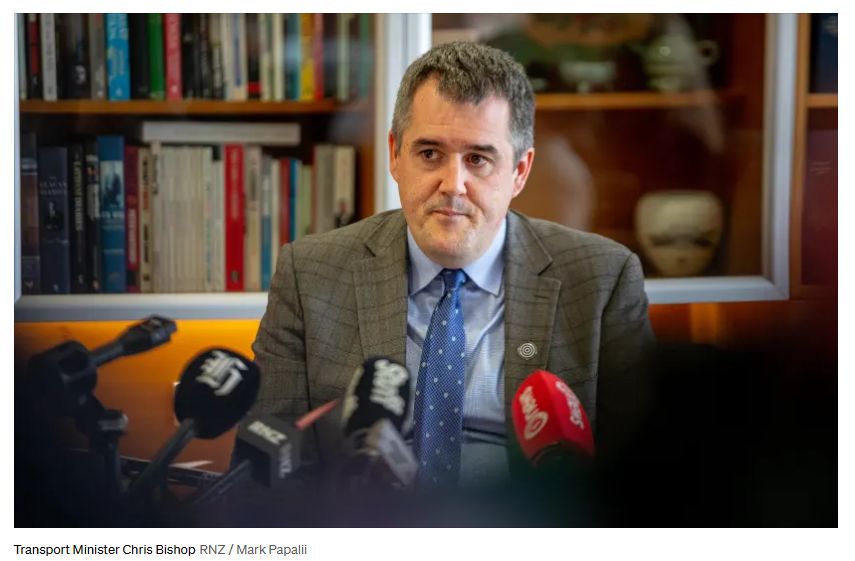
Transport Minister has told truckies he won’t grant their
wish to carry heavier loads, saying it will wreck roads and
cost too much to fix.
Transporting New Zealand has
long been calling for the government to ease truck weight
restrictions.
The pressure has amped up during the
fuel crisis, with the industry arguing the move would mean
they took fewer trips and used less fuel.
But Chris
Bishop on Friday told its conference that would not be
happening.
“Not because we’re opposed to change, but
because the analysis didn’t stack up,” he
said.
Officials modelled looser weight restrictions
would deliver potential diesel savings of up to 16 million
litres over six months, which amounted to about 1.5 days’
diesel use, Bishop said.
“Achieving those fuel savings
would have come at a cost of around $150 million in
additional infrastructure damage over the same
period.
“When it came down to it, the clear advice
that we received is that the costs outweighed the
benefits.”
The measure was being kept “in reserve” and
would only be relied upon if the situation worsened, he
said.
Bishop pointed to a range of other changes in
the country’s fuel response plan that would come into effect
if things worsened, like lifting route restrictions on
bigger vehicles so they could use key Auckland
motorways.
Bishop goes off script
Advertisement – scroll to continue reading
Speech notes
provided to media suggested Bishop intended to lay down a
harder line.
“I want to be very clear about the
Government’s position: we are not in the business of
subsidising the freight sector,” the notes
said.
However, Bishop softened the message in the
room.
“I want to make clear, the government’s position
is: we want to make sure we get the policy right,” he
said.
“Any changes we make will need to ensure the
effects on infrastructure are properly accounted for and
managed through the system.”
Bishop said work was
underway on long-term reform including potential changes to
vehicle weights and dimensions.
He stressed the
long-term nature – rather than a sudden response to a crisis
– was necessary to give the transport agency time to plan
for road design and maintenance.
Bishop and Regulation
Minister David Seymour also confirmed other previously
announced fuel
crisis response measures would take effect from 6
August.
They included allowing more drivers to drive
heavier electric vehicles, and removing permit requirements
for ’50MAX’ trucks which are higher
capacity.
New Zealand’s public broadcaster, providing comprehensive NZ news and current affairs, specialist audio features and documentaries.
Radio New Zealand is a Crown entity established under the Radio New Zealand Act 1995. Radio New Zealand News are vital elements in our programming, providing impartial news and information to New Zealanders every day. Radio New Zealand (RNZ) provides listeners with exciting and independent radio programmes in accordance with the Radio New Zealand Charter.

