



Lillian
Hanly, Political reporter
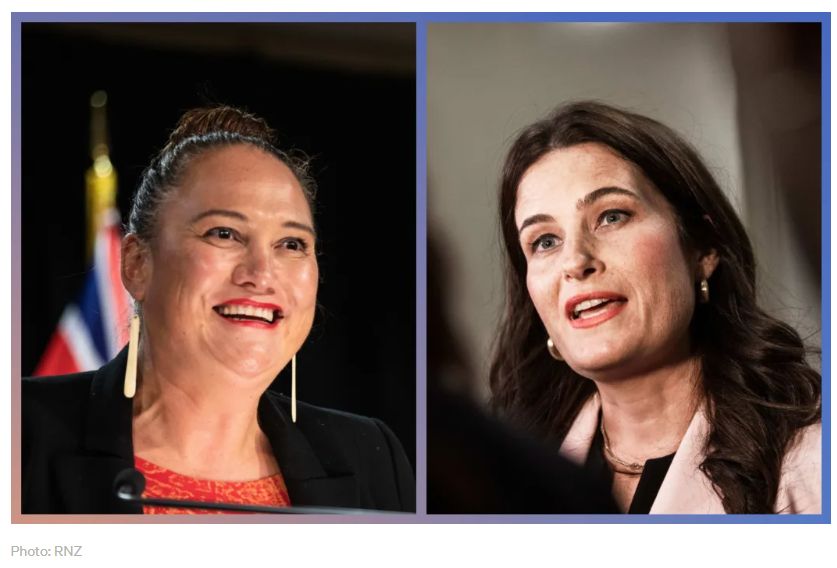
National
and Labour agree there should be some form of costings unit
to consider election year policies independently, but
disagree on how it should be implemented.
National’s
finance spokesperson said she supported a “light touch”
costings unit that would “run the ruler over” costings for
political parties.
Labour’s deputy leader said her
party supported the idea, and had a member’s bill in place
that would be sent to select committee if National backed
it.
It comes after the Green Party wrote to both
National and Labour’s finance spokespeople urging support
for an independent Parliamentary Budget Office to cost
political commitments and “lift the standard of public
debate”.
Green Party co-leader Chlöe Swarbrick said
independent analysis of costs would give people the
information they need to engage with the choices in front of
them.
She said the votes exist in Parliament to make
it a reality before the election, “even if only National and
the Greens agree” but there’s an opportunity to get Labour
around the table for “sustainable, long-term, cross-partisan
support.”
Speaking on Morning Report’s
political panel on Wednesday, Nicola Willis said
Treasury did independent forecasting, but a costings unit
“would be helpful in election year and would support
transparency in our democracy”.
Advertisement – scroll to continue reading
Carmel Sepuloni said
New Zealand First and ACT had blocked an earlier proposal by
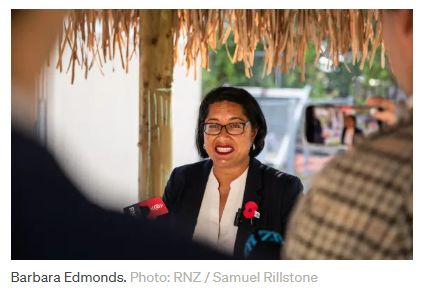
Willis herself, and pointed to Labour’s Barbara Edmond’s
Members’ Bill that would set the unit up.
Edmonds told
RNZ her proposal would see an independent Parliamentary
Budget Officer publish full costings of major parties’
election manifestos, “including impacts on inflation, GDP,
unemployment, child poverty, and emissions”.
“Parties
in Parliament, or those that received over 3 percent of the
vote at the last election, could request policy
costings.
“The officer would also be tasked with
analysing government budgets and fiscal
updates.”
Sepuloni said New Zealand First and ACT had
blocked an earlier proposal by Willis herself, and pointed
to Labour’s Barbara Edmonds’ members bill that would a the
unit up. Sepuloni said National and Labour could progress
that without needing New Zealand First or ACT.
Willis
did not support Edmonds’ proposal, saying it would create an
entirely new institution employing more public servants: “A
parallel bureaucracy to the one that we already
have.”
“Unfortunately,” she said, “the bill that
Carmel is reporting to proposes a ‘bigger than Ben-Hur’
solution.”
She said the proposal she had taken to
Cabinet was a “much more light-touch approach, using
existing resources within the public service in election
year”.
Willis confirmed the proposal did not earn the
support of National’s coalition colleagues, but said Labour
and the Greens’ proposal “goes too far, would be very costly
to the taxpayer, and it’s not necessary”.
“We
already have in the Treasury an independent forecasting
institution that, by and large, does a pretty good
job.”
Sepuloni pointed out Labour’s member’s bill
could go to select committee and get a “pretty speedy
process”, as well as be reviewed.
“If there isn’t
support for what is currently in the bill, then that could
be scaled back. That’s always a possibility.
“It’s
about getting something over the line and getting it to
select committee. So, if there was the will from the
National Party, then it would be possible.”
Asked if
Labour would support a light-touch version, Sepuloni
suggested letting the bill go to select committee and having
the conversation there.
“Obviously, Greens and Labour
would not have the numbers by themselves, and so there would
need to be a level of compromise and negotiation,” said
Sepuloni.
She added Labour was “willing to do that”
because it was the right thing to do.
“It’s just a
pity that National again have been blocked by their
coalition partners on something that is the right thing to
do.”
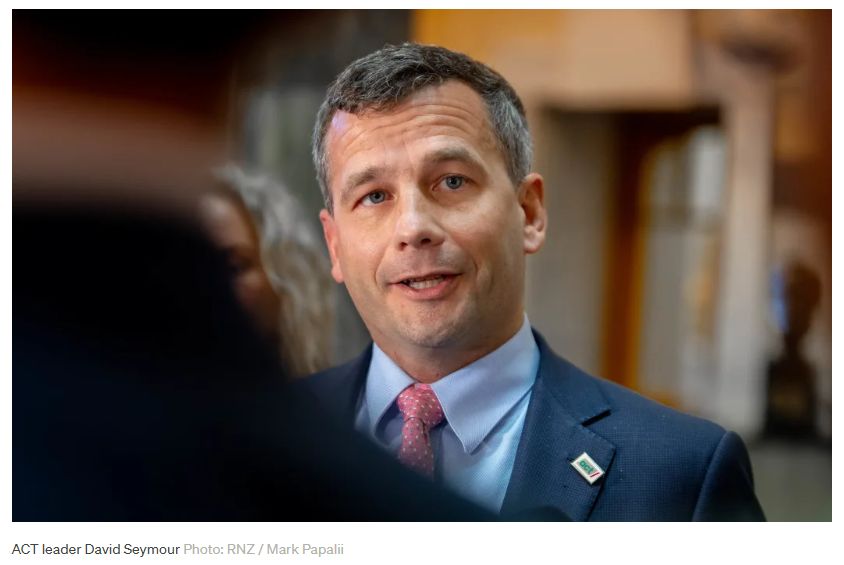
The
ACT Party said the country already had organisations that
scrutinised election promises, from independent
consultancies to political parties and the media. Taxpayers
did not need to fund another one.
In a statement,
leader David Seymour said: “It’s bad enough fighting the
bureaucracy after you win the election, we don’t want them
refereeing it as well.
“There is something
fundamentally undemocratic about the underlying belief here:
that ordinary people can’t be trusted, only those with
official titles and state resources.”
New Zealand
First has also been approached for
comment.
New Zealand’s public broadcaster, providing comprehensive NZ news and current affairs, specialist audio features and documentaries.
Radio New Zealand is a Crown entity established under the Radio New Zealand Act 1995. Radio New Zealand News are vital elements in our programming, providing impartial news and information to New Zealanders every day. Radio New Zealand (RNZ) provides listeners with exciting and independent radio programmes in accordance with the Radio New Zealand Charter.

