



Lillian
Hanly, Political reporter
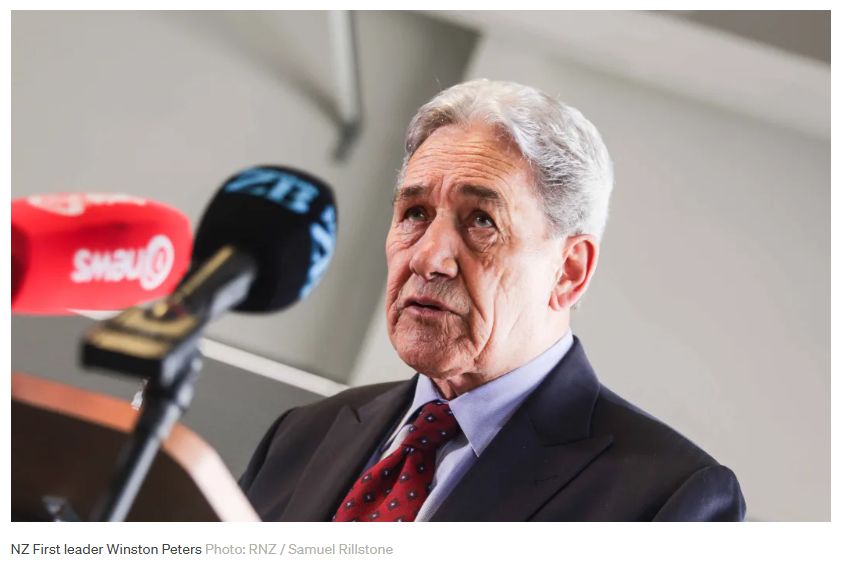
Winston
Peters says public servants who mislead ministers should be
sacked and “put in prison”.
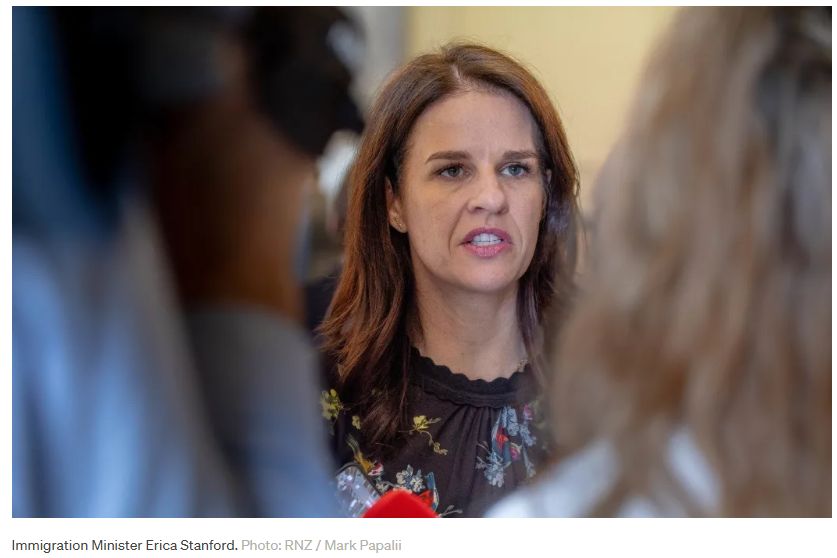
On Tuesday, Immigration
Minister Erica Stanford said officials “deliberately
withheld” information from both her and her Labour
predecessors about
a failed technology upgrade and used “creative
accounting” to avoid scrutiny.
Speaking to reporters
after a select committee appearance on Wednesday, Peters
said those responsible needed to be held to
account.
“Of course you’d lose your job. They need to
be put in prison as well. It’s a conspiracy against the
people, for goodness’ sake.”
Responding to Peters’
comments, Stanford told RNZ: “That’s not something that I
would say, but it is really important that the public
service commissioner does a full
investigation.”
Peters said the revelations came as no
surprise, noting that he had warned Stanford “some time ago”
that Immigration New Zealand was the “worst department in
this country by miles”.
“I’m pleased they’ve been
found out, and now they’re going to be straightened out,
because they’ve simply been lying to Parliamentarians and
lying to the taxpayers of this country.”
Advertisement – scroll to continue reading
Peters
noted some officials were excellent and worthy of trust, but
you do get a “few apples that have gone off”.
He
lamented the loss of more than $30 million, saying that
could have helped ordinary families.
Peters also
questioned why it had taken so long to work out things were
wrong, also questioning the ministerial
oversight.
‘They
fell very short’
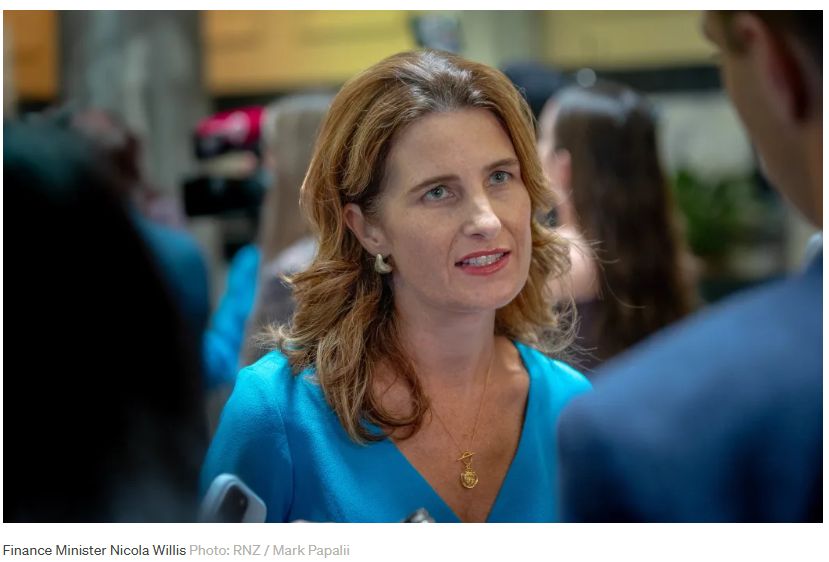
Speaking separately at Parliament,
Finance Minister Nicola Willis said “accountability” was
important to ensure such conduct was never
repeated.
“The message I want everyone in the public
service to hear is: do not cover up bad news, send it up to
the minister’s desk, so that we can take the right decisions
on behalf of New Zealanders,” she said.
“When you
cover your own butt, you’re actually putting New Zealand
taxpayers at risk.”
Willis said she had no reason to
think that such behaviour stretched more widely through the
public service.
“My experience is that most public
servants come to work each day with high levels of
integrity, wanting to do a good job on behalf of their
fellow New Zealanders, but clearly, in this instance, they
fell very short.”
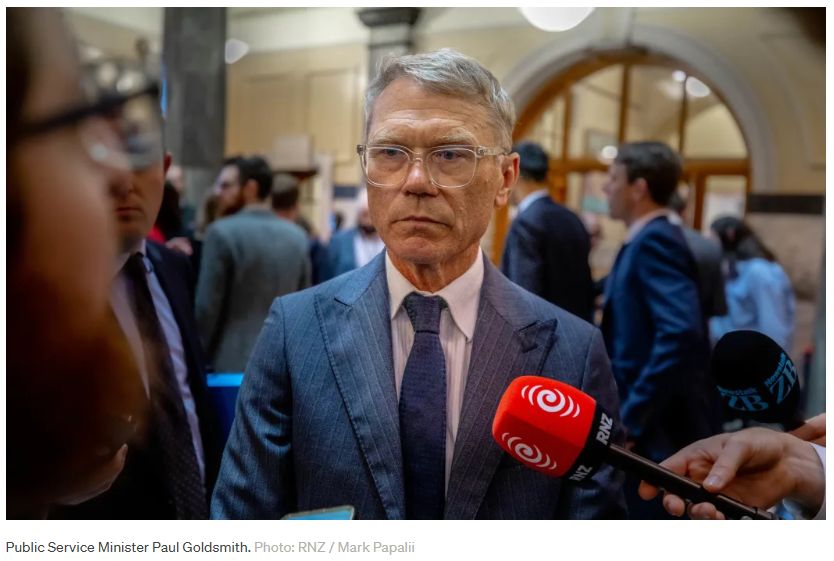
Following
a scrutiny hearing for the Public Service Minister, Paul
Goldsmith and Sir Brian Roche were questioned about Peters’
comments.
Asked if it was helpful to have a senior
minister saying public servants should be imprisoned, Roche
said “there’s a wide range of views on this”.
He said
he didn’t know if recommending criminal charges were within
his powers.
“The courts determine who goes to
prison.
“At this point, let’s get the investigation
done, and whatever flows from that will flow.”
Asked
whether anyone needed to be stood down as part of the
process, Roche said he’ll get “whatever evidence we need”,
and then “take whatever actions”.
“If I look like I’m
leaping to a level of predetermination that will undermine
the integrity of the report – the integrity is what we’re
trying to preserve here.”
However, Roche did say he
didn’t think police needed to be involved at this
point.
On whether it was within Roche’s powers to
recommend criminal charges, Goldsmith said he wasn’t a
lawyer “but my understanding is that it is for police to
decide whether to do such things”.
On the officials
themselves who were involved in the failed biometrics
project at Immigration New Zealand, Roche was asked if
they’d been stood down.
“The senior officials are no
longer involved,” he said. He was “still working through”
whether they remained in the public
service.
New Zealand’s public broadcaster, providing comprehensive NZ news and current affairs, specialist audio features and documentaries.
Radio New Zealand is a Crown entity established under the Radio New Zealand Act 1995. Radio New Zealand News are vital elements in our programming, providing impartial news and information to New Zealanders every day. Radio New Zealand (RNZ) provides listeners with exciting and independent radio programmes in accordance with the Radio New Zealand Charter.

