



Craig
McCulloch, Deputy Political Editor
Lillian
Hanly, Political reporter
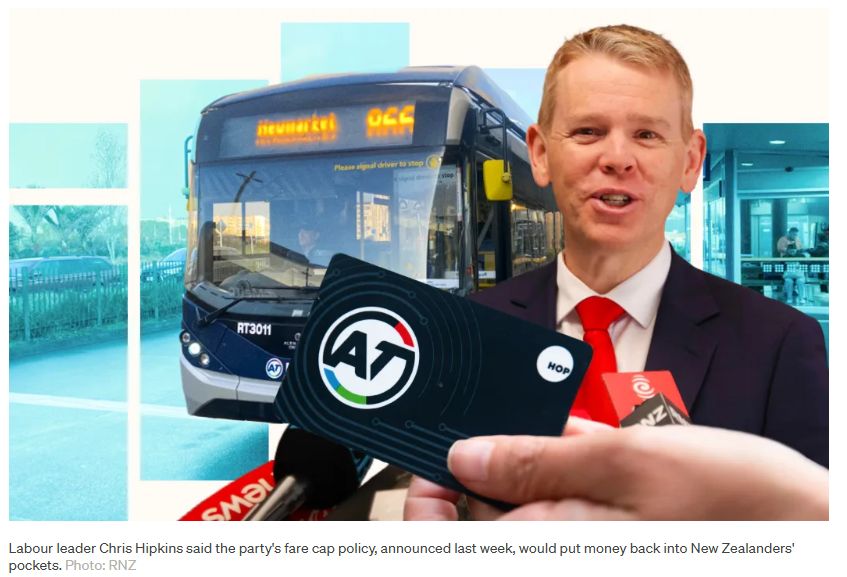
Analysis
– Labour appears to have underestimated the cost of its
public
transport fare cap policy, with economists identifying
several apparent errors in the party’s workings.
The
opposition party last week estimated a net cost of
$65 million a year for its promise to cap
fares at $20 a week in Auckland, Wellington and Christchurch
and $10 everywhere else.
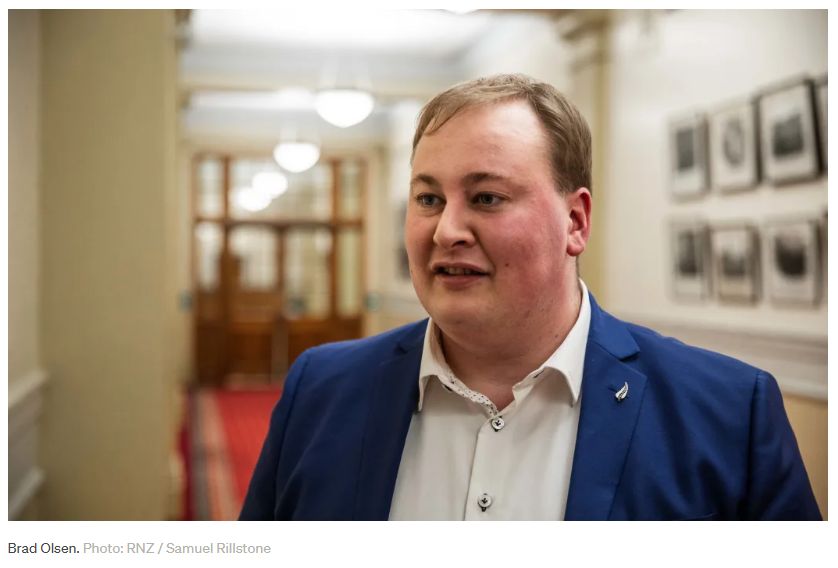
But economists Sam Warburton
and Brad Olsen say a more realistic figure would be
somewhere between $91m and $112m.
The
pair stress Labour’s calculations seem to be a genuine and
reasonable attempt to cost the policy, rather than a sign of
incompetence or an effort to mislead voters.
In
response, Labour told RNZ it stood by its calculations but
also welcomed any prediction that public transport uptake
would be higher as a result of its policy.
Advertisement – scroll to continue reading
To date,
Labour has declined to publish its full policy costings. It
said it updated Auckland Transport (AT) modelling from 2023
to reflect current patronage, fares, and operating costs,
before extrapolating the results nationwide.
Warburton
was one of the economists who exposed a major
shortfall in National’s proposed foreign buyers tax
during the last election campaign. Olsen is the chief
executive and principal economist at consultancy
Infometrics.
Where Labour’s numbers look to fall
short
Claim one: Labour has underestimated the
increase in public transport use
Labour has
repeatedly stated that AT’s modelling assumed a 6.4
percent increase in public transport as the result
of a $20 fare cap.
But the 6.4 percent figure reflects
the cumulative increase over just five
months, rather than a full year.
Warburton’s reading
of the Auckland Transport modelling suggests the equivalent
annual increase would be about 13.5
percent.
That would mean significantly more
passengers using public transport and a greater need for
additional services.
Claim two: Labour has not
accounted for drop in fuel tax revenue
Labour has
claimed the gross cost of its fare cap would also be offset
somewhat by an increase in revenue from the greater numbers
of paying passengers.
Those sums would be collected by
the transport operators, not the central government, but
Labour said it would take that into account when negotiating
funding arrangements.
Labour, however, does not appear
to have accounted for a corresponding drop in fuel excise
and road user charges as commuters switch from cars to
public transport.
Warburton said, as such, a “clean
and reasonable” approach would be to disregard the increase
in revenue altogether, assuming that it would be
counterbalanced by the drop in fuel excise and RUCs and by
the cost of providing additional services.
Claim
three: Labour has understated growth in patronage and fares
since 2023
Labour said it updated AT’s 2023 modelling
to reflect current patronage and fares, but both economists
believe it understated how much those figures have
changed.
Both Warburton and Olsen point to a starting
patronage level of about 70m trips in
2023.
AT has set a target of hitting 111.7m
annual boardings in 2027/28, which would be a
roughly 60 percent increase from 70
million.
To be fair to Labour, current trip levels are
well behind that. Assuming a lower level of, say,
100m boardings would be an increase of
43 percent.
Labour has assumed an
increase, but seemingly not by that much.
The same too
for fare inflation. Since 2023, fares in Auckland have
increased by around 17.5
percent.
Labour appears to have accounted for
that, but not for an additional likely increase in the next
year or two. Warburton predicted an additional 3
percent hike, while Olsen suggested another
5.1 percent – in line with last year’s
increase.
Taken together, those assumptions materially
increase the cost of the policy.
“Not
a huge miscalculation, but a material one” –
economist
After adjusting for those factors – as well
as several smaller ones – Warburton estimated an annual cost
of between $91.4m and $111.6m, though noted
there was still “considerable uncertainty” around the
assumptions and method. Olsen concurred with Warburton’s
calculations.
Warburton told RNZ Labour would need to
raise the cap to about $26 or $27 a week to bring the
policy’s cost closer to its stated $65m figure.
“It’s
not a huge miscalculation, but a material one, and one which
I hope that Labour will take a look at and reconsider their
policy settings around.”
He said Labour’s mistakes
largely arose from a misreading of the original AT paper,
which was “extremely difficult to follow”.
“I
originally set out to do my own costings and came up with
almost identical numbers to Labour, until at the last minute
a funky graph in the report caught my eye.”
Warburton
cautioned against over-reacting and said National’s separate
claim that the policy could cost as much as $1.6 billion was
“utter nonsense” given total fare revenue for the whole
country was just $0.3b per annum.
Olsen told RNZ
Labour’s errors were not massive, but they were “unhelpful”
to its cause and could undermine the policy’s legitimacy in
the eyes of voters.
“It’s frustrating that we’ve been
spending so much time trying to recreate calculations based
on bland statements from Labour, when the merits of the
policy could have been debated instead, if only Labour had
provided some detail about how they’d come up with their
figures.”
Olsen also suggested that more investment in
the reliability and frequency of public transport would be a
better use of taxpayers’ money than a fare
cap.
Labour: ‘We’re confident in our
workings’
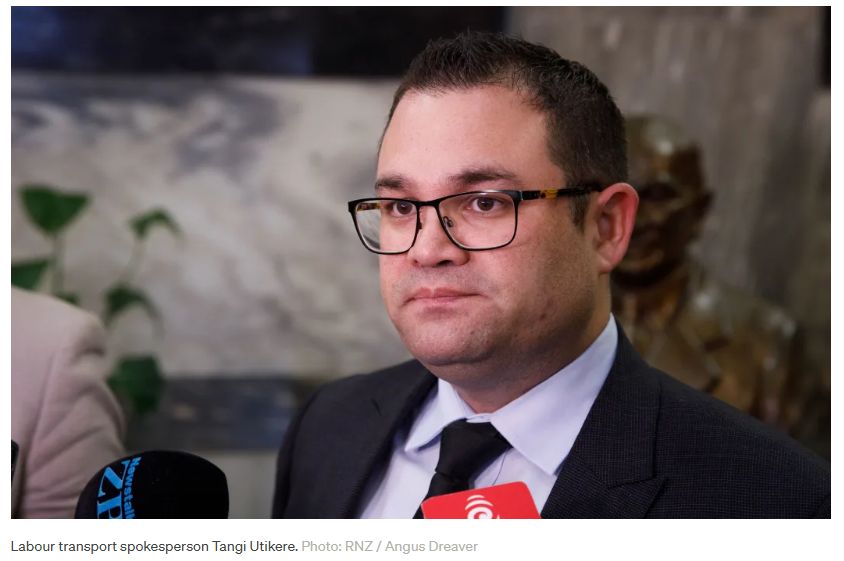
In
a statement, Labour transport spokesperson Tangi Utikere
said all modelling required judgements and assumptions,
including that done by Warburton and Olsen.
“We’re
confident in our workings, and in the capacity of the
network. We’ll work with councils in the lead up to July 1,
2027 and onwards to ensure services are resourced and up to
scratch.”
Utikere said a predicted 6 percent increase
in public transport use was in line with the Transport
Agency’s findings
that around 6 to 9 percent of New Zealanders used buses or
trains in the previous week because of the half-price
fares.
He said he welcomed any prediction that uptake
would be higher than that: “We’d love to see more people on
public transport.”
But Warburton said Labour had also
misinterpreted the NZTA research, noting that 6 to 9 percent
more New Zealanders using public transport was a lot more
than a 6 to 9 percent increase in public transport
use.
He noted that public transport use was around 15
percent. Increasing that by 6 to 9 percentage points took it
to between 21 percent and 24 percent.
In other words,
half-price fares increased the percentage of people
travelling by public transport at least once a week by about
50 percent, Warburton
said.
New Zealand’s public broadcaster, providing comprehensive NZ news and current affairs, specialist audio features and documentaries.
Radio New Zealand is a Crown entity established under the Radio New Zealand Act 1995. Radio New Zealand News are vital elements in our programming, providing impartial news and information to New Zealanders every day. Radio New Zealand (RNZ) provides listeners with exciting and independent radio programmes in accordance with the Radio New Zealand Charter.

