



Lillian
Hanly Political Reporter
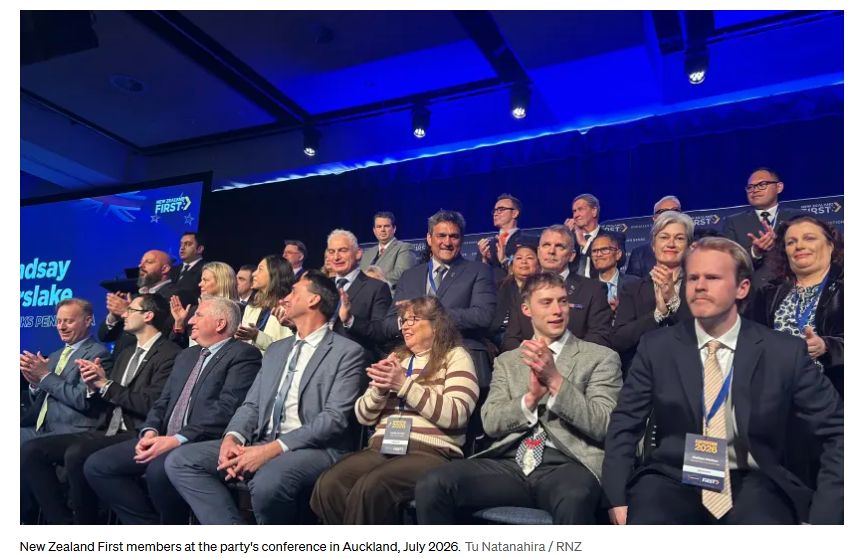
“Granddad
was blue, dad was blue, I was blue until I woke up,” a New
Zealand First member who previously supported National told
RNZ on Saturday.
Another delegate said she had
previously been a National member, but now thought National
was “too weak” in terms of policy.
Another suggested
“the globalist governments have done nothing but degrade our
economy”, saying the leaders of other parties were opting
for “globalist” agendas.
NZ First members and
candidates are in Auckland for a party conference and
election campaign launch, as polling shows the party’s
popularity continues to rise.
New Zealand First leader
Winston Peters said some voters’ move away from National was
explained by his party’s focus on nationalism with a
“capital N”.
“People are coming from other political
parties and realising it’s one party now that’s critically
needed.”
It comes as New Zealand First climbs in the
polls. The 11.5 percent the party received in the latest RNZ-Reid
Research poll was its third consecutive rise in this
poll and its best result in nearly a
decade.
Advertisement – scroll to continue reading
Meanwhile, National slumped to its lowest
level of support since Luxon became leader, at 28.7
percent.
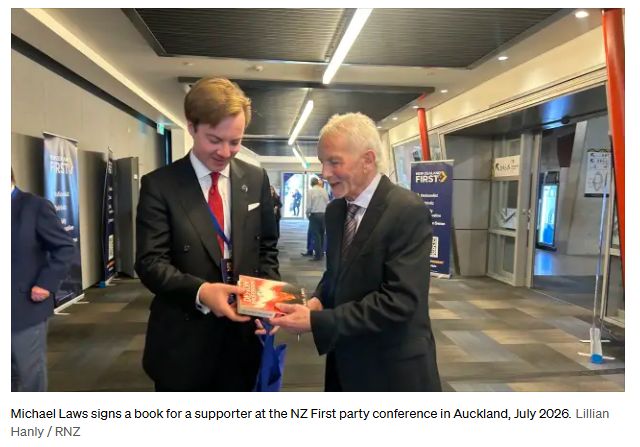
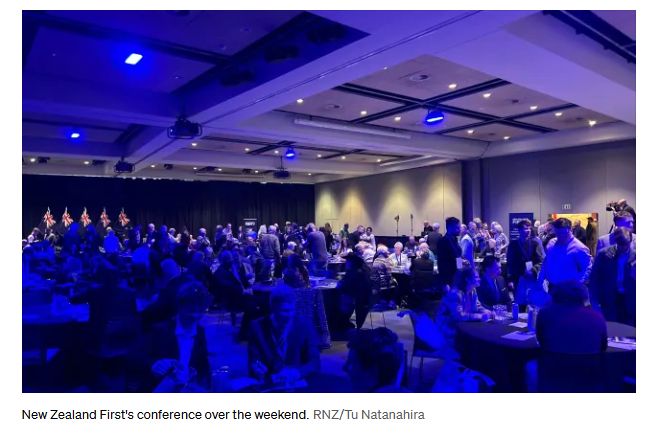
Around
380 delegates were present at the NZ First convention. New
candidates – and former National Party MPs – such as Alfred
Ngaro, Harete
Hipango-Brownlie and Michael Laws were also
there.
But it was not just National deserters the
party was welcoming. A recently confirmed member, former
Labour minister Rino Tirikatene, was not present on Saturday
morning, but he told RNZ he joined the party because he
supported the principles and policies, “which fit well with
my personal beliefs”.
“Winston and Shane are whanaunga
of mine and I support them 100 percent,” he added,
confirming he would not be running for
Parliament.
Former Labour MP Dover Samuels was
present, along with confirmed candidate and former Labour
minister Stuart Nash.
Former New Zealand First
minister Ron Mark was also there as a member. He told RNZ he
had not made his mind up yet about running.
Deputy
leader Shane Jones introduced Peters, welcoming the crowd to
the “first of our successful rallies as we march forward to
victory” on 7 November.
He then warned those listening
about “demographic engineering”.
He said it was not
for New Zealand First to be “hobbled, stared down, cowered
by the vested interests and the more powerful, voluminous
parties who don’t want us to reflect what our fellow
citizens feel in the hinterlands… Who don’t want us to
reflect what garden variety Kiwis are apprehensive over, as
they watch demographic engineering before their
eyes.”
Asked later by reporters what this meant, he
would not elaborate, pointing instead to a speech later in
the day.
Peters then took to the stage saying “seconds
out of the ring for round 33”, a nod to New Zealand First’s
33rd anniversary.
“We’ve got the players and we’ve got
the strategy,” Peters said, as the party marked the start of
the election campaign.
“We’ve got news for our
opponents and it’s all bad. This weekend is about how we, as
a party, can build our country back to the greatness it once
had.”
He spoke about the “sliding” economy, and the
need to increase wages.
Peters also took aim yet again
at the Indian
Free Trade Agreement, suggesting people were talking the
deal up when they hadn’t read the agreement.
“We stand
for the national interest, even when we stand
alone.”
He also addressed the members present, saying
the media was also in the room.
“Just because there’s
a microphone in front of your mouth doesn’t mean you have to
answer,” he said, suggesting members could say “I’ll leave
it to the leader” if they didn’t want to speak.
What
party members want
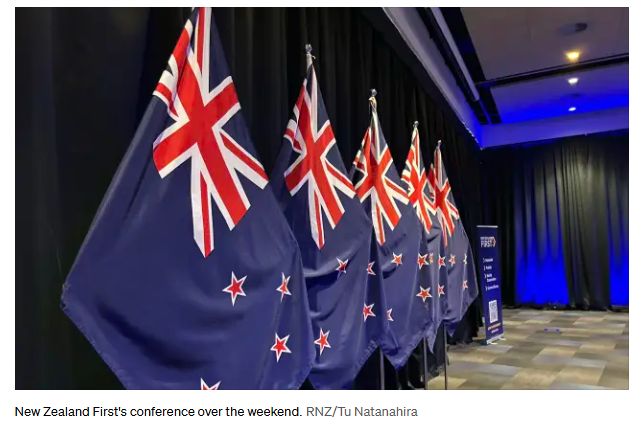
RNZ
spoke to some members who had joined NZ First in the past
year. One said New Zealand First was “sensible”, and that
Kiwis needed to come together. He said Labour had caused the
division.
Another said NZ First was calling out
policies she did not agree with. She did not specify the
policies, but said she was a Christian and there were a
number of things happening in the country and “across the
world that I don’t agree with from that
perspective”.
“I’ve been a National Party member and
supporter on all that side of things, as a young person, I
voted Green, and they seem to have lost track.
“NZ
First seems to be the next, the one that I think probably
matches what I believe this country should be
doing.”
She said National’s policy was “too
weak”.
Another pointed to the name of the party,
suggesting the party would put New Zealand
first.
“Winston Peters must have known something years
ago when he created the party. The globalist governments
have done nothing but degrade our economy, our state of
living, and our freedoms.”
She said experimental
medications should not be mandated, referencing Covid-19 but
also her wish not to have a smear or a mammogram until she
chose to, rather than every two years.
In New Zealand,
women between the age of 45 and 69 qualify for regular free
mammograms, but it is a choice.
She said her medical
practitioner “gave me a really hard time” for choosing not
to, “my voice has not been heard”.
Another new member
told RNZ he joined because “you can’t change culture without
changing politics”. In terms of what needed to change, he
said he liked the party’s “common sense policies”.
The
party says it has a focus on nationalism, social
conservatism, patriotism and common sense.
Another
member agreed, saying New Zealand was a conservative
country, and it needed “some direction”.
‘Long list’
wanting Cabinet positions
Speaking
to reporters after his opening address, and asked if he
would like to see Ron Mark around the cabinet table again,
Peters said the list process was something he stayed out
of.
“If I was to show preference like that, it means
that their list system doesn’t work. It means that people
aren’t treated fairly.”
Asked how he planned to manage
new MPs with parliamentary experience who might want Cabinet
positions, along with those who had been in Parliament this
past term, Peters just said “there’s going to be a long
list”.
Members will vote on a number of remits over
the weekend, including:
- whether to advocate for
legislation requiring all universities to adopt strictly
merit-based admissions criteria - funding a primary
care winter wellness check for seniors - protecting
New Zealand’s sovereignty by rejecting international
agreements or trade deals that compromise parliamentary
supremacy, independent immigration policy, economic
self-governance or democratic control over
laws - reaffirming one law for all New
Zealanders.
The party listed its candidates for
the election, and provided a coalition agreement
report.
The convention will continue on
Sunday.
New Zealand’s public broadcaster, providing comprehensive NZ news and current affairs, specialist audio features and documentaries.
Radio New Zealand is a Crown entity established under the Radio New Zealand Act 1995. Radio New Zealand News are vital elements in our programming, providing impartial news and information to New Zealanders every day. Radio New Zealand (RNZ) provides listeners with exciting and independent radio programmes in accordance with the Radio New Zealand Charter.

