

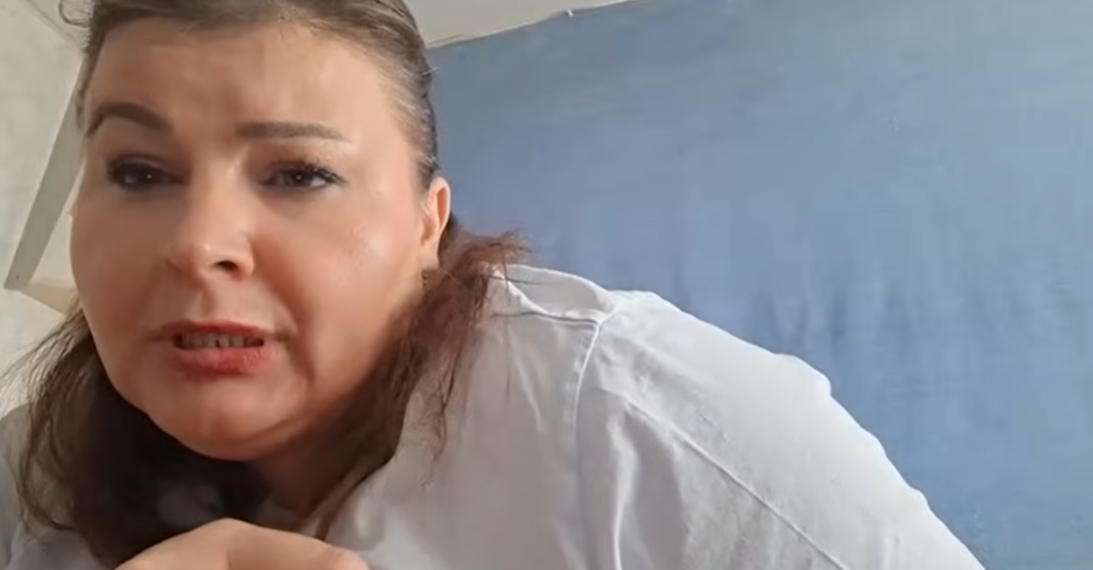
The account of Nata Vibliani, a woman in her forties who has alleged that she was repeatedly raped as a child in her community in Georgia’s northwestern Svaneti region, has prompted widespread calls for accountability more than 30 years after the alleged abuse began. The Interior Ministry told Civil.ge it is investigating the case.
Vibliani, originally from the village of Sgurishi in Svaneti’s Chuberi community and now living abroad, first shared her story in a series of social media videos before recounting it in greater detail in an interview with Vedzeb (translated: Searching), a Georgian media project that gained popularity by reuniting people who had been separated from their biological parents at birth.
She accused four different men from her community — all of whom she identified by names — of sexually abusing her, alleging that the initial abuser started raping her when she was nine years old and eventually led to her pregnancy and childbirth, with the child’s fate remaining unknown.
The Ministry of Internal Affairs confirmed to Civil.ge that police are investigating the case under Article 137 of Georgia’s Criminal Code, which covers rape. Radio Free Europe/Radio Liberty’s Georgian service separately reported that the probe was launched about a month ago, based on Vibliani’s social media videos.
Lawyers say that legislative changes over the years have led to childhood sexual abuse being included among the crimes for which there is no statute of limitations under Georgian law.
Vibliani’s account
“My hell started on the night of my father’s death,” Vibliani said during her interview with Vedzeb’s Tamuna Museridze, published on July 12, recounting her father dying “in her arms,” apparently, though a gunshot wound, when she was seven years old. According to her, the circumstances surrounding his death remain unclear because no forensic examination or official investigation was conducted.
She alleged that soon after that, when she was nine years old, an adult man whom she described as her neighbour and the brother of her godparent began raping her. According to Vibliani, the abuse continued for several years, leading to her pregnancy when she was around 13 or 14.
According to Vibliani, members of the community “across three villages,” including her family and neighbours, were aware of her pregnancy but failed to intervene. She said the man denied paternity and threatened her with a firearm, forcing her to say that another man was the father of the child, and bringing “witnesses” to confirm the account.
“This was happening in front of the whole village, and my relatives live in the whole village,” she said.
Vibliani also alleged that relatives initially attempted to terminate her pregnancy using herbal “liquids.” Later, she said, her godparent and the brother, alleged abuser, took her to the hospital in Zugdidi, Samegrelo region, while around seven months pregnant, where labour was induced and during which she was put through another “hell.”
She said she heard her baby cry after delivery and saw the hair before hearing the nurse asking what should happen to the newborn, and said she then heard the alleged abuser ordering in response to kill the baby. However, she said she has never learned whether the child died or survived.
According to Vibliani, the abuse did not end after she gave birth. She alleged that she was subsequently raped by three more men, including the initial abuser’s brother, his cousin, and another man from their circle.
The woman recalled being mistreated by the broader community, which she said was aware of her situation. She said that, during one community event, while she was pregnant with the alleged abuser’s child, she was driven away with stones thrown at her, with his uncle calling her a “disgrace.” Years after the birth, Vibliani said she, her mother, and her three siblings were pushed out of the village and home by her father’s relatives. She linked the family’s treatment to longstanding disputes over family matters and land, as well as questions surrounding her father’s biological ties to the family.
“They destroyed my life, took away my childhood, killed my child,” Vibliani said during the interview. “There wasn’t a single insulting word that my family members and relatives didn’t call me.”
The woman said she largely cut ties with her relatives in the early 2000s and is now seeking justice, as well as the return of the deceased father’s house in the village where she grew up.
Allegations Prompt Solidarity, Calls for Justice
Vibliani’s account sent shockwaves across Georgia, with many on social media rushing to express solidarity and call for a proper investigation into the case. The allegations have also prompted broader discussions about childhood sexual abuse and the role of state policies as well as communities, particularly in remote areas with deeply rooted local social norms, in enabling or failing to prevent such treatment.
The woman also told the Vedzeb project that after speaking out publicly, other women from Svaneti contacted her and shared similar accounts of abuse.
“Child sexual abuse is one of the gravest, yet at the same time, one of the most concealed crimes,” Georgian Women’s Movement, a local group, said in a July 16 statement, expressing support for Vibliani in her quest for justice. “Its true scale in Georgia remains unknown because the state has failed to establish effective systems for prevention, detection, and survivor support.”
The group said Vibliani’s testimony demonstrates that silence should never be interpreted as evidence that abuse did not occur, warning that restrictions imposed in recent years in Georgia on civil society organizations working on women’s and children’s rights have further weakened available support mechanisms.
“Silence does not mean violence did not happen,” the statement reads. “It is often the result of trauma, fear, shame imposed on survivors, social pressure, and distrust of state institutions.”
“We believe Nata’s courage will encourage many others to break their silence, reclaim their voice, and demand justice.”
Also Read:

