



Giles
Dexter Political reporter
Survivors
of abuse in care say their fight is not finished, as they
mark two years since the Crown’s apology.
A small
crowd gathered in front of Parliament to acknowledge the anniversary
of the government’s apology to those who were abused in
state and faith-based care.
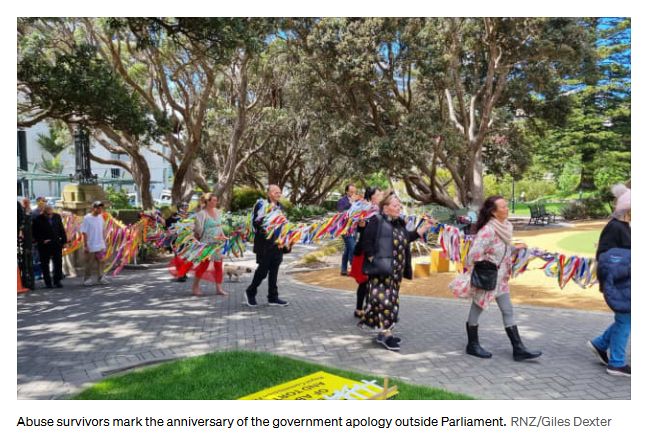
Attendees tied ribbons to
a barricade, each one representing someone who was abused,
including those who died before the apology was
made.
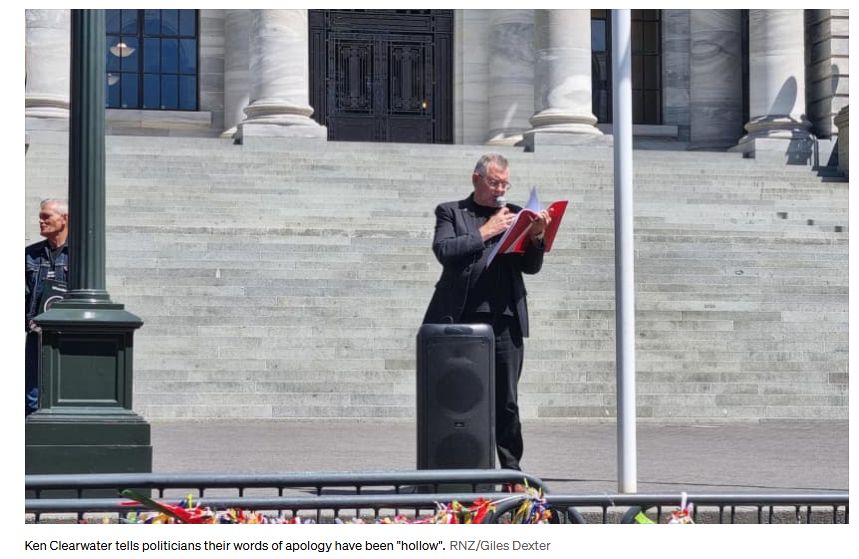
Survivor and advocate Ken Clearwater told those
present that a lot of angry survivors still needed help and
support, and re-iterated a call for an
independent redress system.
Clearwater said the apology
two years ago was hollow.
“Survivors stand here
today, because the apology has fallen short.”
Advertisement – scroll to continue reading
Erica
Stanford, the lead co-ordination minister for the
government’s response to the Royal Commission of Inquiry,
said she recognised an apology could
not undo what had happened, nor could it take away the
pain and lasting impacts experienced by
survivors.
“For many, that harm continues to affect
their lives every day,” she said. “We must never lose sight
of that.
“As a government, our responsibility does not
end with an apology. We must continue to learn from the
failures of the past and turn those lessons into meaningful,
lasting change.”
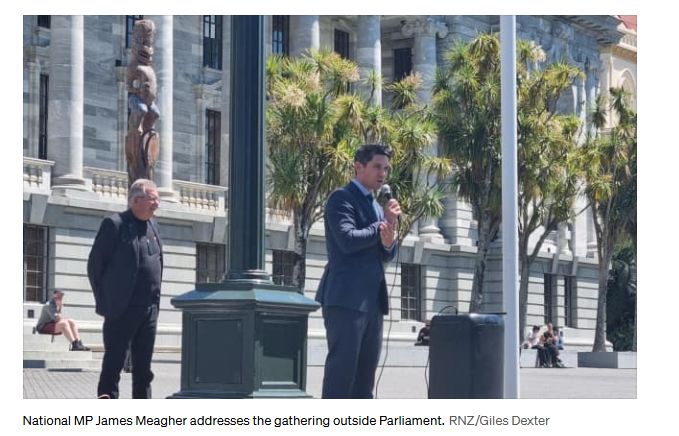
Stanford was not at the event, but
National’s James Meager told those gathered that members of
Parliament were “united” in their support for
survivors.
“Do
know that, when it comes to this kaupapa, we are united as
members of Parliament in our support for you, for survivors
and for making sure that we heal as much damage that has
happened in the past as we can.”
Christopher
Longhurst, national leader of the Survivors Network of those
Abused by Priests, expressed disappointment in Meager’s
speech and disagreed that political parties were
united.
Longhurst said parties were “diametrically
opposed”, as Labour wanted an independent redress system,
which survivors also wanted – but National did
not.
“To be united in what you say and not united in
what you do is not helpful,” he said.
Longhurst said
the New Zealand response had been the weakest “across the
board”, calling it “embarrassing”, compared to how other
states had responded.
“They’re making history, but
they’re making very bad history, but things will change, we
hope.”
Labour’s Lemauga Lydia Sosene and the Greens’
Kahurangi Carter also addressed the survivors, with Carter
saying the Greens had committed to implementing all the
recommendations from the Royal Commission of Inquiry in its
manifesto.
Commissioner Paul Gibson also said the
abuse suffered in New Zealand was worse than in other
countries that had similar inquiries.
“I thought,
before I came to the inquiry, I knew what had happened.
Everywhere we looked, things were worse than what we could
have imagined.”
Gibson said the “vision” of the
survivors who came to the inquiry had not yet been
built.
“I don’t, as yet, feel you are behind us and
united behind us, as survivors, in delivering meaningful
redress and delivering the recommendations of the inquiry,
and preventing children, adults at risk from being abused
now and in the future.”
Survivor
Keith Wiffin told RNZ that the response since the report’s
release and the apology had been disappointing, and people
were frustrated.
“The sentiments expressed in the
apologies have been hollow. They’ve meant not a lot, and
promises have been broken yet again, survivors betrayed and
the investment in the Royal Commission by the taxpayers of
this country, by the good people of this country, has also
been dishonoured.”
Where to get help
New Zealand’s public broadcaster, providing comprehensive NZ news and current affairs, specialist audio features and documentaries.
Radio New Zealand is a Crown entity established under the Radio New Zealand Act 1995. Radio New Zealand News are vital elements in our programming, providing impartial news and information to New Zealanders every day. Radio New Zealand (RNZ) provides listeners with exciting and independent radio programmes in accordance with the Radio New Zealand Charter.

