



Russell
Palmer Political reporter
The
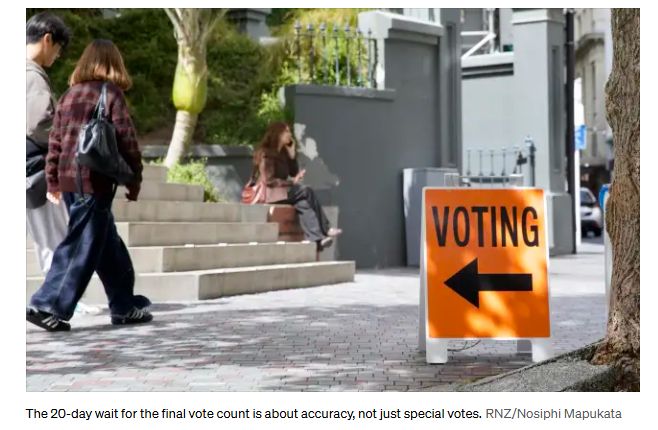
20-day wait for the final vote count is about accuracy, not
just special votes – and if politicians are anxious there’s
nothing stopping negotiations starting now.
That’s the
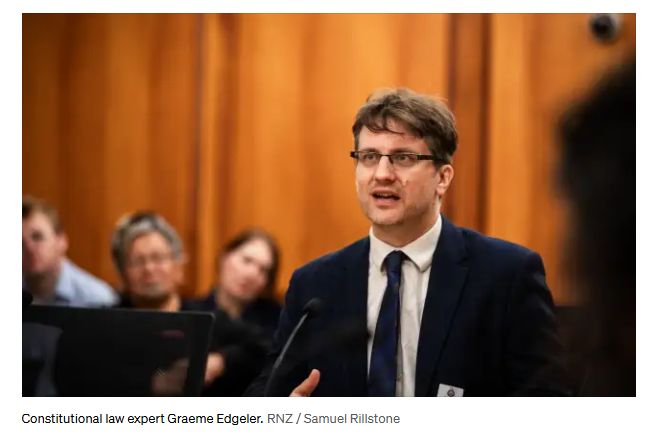
view of constitutional law expert Graeme Edgeler, who along
with the Electoral Commission is pointing to technological
changes to speed up the process next time.
‘The real
count’
A week after the election, and with a
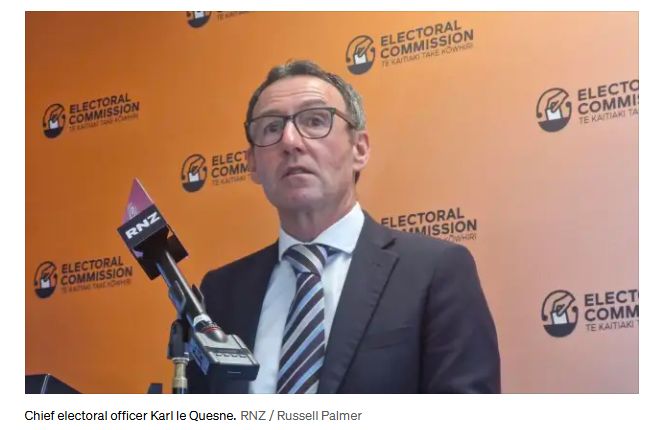
fortnight left before the final result, chief electoral
officer Karl le Quesne told RNZ most of the time taken was
to ensure accuracy.
“We take
a great deal of care to make sure it’s complete and
accurate, so people can trust the result,” he
said.
Improvements had already been made since 2023,
when a rushed
process meant multiple errors were missed.
“We’ve
strengthened not only that those checks get done, but we’ve
reviewed those checks and improved them to make it easier to
actually apply them, and that’s one of the real reasons we
still need the 20 days to get a complete set of results
produced,” le Quesne said.
Advertisement – scroll to continue reading
The process includes
recounts of ordinary votes, checking votes against
enrolments, tallying the number of electorate and party
votes to ensure they match, removing any ineligible votes,
waiting a legally mandated 10 days for the special votes to
be sent to their electorate (many from overseas), counting
the special votes, and doing a final series of quality
assurance checks.
Le
Quesne said a key thing slowing down the count was the need
to combine the rolls from the 2700 voting places into one
for each electorate, to ensure names had not been crossed
out twice.
Edgeler said such cases then needed to be
investigated.
“Maybe it was a mistake – you know, Dan
Smith voted at one, and they accidentally crossed off Dean
Smith’s name … [but otherwise] if you vote twice, all of
your votes get cancelled.”
The
actual special vote count would happen at the end, which he
said aimed to avoid votes being disallowed due to bias from
those doing the counting.
“Sort of, someone objecting
because ‘oh, this is a vote for the other person, my
scrutineer is going to try and object and say that shouldn’t
be counted’, so just a protective measure.”
Edgeler
said New Zealanders should be assured any mismatch between
the election night result and “the real count, the careful
count” was not only because of special votes but thorough
checks and tallies.
Le Quesne said the commission was
making good progress.
“It’s going really well. We’ve
just about completed the production of one roll for every
electorate; we’re well into doing the second count of the
ordinary votes that were cast before election day and on
election day; we’re getting the special votes repatriated,
they’re starting to land in their home
electorates.
“We’ve already started the process on
validating and qualifying those – so, we don’t do the steps
one after each other, we do them at the same
time.”
‘Nothing stopping politicians from starting
their negotiations’
Some political parties have been
meeting since the election but with the result “too close to
call” have largely delayed negotiations for forming a
government until the final vote count.
But Edgeler
said there was no need, pointing to John Key’s first
government formed in 2008.
“With the Māori Party as
it then was, with United Future, and with ACT, they form a
four-party [government], John Key is sworn in as prime
minister and announces government ministers before the final
count is released. There is nothing stopping politicians
from starting their negotiations now if they want.”
He
said with the result so close, they probably should wait
until the final count before announcing a government, but
National could be talking to both ACT and New Zealand First
at least – and with Opportunity having promised to talk
first to the party with the most seats, to Qiulae Wong’s
negotiating team as well.
“National, plus ACT, plus
New Zealand First, plus Opportunity – even if the special
votes go badly for the government … it seems it’s almost
inconceivable based on historic patterns of special votes
that group of four parties would not be a
majority.
“It’s just a question of whether the three
opposition parties and Opportunity could also form – but
given that Opportunity said they want to speak to the
largest party first, based on the votes we have, that is
almost certainly the National Party.”
Future
voting: Barcodes and auto-updates
For the impatient,
changes are coming for future elections that would help
speed the process up.
Le Quesne said the commission
would soon be trialling a new digital roll mark-off
system.
“Instead of having a paper-based roll in every
voting place, you could have a electronic roll and you mark
people off by scanning a barcode on their Easy Vote
card.
“That would make it much quicker to produce that
one roll for each electorate, but it would also help you to
avoid people voting more than once because you’d be able to
identify straight away that they’d voted in another voting
place.”
Edgeler also pointed to changes that had
passed the legislative hurdles but were not installed in
time for the 2026 election, which would automatically change
someone’s enrolment when they changed details like their
address with other agencies like Work and Income, or the
Transport Agency.
“That information will be passed
along to the Electoral Commission who will just say ‘okay,
this person was enrolled here, they’ve moved, we’re going to
change their enrolment’.
“The system we currently have
is that information will be passed to the Electoral
Commission and they’ll write to you saying ‘oh, it looks
like you’ve moved, could you please enrol?'”.
He said
that would significantly reduce the number of special votes
from people who had moved but forgot or delayed updates to
their enrolment, as they would be ordinary votes instead,
“which will mean the amount of time needed to check special
votes will be significantly
less”.
New Zealand’s public broadcaster, providing comprehensive NZ news and current affairs, specialist audio features and documentaries.
Radio New Zealand is a Crown entity established under the Radio New Zealand Act 1995. Radio New Zealand News are vital elements in our programming, providing impartial news and information to New Zealanders every day. Radio New Zealand (RNZ) provides listeners with exciting and independent radio programmes in accordance with the Radio New Zealand Charter.

