



Lillian
Hanly, Political Reporter
The
Fisheries Minister is delaying controversial legislation
that had already seen a major
U-turn on one aspect of the Bill.
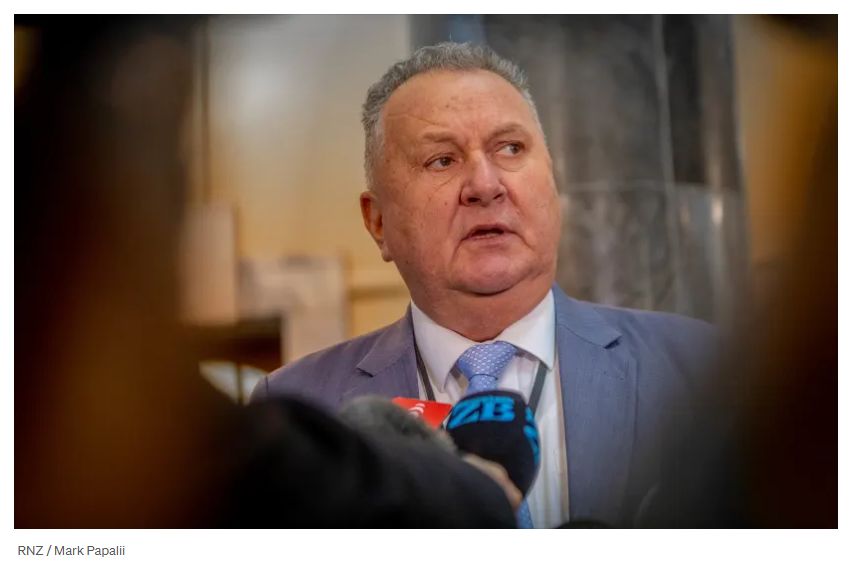
Shane Jones says
the Fisheries Amendment Bill could use some more “panel
beating”, and acknowledges there hadn’t been a lot of
harmony across Parliament or the industry about
it.
He’s suggesting the committee considering the Bill
extend its deadline for when it was due to report to
Parliament, “and take some time to pluck the fruits of
democracy”.
It would delay progressing the legislation
until after the election.
Jones had labelled critics
of his bill as “noisy voices” in March, before the coalition
announced days later they had listened to public feedback
and would no longer scrap most minimum size limits for
commercial fishers.
National, ACT and New Zealand
First all claimed credit for the change.
However,
other contentious aspects including limits on judicial
review timeframes and a ban
of on-board camera footage being shared – including
under the Official Information Act –
remained.
Advertisement – scroll to continue reading
Speaking during the scrutiny week hearing
for the Fisheries portfolio on Thursday, Jones said despite
his desire to “charge on ahead”, he acknowledged there was
disharmony within the industry about the Bill, and across
Parliament.
He said he was the author and had to take
responsibility for it.
“If it can be improved by some
more panel beating, then I’m up for that.”
Asked if
he’d taken instruction from the New Zealand First leader or
from the prime minister that it was becoming “challenging,”
Jones said there hadn’t been.
“I’m very well aware
that there was a host of opinions tossed about several
months ago…from some of the back benches that they were
upset that I’d taken too much of a hard line against
opponents of the bill, so I accept that those individuals
were concerned.
“But I don’t take instructions in the
way that you’ve described it, only from my leader, Winston
Peters.”
He said it would be better for the sector if
more time was taken, “it’s a highly contested
space”.
Asked by ACT’s Cameron Luxton how Jones
engaged with the recreational fishing sector, saying he
himself was one and could discuss the issue with
him.
Jones said he thought Luxton misrepresented
recreational fishers, “you belong to a property rights
party, but you seem to have declared war on property
rights”.
Luxton responded saying that was a
“discourteous mischaracterisation” of his
position.
Bill should be scrapped –
Labour
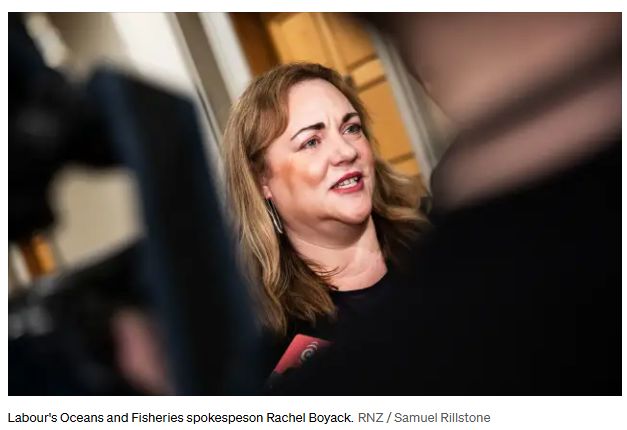
Labour Oceans and Fisheries spokespeson Rachel
Boyack welcomed the delay, saying the bill should be
scrapped altogether.
“There’s so much opposition to
the bill that we think it needs to be completely pulled, and
if anything, if there’s to be any reform in this area, it
needs to start again from scratch.”
She
said about 18 requests for on-board camera footage had been
made under the Official Information Act so far.
“All
of those were declined; there have been a number that then
went to the Ombudsman, the ombudsman has upheld most of
those decisions by MPI.
“It shows that the system is
working, that by having cameras on boats, this type of
reporting can occur – but we don’t agree with Shane Jones
and New Zealand First that we should be further limiting the
public’s access to cameras on boats.”
Boyack said it
should be up to officials to decide whether it was
sufficiently in the public’s interests to release camera
footage.
The Greens’ Steve Abel suggested the delay
could make it an election issue, asking whether Jones would
campaign on the “harder line” regarding commercial
values.
Jones said it would depend on what his party
agreed to.
‘Lost in the noise’
Seafood NZ
chief executive Lisa Futschek said she was disappointed by
the decision not to progress the legislation.
“This
Bill is about bringing fisheries management into the modern
era,” she said. “The intention is to move away from a
one-size-fits-all process that can be slow and blunt, and
towards a legislative framework that is more responsive and
better matched to the realities of the job.”
She said
the Bill contained sensible reforms that would improve
efficiency, reduce compliance costs and enable better use of
technology.
“Some genuinely worthwhile reforms have
been lost in the noise. It was very clear those who lobbied
against were more taken with slogans than what could
actually have been
achieved.”
New Zealand’s public broadcaster, providing comprehensive NZ news and current affairs, specialist audio features and documentaries.
Radio New Zealand is a Crown entity established under the Radio New Zealand Act 1995. Radio New Zealand News are vital elements in our programming, providing impartial news and information to New Zealanders every day. Radio New Zealand (RNZ) provides listeners with exciting and independent radio programmes in accordance with the Radio New Zealand Charter.

