



Russell
Palmer, Political Reporter
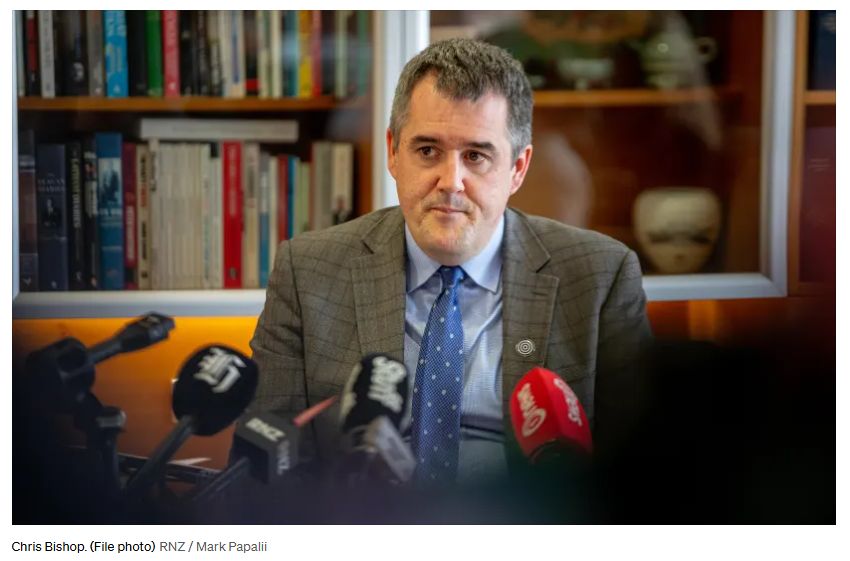
Transport
Minister Chris Bishop – who previously cast doubt on
fuel taxes rising next year – says after the Iran peace
deal they are still possible.
Speaking at the
Transport scrutiny hearing on Thursday morning, Bishop told
his Labour counterpart Tangi Utikere his stance was
unchanged.
“The status quo is just what I said, which
is it’s unlikely … but still possible,” Bishop
said.
“Just in the last few days the world has changed
again, we hope. Obviously, there’s been a deal done in the
Middle East, we’ve got to wait and see how that plays out
but fuel price is down compared to a month ago, for
example.
“It may lead to more sustainable, a lower oil
price over time. It also may not, we just don’t
know.”
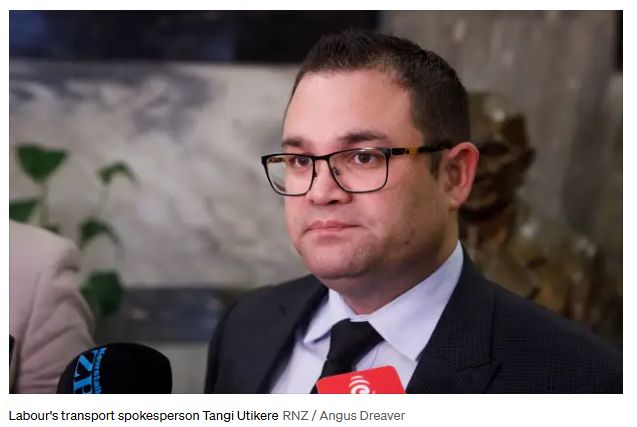
Labour
has ruled out increases to fuel tax. In a statement to RNZ,
Utikere said it was disappointing Bishop had not done the
same.
“We acknowledge that households are doing it
tough. National are incredibly out of touch to think what
they’re doing is going to work for household
budgets.”
Advertisement – scroll to continue reading
Bishop said it would still be a “hard ask”
for New Zealanders to “stump up with a 12-cent rise in
petrol tax and the equivalent in RUC (road user charges). On
the other hand I’m acutely conscious… the land transport
funding system is not sustainable the way it is at the
moment”.
Bishop had been working on scrapping fuel
taxes in favour of digitally monitored road user
charges.
He pointed to fuel taxes not rising since
2020, Labour having kept them steady during the Covid
pandemic being followed by National’s promises not to
increase them this Parliamentary term – delaying Labour’s
previously planned increases to next year.
He had
earlier said it was important to get the switch to all
vehicles paying road user charges right and “build social
licence” – helping the public understand what it would mean
and support it – saying the government was “not rushing
it”.
In the meantime, fuel excise charges and the
equivalent increase in RUC – currently scheduled for 1
January next year – would need to go through
Parliament.
“I don’t have a fixed date,” Bishop said
on that.
Transport funding plan for next year may be
delayed
The minister was unable to say when the next
government Policy Statement for Land Transport, which sets
out government plans for transport investment from 1 July
2027, would be completed – saying it was “possible” that
would not be complete by the end of the year.
“We
don’t have a fixed date for it … it is challenging because
obviously we’ve been dealing with the fuel situation in the
last few weeks and months, and that has discombobulated
things somewhat.”
He said the Transport,
Infrastructure and local government sectors had often told
him the “three-year wild oscillations in GPSs are
unhelpful”, noting he had previously talking about changing
them to a 10-year timeframe.
“There’s a difficulty
there with the way the Budget process works, and just the
Crown forecasting and fiscals – so that’s a subsidiary
issue, but related.
“I would envisage some change to
the next draft GPS that we consult on but it’s not going to
be a wild change.”
Bishop pushed back on the
suggestion legal changes would be used to bring maintenance
funding up to 60 percent of the transport total, as
recommended by the Infrastructure Commission.
“We
haven’t talked about legislating for the 60 percent figure,
because that’s just a rough guide, like, don’t get fixated
on 60 percent,” he said.
“What we’ve talked about
legislating is long-term asset management plans that will be
a requirement of government agencies.”
While it would
not apply to the entire sector, the 60 percent figure would
apply to the New Zealand Transport Agency after legislation
passed in 2027, he said.
Roads of National
Significance
Bishop confirmed there was no newer cost
estimate for the various Roads of National Significance
(RONS) since the $56 billion figure he confirmed in
November.
“We tend to focus on it more at an
individual road level,” he said. “There’s a spectrum of
readiness.”
“Hawke’s Bay’s in construction now; Ōtaki
about to go subject to commercial procurement decisions;
about to hit go on Northland; obviously Cambridge to Piarere
… we’ll have a final cost on by the end of the year, give
or take.
“Those are projects further up the food
chain, but then there’s projects like the North West
Alternative State Highway, for example, which … how much
is that road going to cost, who knows, really. I mean, we’ve
got a forecast, we’ve got an estimate, but we don’t know …
it could be 20 years away.”
When that earlier estimate
was arrived at, Bishop had indicated the government would
not be able to afford the cost of funding all those roads as
promised at the 2023 election, and they would need to be
rescoped, resequenced.
Asked how soon that would be
done and made public, he could give no more specific answer
than “soon”.
“I don’t know. I mean, people have
different definitions, I’ll just say soon. It’s a
challenging piece of work, the fuel crisis has not helped
matters … I think people perhaps are discovering a bit
more than they knew before: you can’t just build a road
tomorrow.
“There’s an enormous amount of work that
goes into all the pre-implementation work, and the roads are
at different stages of that as well.”
He said the
rescoping of the projects would likely curb the costs,
noting the $56b figure was “like a finger in the
air”.
RONS projects considered “high risk, high value”
would also be put through the new investment assurance
process that was part of the National Infrastructure Plan
supported by National, Labour and the Greens, he
said.
He also confirmed road tolling would also be
considered as part of future cost-benefit assessments, once
the system was in
place.
New Zealand’s public broadcaster, providing comprehensive NZ news and current affairs, specialist audio features and documentaries.
Radio New Zealand is a Crown entity established under the Radio New Zealand Act 1995. Radio New Zealand News are vital elements in our programming, providing impartial news and information to New Zealanders every day. Radio New Zealand (RNZ) provides listeners with exciting and independent radio programmes in accordance with the Radio New Zealand Charter.

