



Lauren
Crimp, Political Reporter
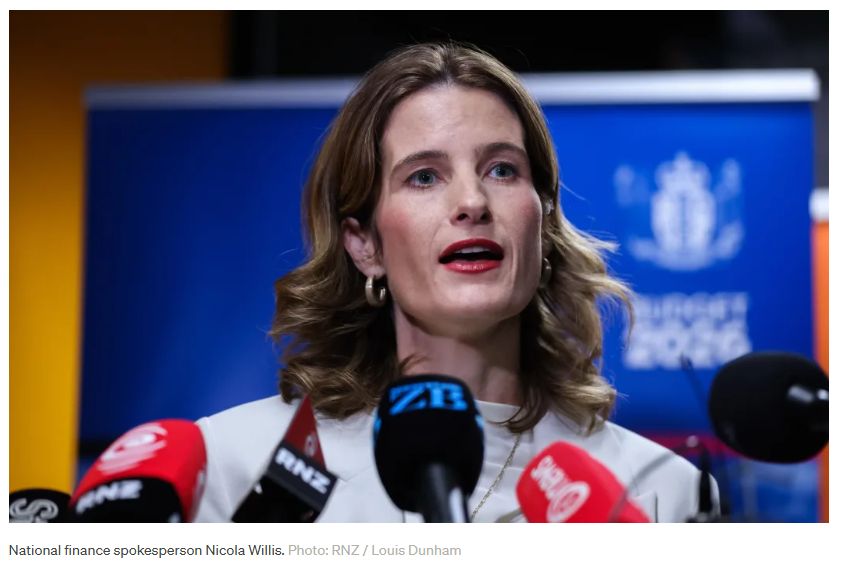
An
election-year tiff about policy spending highlights the need
for an independent watchdog to weigh in on the country’s
big, expensive problems, an economist says.
On Sunday,
National finance spokesperson Nicola Willis unleashed
on Labour, claiming the opposition was $18.2 billion
short on funding for its promised policies.
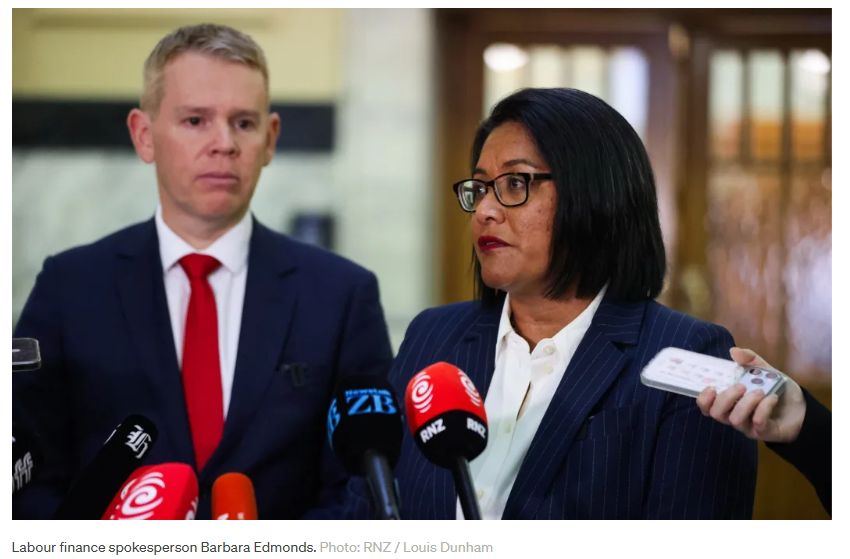
Labour
finance spokesperson Barbara Edmonds fired back, calling
National “desperate” for producing the document it called
‘Labour’s Hidden Bill’.
Economist Cameron Bagrie said
the argument was nothing new.
“We saw this in 2017,
2020, 2023… one side has a crack at the other in regards
to making their numbers sort of stack up,” he said. “We’ve
been here before, not surprising.”
All political
parties partook in “promise me-nomics”, claiming they could
get the books back to surplus – and all would struggle to do
so, he said.
“You’ve got to make tough decisions and
those tough decisions involve trade-offs between tax versus
infrastructure versus spending cuts.
Advertisement – scroll to continue reading
“There’s no easy
way out, going from a large deficit back into surplus, and
everybody’s promising that, the question is, how do you
achieve it?”
Bagrie said cross-party money squabbles
could be solved by an independent fiscal watchdog, separate
from Treasury.
Both Treasury and the Organisation for
Economic Co-operation and Development (OECD) suggested
that measure.
“Guess what, when you bring a little
bit more independence into the game, the evidence, according
to the OECD, is you do start to see a little bit more fiscal
responsibility across the political fence,” Bagrie
said.
An
independent body would not assess election campaign
promises, he said.
“You’d expect [it] to be wading in
pretty heavily – and a lot more active and vocal than
Treasury is – on big issues such as population age, in
particular, the fiscal cost,” Bagrie said, referring to
superannuation.
“These watchdogs… they bring a lot
of independence and autonomy to the table, that pours a lot
more sunlight on some of these key issues.”
Labour
comitted to pay equity
Edmonds told Morning Report
the Labour party was committed to reinstating pay equity
legislation but said the party could not give an exact cost
yet.
“We have to see which claims have actually
already been paid out and which new claims have started,
because the government also says that there is still a pay
equity regime.”
The National party said the policy
would cost $10.9b over four years.
Edmonds said Scrutiny
Week would give the Labour party another chance to get
more information in order to estimate a cost.
“We get
another chance at trying to crack into the redacted
information that Treasury redacted when they released it
last year.”
She also said discussions were also taking
place with the unions for the sectors representing affected
workers, to get information about their pay
negotiations.
Edmonds said the party did not have a
ballpark figure on the costs yet but would try to ensure
they have a sufficient contingency in its fiscal
plan.
“For us, we have clear priority areas, we need
to make sure that that’s where the focus is.
“If it
means we need to reprioritise some of this government
spending, we will do so.”
Edmonds said it was not
unusual that all its planned spending details had not yet
been announced.
“Nicola Willis is not a junior
politician,” she said. “She knows what happens during
campaign years, she knows that parties release fiscal plans
closer to the election, which shows the fully costed
plan.”
National has not released its plan
either.
Both Edmonds and Willis indicated their fiscal
plans would be revealed closer to the election, but neither
would set a date.
Luxon says Labour needs to ‘front
up’
National party leader Christopher Luxon said if
Labour had a way to fill the gap in their plan it would
require increasing taxes or borrowing and they needed to
“front up”.
“I think they do need to be held
accountable for actually, how are they going to fund their
spending intentions?”
He said he was not worried that
some of Labour’s cost of living policies would resonate with
voters.
“I’m struggling to see how they make sense…
I think voters understand we need responsible, disciplined
financial management in government and not spend more,
borrow more, tax more, which is what is the default policy
of Labour.”
He said the country had been through
economically difficult times and said they did not want to
put economic recovery at risk.
“We’ve got a surplus
coming into track in 2028, we want to make sure we don’t put
any of that at
risk.”
New Zealand’s public broadcaster, providing comprehensive NZ news and current affairs, specialist audio features and documentaries.
Radio New Zealand is a Crown entity established under the Radio New Zealand Act 1995. Radio New Zealand News are vital elements in our programming, providing impartial news and information to New Zealanders every day. Radio New Zealand (RNZ) provides listeners with exciting and independent radio programmes in accordance with the Radio New Zealand Charter.

