



Coco Lance
RNZ Pacific digital journalist
Layla
Bailey-McDowell Māori news journalist
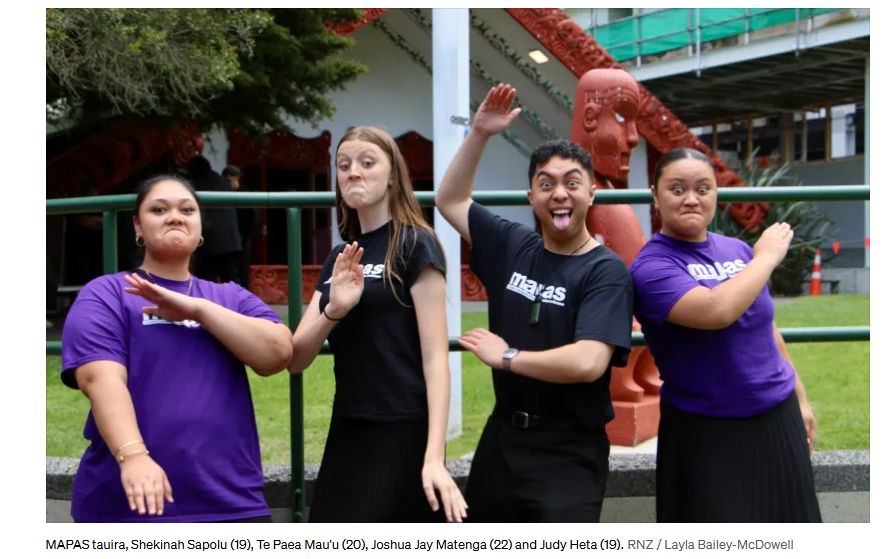
For
more than 50 years, the Māori and Pacific Admission Scheme,
commonly known as MAPAS, has aided Māori and Pacific
students into the healthchare system.
As those behind
the scheme take stock of what has been achieved to date,
they remember the contribution of Emeritus Professor Colin
Mantell (Ngāi Tahu), whose work helped shape MAPAS and
different aspects of Māori and Pacific healthcare,
generations of health leaders gathered
at Waipapa Taumata Rau on Wednesday.
For current
and former MAPAS students and graduates, Prof Mantell’s
lifelong commitment to Māori and Pacific health was a stark
reminder of why the programme continues to
matter.
“The biggest thing is that MAPAS provides the
foundation to be able to unify one another,” Joshua Jay
Matenga, 22, said.
“The idea of MAPAS is to make a
collective empowerment to bring us together, but also to be
able to celebrate both the diversity and the academia as
well, of our achievements.
Advertisement – scroll to continue reading
“It’s more of a platform
that raises the ability to emphasise the Māori success and
the Pacific success that we have … so if anything, it’s
more about trying to embrace what we already have and
bringing it to a higher light.”
Te Paea Ma’u, 20,
agreed with Matenga’s sentiments, describing MAPAS as a
programme focused on equity.
“It’s so important that
we have a health system that is representative of the
populations that we have, and just due to the systemic
effects of colonisation and the inequities that have
persisted from that, we don’t currently have that healthcare
system,” Ma’u said.
“The whole role of MAPAS is to
just ensure that we do have that for the future… it is
just giving the opportunity for tauira who do want to get
into healthcare that opportunity, that they can if that’s
what they want.”
ACT leader David Seymour has called
ethnicity-based admission pathways discriminatory, while the
National-ACT coalition agreement led to a government review
of targeted medical school admission
programmes.
Seymour’s criticism has not extended to
the Rural Admissions Scheme, which selects students based on
their attendance at rural primary and secondary
schools.
“I oppose racial discrimination. I don’t
oppose living in the country. I don’t oppose, for example,
trying to train rural GPs. I don’t oppose bonding people to
work in the countryside where it’s hard to get people …
those are separate issues,” he previously told
RNZ.
The review has reportedly been completed and is
awaiting release.
Samoan doctor Joseph Johnston
graduated through MAPAS in 2025, and is now in his first
year as a house officer at Waitākere Hospital.
He
will move to Middlemore Hospital next year as he works
towards his long-term goal of becoming a
surgeon.
Since leaving university, Johnston said the
importance of having Māori and Pacific health professionals
had become even more apparent.
While in medical
school, tauira are taught about health inequities and the
wider social and economic factors influencing Māori and
Pacific health.
But Johnston said that real-life
experience in hospitals had clearly shown him what
representation could mean in those everyday interactions
with patients.
“I think just being a voice and
actually representing our people and advocating for our
people in spaces that there’s not a lot of advocacy for …
is something that’s really important,” Johnston
said.
Disproportionate statistical
representation
Māori experience a life expectancy
gap of around seven years and greater barriers to accessing
healthcare.
The current gap in representation shows
that Māori make up less than 6 percent of the medical
workforce, despite making up around 18 percent of the
population.
Pacific representation among doctors is
even lower.
Across a variety of measures, Māori and
Pacific peoples continue to experience substantially worse
health outcomes. Māori women have more than three times the
lung cancer registration of non-Māori women. Māori adults
have twice the rate of ischaemic heart
disease.
Pacific life expectancy remains about six
years behind that of non-Māori, non-Pacific people. They
also have the highest rates of diabetes and gout examined in
the ethnic
groups observed in Tupu Ola Moui.
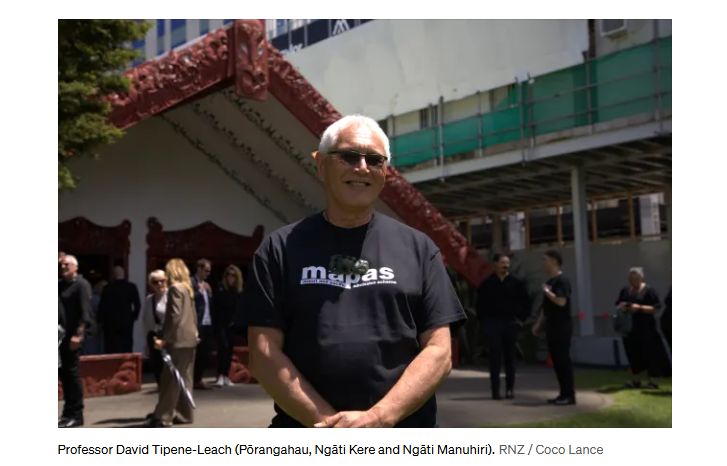
Professor
David Tipene-Leach, who was involved in the programme’s
early development, said the ultimate goal was a Māori and
Pacific health workforce capable of serving its own
communities.
“What we need is allies who are there
with us in the battle for good health for Māori [and]
Pacific people. In fact, for everybody in Aotearoa New
Zealand who, at the moment, don’t get a fair deal,” he
said.
“MAPAS graduates pass at the same rates. They
stay in New Zealand. They don’t go overseas. They are more
likely to become general practitioners, and we know there’s
a shortage of that,” Tipene-Leach added.
“They’re more
likely to go into the regions and to rural medicine, and we
know there’s a shortage there. So the argument is that, and
I’ve heard [Prof Paparangi Reid] say this time and time
again, is that these are exactly the doctors that we should
be training in New Zealand.”
Johnston shared a similar
sentiment – that much of the criticism of MAPAS comes from a
misunderstanding of the programme, including a misconception
that Māori and Pacific students face lower
standards.
“There’s the misunderstanding that we get
in easier and that we don’t have to meet the same
requirements,” he said.
“Our graduates meet those
requirements and go above and beyond those requirements. And
actually as we enter the workforce, some of the best doctors
that I’ve been lucky enough to work with this year have been
MAPAS graduates.”
Current students made a similar
distinction, clarifying that MAPAS is not about giving
somebody an advantage, but rather
addresses an existing disadvantage.
“Removing one
aspect will eventually lead to the removal of a bigger
kaupapa there, so I’d say it would be very hard for us to be
involved in this field or in this profession if this wasn’t
here in the first place,” added Matenga.
“I think that
when you stand in a place of privilege, to provide equity
feels like you’re providing inequality to that
person.
“We are just trying to bring everyone up to
the same starting point. We’re not trying to lift those
above anyone
else.”
New Zealand’s public broadcaster, providing comprehensive NZ news and current affairs, specialist audio features and documentaries.
Radio New Zealand is a Crown entity established under the Radio New Zealand Act 1995. Radio New Zealand News are vital elements in our programming, providing impartial news and information to New Zealanders every day. Radio New Zealand (RNZ) provides listeners with exciting and independent radio programmes in accordance with the Radio New Zealand Charter.

