



Coco Lance
RNZ Pacific digital journalist
A
university admissions scheme aimed at building the Māori
and Pacific medical workforce has found itself at the centre
of a political debate.
While some politicians are
pushing to scrap the Māori and Pacific Admissions Scheme,
or MAPAS, university students themselves have shared more
nuanced views about the programme, pointing out its value in
promoting equity.
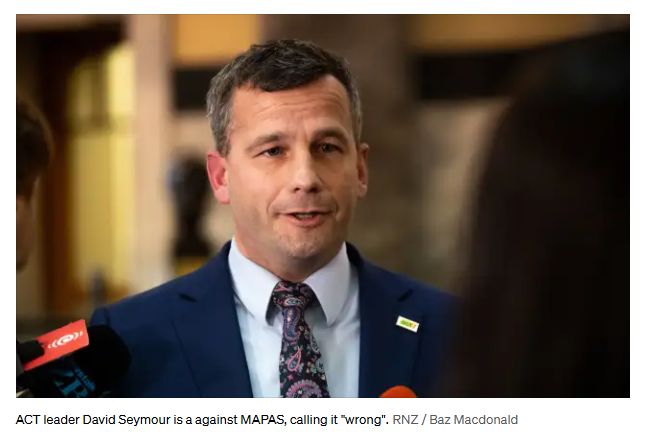
Leading the chorus of voices against
MAPAS is ACT Party leader David Seymour, who believes the
programme is “wrong” and “a clear case of racial
discrimination”.
A New Zealand First candidate, Elliot
Ikileili, told Pacific Waves he backed Seymour’s
position, stating that, while his party did not have a
position on the scheme, it was “against race-based
policies”.
“The MAPAS scheme does have some
fundamental problems with it, which is that it is very much
a racially discriminative policy … so there’s no doubt
about it that it is race based.”
MAPAS is run by the
University of Auckland, while the University of Otago
operates similar Māori and Pacific admission
pathways.
The scheme was established in 1972 to
provide a special pathway to train more Māori and Pasifika
doctors at Auckland University.
Government
review
Advertisement – scroll to continue reading
A review was commissioned following the
National-ACT coalition agreement in late 2023, which
committed the government to examining targeted medical
school admission programmes, such as MAPAS.
The review
by the Ministry of Health has reportedly been completed,
although there has been no public release of the
findings.
Professor Warwick Bagg, dean of the
University of Auckland’s Faculty of Medical and Health
Sciences, previously
told RNZ the review should be released “so the public
can judge its findings for themselves.”
“All medical
students, regardless of admission pathway, must meet the
same academic, clinical and professional standards before
they graduate,” Prof Bagg said.
“Every student
selected to study medicine at the University of Auckland has
earned their place and is expected to demonstrate the
competence, professionalism, and commitment required of a
future doctor.”
Seymour
previously told RNZ Midday Report that he
had not seen the full review.
However, he said
based on briefings he had received, it appeared “the
review’s authors were under the misapprehension that their
job was simply to show that some good might be done by this
discrimination – not that it’s consistent with New Zealand’s
international obligations”.
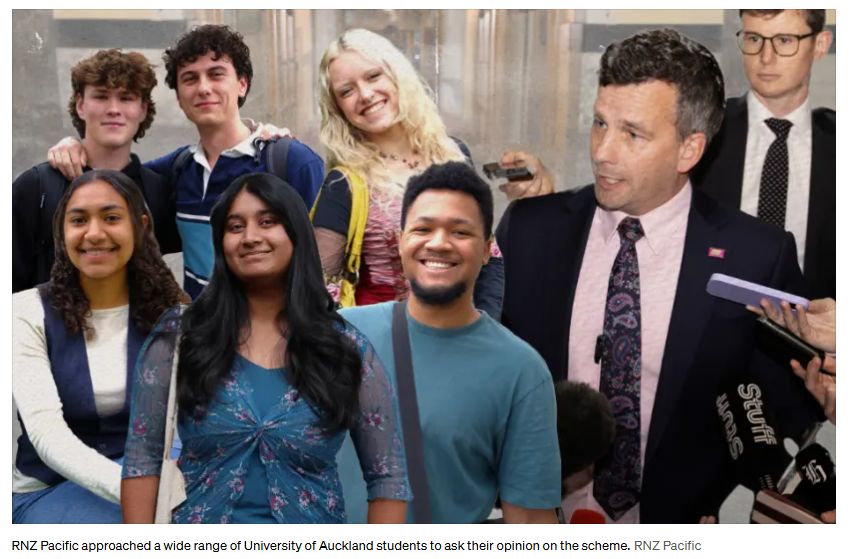
RNZ Pacific approached a
wide range of University of Auckland students to ask their
opinion on the scheme. Some did not know enough about the
scheme to share an informed opinion, while others were
indifferent to the issue.
However, those who did agree
to speak shared unanimous support for MAPAS, with students
strongly backing its role in improving opportunities for
Māori and Pacific students.
So, what do students
think?
Law student Sabreen Islam said that the MAPAS
controversy is a “dangerous dog whistle”, fuelled by
“inflammatory language.”
“I think saying that [MAPAS]
is based on race, or [that] it is really dangerous, … the
co-opting of that sort of language where it doesn’t belong
… I think it’s a dangerous dog whistle,” she
said.
Islam believes political rhetoric “for clicks
and gains” does not benefit anybody.
MAPAS is a
response to longstanding inequities rather than an unfair
advantage, she said.
“Māori and Pacific communities,
from my knowledge, have been systematically disadvantaged
for many, many years. So these schemes are just trying to
rectify that, and I think they’re a net positive for
everybody,” she said.
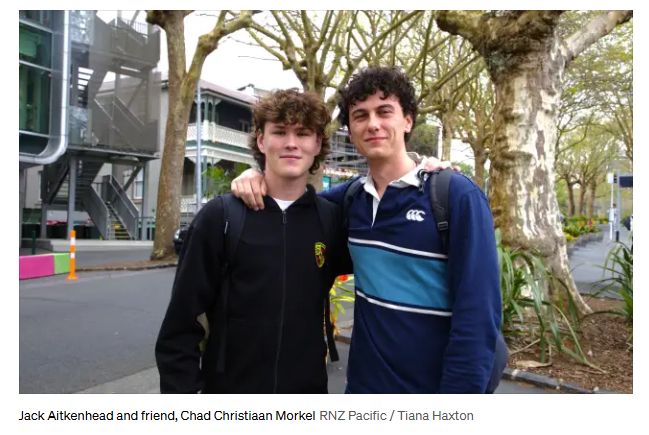
Another student Jack Aitkenhead
said he understood ACT’s emphasis on equal opportunity, but
supported MAPAS because of the systemic disadvantages Māori
and Pacific communities have faced.
“However, [MAPAS]
promotes equity, where Māori and Pasifika have historically
and continue to be systemically oppressed.”
Aitkenhead
said programmes such as MAPAS come from a place of trying to
make things fairer and equal and address historical
injustices.
“In the cases where maybe someone who is
Māori or Pasifika are in a higher economic standpoint,
where they are still able to have access to these schemes,
that is where it gets a bit of a grey area because there
[are] people of other ethnicities, races who suffer from the
exact same injustices.”
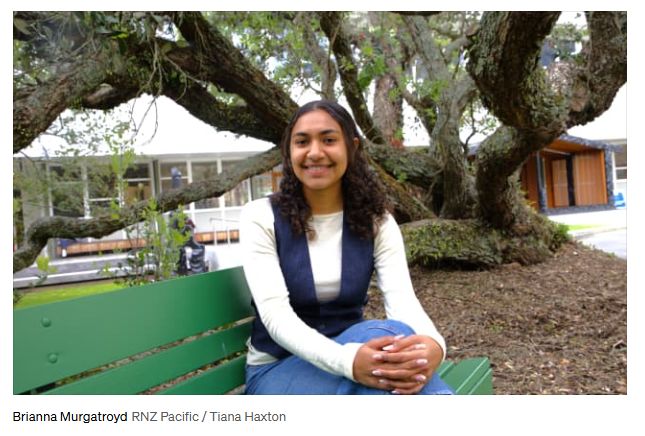
Final-year student Brianna
Murgatroyd said programmes such as MAPAS, as well as
scholarships targeted at specific demographics, had
inarguably helped students access higher education.
“I
have seen a lot of students really benefit from being able
to have the opportunity through not just the MAPAS scheme,
but like the Pacific scholarship. That has really been a
gateway into letting people get into academia,” Murgatroyd
said.
At
the same time, Murgatroyd said she could “understand some of
the criticisms [of MAPAS]”, although she felt opponents
often misunderstood the purpose of such
programmes.
“It’s important to understand the scheme
in its entirety,” she said.
“It is a stepping stone.
It is not for the entire time they are at the university.
MAPAS is just for the first year, and so being able to
really understand what it actually does will be able to
alleviate the fears of this type of racial discrimination,
because at its core, that is not what it is,” she
said.
Another student Lea Nova Tisch said Māori and
Pacific students were an enrichment of her learning
environment, and MAPAS was one example of a pathway that
opens doors for people who may otherwise miss out on higher
education.
“I feel like the Māori and Pasifika people
in my cohort bring so much to my learning experience here,
and having these pathways for people who might not otherwise
have access to this sort of education is amazing,” Tisch
said.

She
said the scheme helped counter barriers Māori and Pacific
students continue to face within a “westernised” tertiary
education system.
“I think that the university system
in general, all over Aotearoa, is stacked against Māori and
Pasifika students.”
‘A scheme like this
helps’
Politics student Ife Ugwuedeh said MAPAS helps
create opportunities for Māori and Pacific students who
have historically faced barriers that “many others have
not.”
“I think it is good for Māori and Pacific
students. A scheme like this helps them become the best
students they can be and gives opportunities to people who
might not otherwise have them,” Ugwuedeh said.
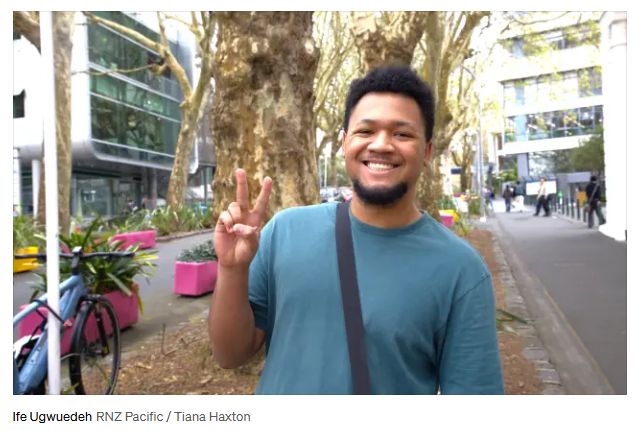
He
said the scheme was not about creating unfair advantages,
but helping achieve greater fairness, rejecting ACT’s notion
that MAPAS promotes “unfairness”.
“I don’t think
unfairness is the right word. I think it is more getting to
a point of fairness. We have made big strides forward, but
we are still not at a point where we can really say we are
equal.”
‘Less capable’ misconception
Islam
said she felt that a common misconception was that Māori
and Pacific students who go through MAPAS are “less
capable.”
“The students who come through these
programmes are just as smart and capable and have the
potential to make a really big difference in society, just
like anyone else, and deserve a chance to do so,” she
said.
She added that after six years at university,
MAPAS had never negatively impacted her own experience as a
non-Māori, non-Pasifika student.
“I have never once
felt threatened or impacted by these kinds of schemes. It
really does not make a difference for me. If anything, it
just makes a difference for people who really need
it.”
For Tisch, supporting pathways such as MAPAS was
a way to simply improve access for underrepresented
students, and also address historical inequities. She
believes those who believe in the benefits of such
programmes were “very much in the right”.
She added
that she did not agree with Seymour’s view on
MAPAS.
“I think that [those] who are speaking out
against [Seymour’s] racism … are doing a great job, and I
would love to see them take an even stronger stance in
standing up for marginalised
communities.”
New Zealand’s public broadcaster, providing comprehensive NZ news and current affairs, specialist audio features and documentaries.
Radio New Zealand is a Crown entity established under the Radio New Zealand Act 1995. Radio New Zealand News are vital elements in our programming, providing impartial news and information to New Zealanders every day. Radio New Zealand (RNZ) provides listeners with exciting and independent radio programmes in accordance with the Radio New Zealand Charter.

