



The
head of a women’s rights organisation in Fiji has told a
parliamentary committee the country should introduce paid
menstruation leave for female workers as part of labour law
reform and to remove “discrimination”.
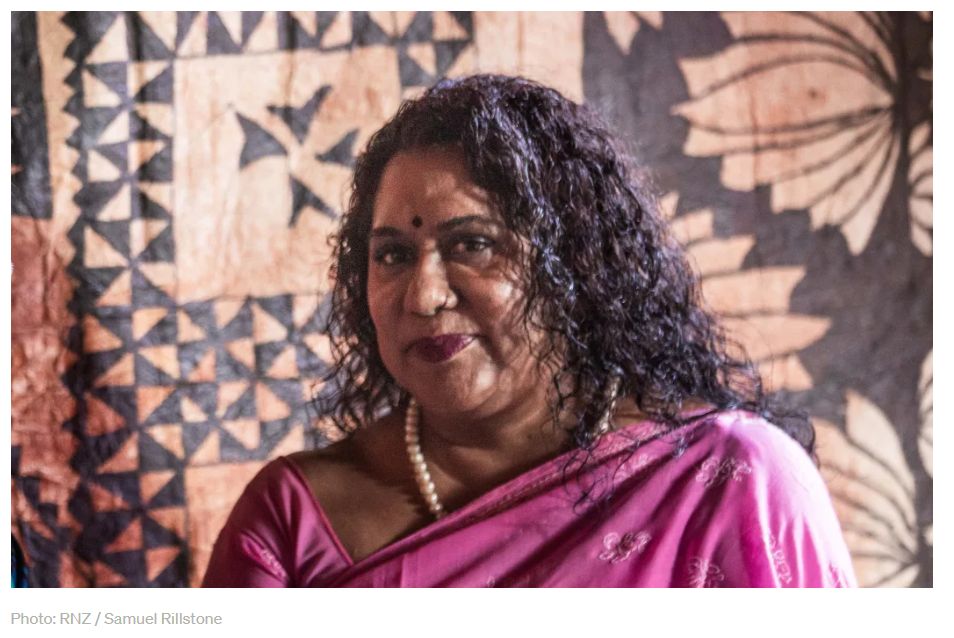
Fiji Women’s
Rights Movement (FWRM) executive director Nalini Singh said
most workplaces in Fiji are not designed to support women
when they menstruate.
Fiji does not have any
provisions for paid menstruation leave under its existing
employment laws. The government’s Employment
Relations (Amendment) Bill proposes the introduction of
such a leave “specific to women (including menstrual leave
and miscarriage leave)…”
According to the Bill,
“where a worker has completed more than three months
continuous service with the same employer may use 3 of her
10 days paid sick leave during each year of service if she
has severe or debilitating menstruation”.
However,
while making a submission to the Standing Committee on
Economic Affairs on the Bill on Monday, Singh said the law
must go further, saying “three days … is not fair because
we don’t menstruate only three months. It’s every
month.”
Advertisement – scroll to continue reading
She said the FWRM wants the proposed
legislation to include provisions that provide reasonable
accommodation for women so that they can menstruate at work
with dignity.
‘Biologically, women are
different’
A 12-day paid menstruation leave, distinct
from other leave provisions, would be a “step in the right
direction”, she said.
“When we advocate for gender
equality and work towards removing the existing biases …
we have to move away from ‘it’s going to be too expensive to
employ women’,” she said.
“If we believe that we are a
modern society, we recognise women as having skills and
capabilities to do any type of work [that] matches their
education, then we have to be prepared to also understand
that biologically, women are different, and that cannot be
used as a point of discrimination.”
Responding to a
question from a male committee member on whether FWRM would
consider reducing annual leave to compensate for the
additional days of paid menstruation leave, Singh said
“menstruation is not an illness”.
“I would not
consider reduction in sick leave compared to menstruation
leave,” she said.
“The stigma around this issue is
finally breaking officially now … because it’s been
recognised in legislation. For years, this has not been
talked about in an open way”
“The pain, we can’t
describe it and unless you go through it, you won’t
understand what that is. So recognising that as a special,
unique thing that some women will need is, to me, a step in
the right.”
The FWRM’s submission also called for a
menopausal leave and paternity leave increases.
When
asked by the chair of the committee on what the implication
of such a provision could have on Micro, Small and Medium
Enterprises (MSMEs), which account for nearly 60 percent of
the nation’s workforce, Singh said the law would need to be
“a little bit more detailed”.
“If we were truly going
to make our employment laws applicable and useful … there
is still scope to be a little bit more detailed so that we
close the loopholes and we don’t look at everybody in the
same way./
“At the moment, the Bill is looking at
everyone, all the employers, in the same way.”
The
Bill, tabled in Fiji’s parliament last August, aims to
modernise Fiji’s labour laws in line with the constitution
and international standards, according to the
government.
It proposes more than 140 amendments to
the Employment Relations Act 2007. Public hearings are
currently being held across Fiji to gather input from
stakeholders.
A final report is expected sometime this
year.
New Zealand’s public broadcaster, providing comprehensive NZ news and current affairs, specialist audio features and documentaries.
Radio New Zealand is a Crown entity established under the Radio New Zealand Act 1995. Radio New Zealand News are vital elements in our programming, providing impartial news and information to New Zealanders every day. Radio New Zealand (RNZ) provides listeners with exciting and independent radio programmes in accordance with the Radio New Zealand Charter.

