



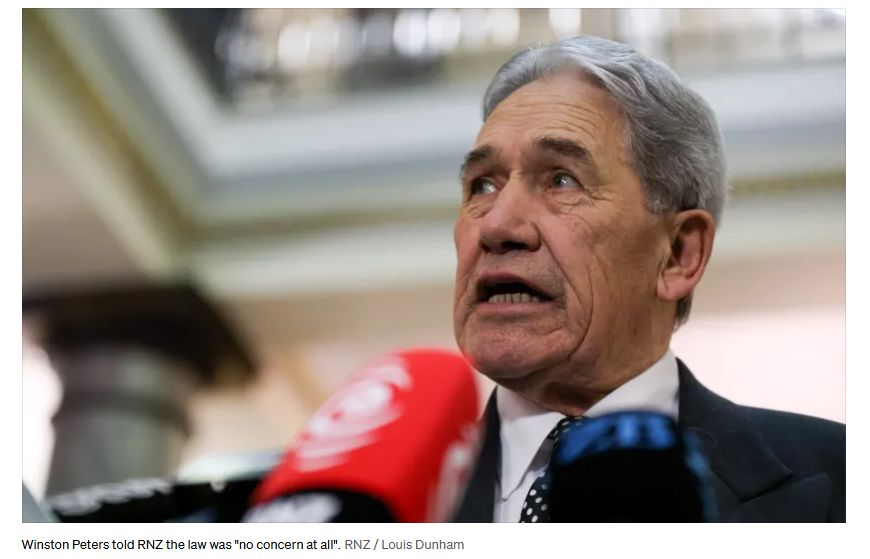
Foreign
Affairs Minister Winston Peters says he’s not by concerned
by China’s new ethnic unity law, stressing it has no power
or authority in New Zealand.
It comes after
Australia’s government lodged
objections with Beijing about the legislation and its
potential to “curtail the rights and freedoms of individuals
beyond China’s borders”.
But speaking at Parliament on
Wednesday, Peters told RNZ the law was “no concern at all”
as it had no standing outside China, regardless of what it
might say.
“You might make the claim, but it doesn’t
apply,” he said. “Neither in New Zealand, Australia, the
United States, UK or anywhere else.”
Asked whether he
would raise the issue with his Chinese counterpart, Peters
replied: “It doesn’t have any standing, so why would I raise
it?”
“If you’re coming to New Zealand, well, you sign
up to New Zealand’s law and New Zealand’s flag and New
Zealand’s democracy. Otherwise, don’t come.”
China’s
Ethnic Unity and Progress Promotion law sets out Beijing’s
vision of a “shared” national identity, requiring
governments, schools and public institutions to promote
ethnic integration and loyalty to the state.
Advertisement – scroll to continue reading
Beijing
says the law will foster social cohesion and national unity,
but rights groups argue it further entrenches policies aimed
at assimilating ethnic minorities.
It also includes a
clause stating that people and groups beyond China’s borders
can be held legally accountable for undermining ethnic unity
and progress.
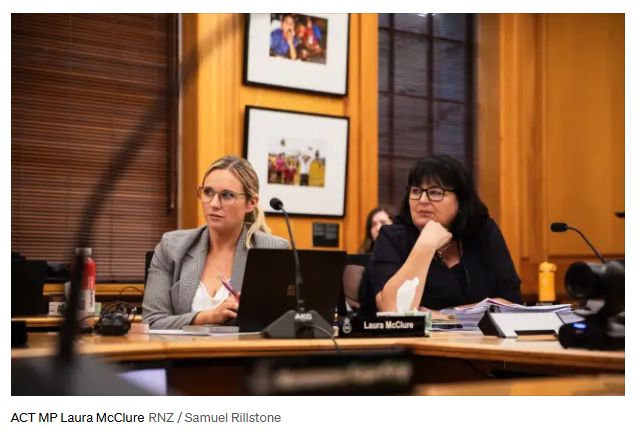
Earlier on Wednesday, ACT MP Laura
McClure told Midday
Report she would be emailing Peters to ask him to raise
the matter directly with China.
“[The
law] is a suggestion that Beijing believes it can reach
beyond those borders and potentially intimidate or punish
people living in free democracies like New Zealand or
Australia or Canada.”
McClure – who’s a member of the
Inter-Parliamentary Alliance on China – warned of the
implications for Chinese people living in New
Zealand.
“There are groups already in New Zealand that
feel that they can’t freely… go to a protest, for example,
or attend a Taiwanese event without feeling the intimidation
from the Chinese government.
“It’s really important
that we don’t see an escalation in that behaviour because of
this potential legislation.
“And I think we should
make it very clear to the Chinese government that New
Zealand is sovereign and we do have our own domestic laws
here. And we do protect the rights and freedoms of New
Zealanders, no matter if they’re born here or if they
immigrate here.”
McClure was among the four New
Zealand MPs banned from entering China for a year after a
visit to
Taiwan.
New Zealand’s public broadcaster, providing comprehensive NZ news and current affairs, specialist audio features and documentaries.
Radio New Zealand is a Crown entity established under the Radio New Zealand Act 1995. Radio New Zealand News are vital elements in our programming, providing impartial news and information to New Zealanders every day. Radio New Zealand (RNZ) provides listeners with exciting and independent radio programmes in accordance with the Radio New Zealand Charter.

