



Tuwhenuaroa
Natanahira Political reporter
Police
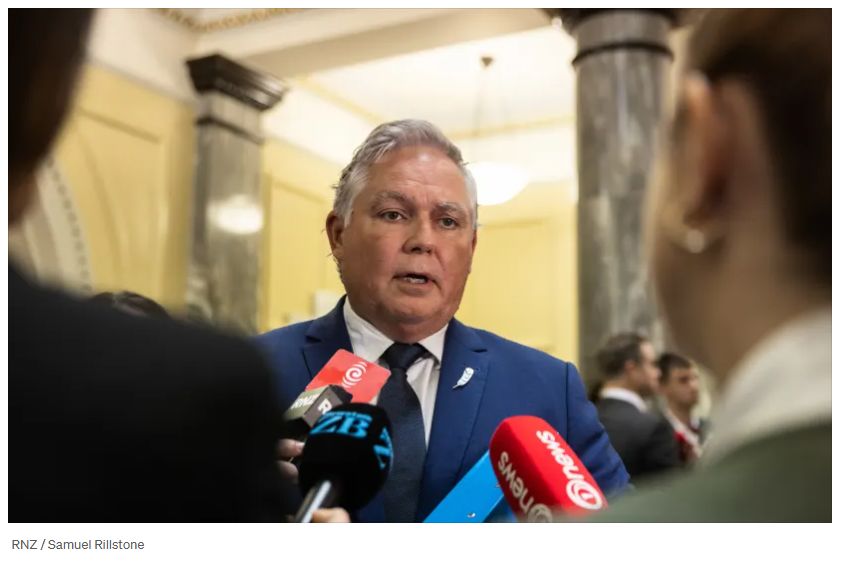
Minister Mark Mitchell says people should simply “stay away”
from drugs, following a spate of suspected overdoses in
Wellington.
The New Zealand Drug Foundation is calling
for greater legal protections for people experiencing a drug
overdose.
It comes after one
person died and five
others were hospitalised following a string of suspected
overdoses of the fantasy drug GHB in Wellington in recent
days.
A woman died at Woofingtons, a castle-like
mansion in Wellington after drinking
GHB from a bottle, her friend earlier told
RNZ.
Parliament’s health select committee is
considering submissions on a ‘Good
Samaritan’ bill which would provide legal protections
for people experiencing a drug overdose, those who call 111,
and others who remain at the scene to help.
Advertisement – scroll to continue reading
Minister
of Police Mark Mitchell said he had not yet had an official
brief on the matter, only “initial information”, but police
were investigating as part of broader investigation into
illegal drugs.
Pressed on whether he was open to
enacting a ‘Good Samaritan’ law, Mitchell said he needed
more advice on the issue.
“I need to get advice on
that. You don’t want to set up perverse outcomes in terms of
providing a defence of people that are dealing with and
peddling harm in communities, so we wouldn’t allow that to
happen.
“If a bill is going through the house, then
there will be some advice provided but who is the person
putting in the 111 call? Is it a drug dealer that’s peddling
misery in the communities?”
Mitchell said New Zealand
had some of the best health support and “safety nets” in the
world.
“At the end of the day, my message would be
don’t use drugs, stay away from this. People are making very
poor decisions that are impacting very negatively on their
own health.”
“The state can do as much as it can to
try and stop drug dealers and clamp down on gangs and deal
with transnational crime and disrupt supply chains. At the
end of the day, a big part of this is personal
responsibility, and people are choosing to use harmful
drugs, and they should choose not to,” he said.
New
Zealand Drug Foundation executive director Sarah Helm told
Morning Report there are a group of three “G-type”
substances – GHB, GBL and 14BD.
She said they give the
user a bit of a “euphoric effect” similar to alcohol. It can
make a user a “bit groggy and sexualised”.
The
substances are relatively potent, Helm said. 14BD commonly
had a slow onset, she said, leading people to think the drug
hadn’t worked and they typically took more.
It was
“vital” that users called for help if they needed it after
taking the drug and they should be able to alert authorities
without fear of facing legal charges.
“It’s really
great that we have a law that protects people from going to
drug checking without being prosecuted. We need a similar
protection around calling for help.”
Currently, Helm
said users were too scared to call for help, worried that
police would arrive instead of an ambulance, and it was
“costing people’s lives”.
Helm told Morning
Report overdoses of these substances weren’t
uncommon.
People were just hearing more about this
cluster because the police were speaking out on
it.
“We have three people die every single week from
New Zealand from accidental overdose.”
Helm said while
there was a small percentage of people in New Zealand who
used G-type drugs, they were “quite potent” and carried more
harm that other substances.
She said she was attending
a select committee on Wednesday with two mothers who had
lost their children to drug overdoses.
They would be
talking about a bill that was before Parliament that would
protect people calling for help.
“They believe this
sort of legislation would make all the
difference.”
She encouraged people to visit drug
checking services to make sure they knew what they were
taking.
Detective Inspector Anna Grant said police
continue to investigate the matter as a priority given the
risk to the public.
The work included working to
identify if all cases were connected and where the supply
came from.
“Police strongly urge the public to take
extreme caution around drugs of this type.
“While it’s
safest not to use drugs at all, New Zealand’s drug early
warning system High Alert recommends at the very least
getting substances checked before taking them,” Grant
said.
Luxon and Hipkins open to banning sale of meth
pipes
Both Prime Minister Christopher Luxon and
Labour leader Chris Hipkins say they are open to banning the
sale of meth pipes.
Twenty-five-year-old Jodie
Rameka is on a campaign to rid her community of glass
methamphetamine pipes being sold in many $2 shops, vape
stores and dairies around Whangārei.
Luxon said
banning the sale of glass pipes was “may be something” his
government would look at, but he was focussed on expanding
drug crackdowns across the Pacific.
“That’s why you’re
seeing us work really closely with Australia, Fiji, Tonga,
and Samoa, because we have a Pacific problem around the
importation of meth.
“I spoke just a couple of weeks
ago with Prime Minister Rambuka about that issue, and we’ll
continue to make effort that way,” he said.
However,
the prime minister said he did not “see value” in
legislating a ban.
Meanwhile, Labour leader Chris
Hipkins said it was concerning that people could purchase
“something that’s effectively being sold as a meth pipe” so
cheaply.
“That’s really concerning, and we do need to
do a lot more about that, so if there’s a law change
required, I’m very open to considering it.”
The former
police minister said he was surprised to learn the sale of
pipe was not already illegal.
Asked if he thought
there should be more focus on cracking down on drug supply
chains across the Pacific rather than support services,
Hipkins said both needed to be done.
“Customs services
search around one percent of the shipping containers that
come into the country. There is going to be no foolproof way
of ever stopping methamphetamine getting into the
country.
“The intelligence gathering that we use has
resulted in some very impressive drug busts, but they need
to keep doing more,” Hipkins
said.
New Zealand’s public broadcaster, providing comprehensive NZ news and current affairs, specialist audio features and documentaries.
Radio New Zealand is a Crown entity established under the Radio New Zealand Act 1995. Radio New Zealand News are vital elements in our programming, providing impartial news and information to New Zealanders every day. Radio New Zealand (RNZ) provides listeners with exciting and independent radio programmes in accordance with the Radio New Zealand Charter.

