



Jimmy
Ellingham, Field Correspondent
Louisa
Cleave, Senior Producer,
Checkpoint
- Officials caution that after
resignations retail crime advisory group doesn’t have
security or facial recognition expertise - Group
chairman says it will deliver robust reports on these issues
to minister - Ministry of Justice says its advice
still stands.
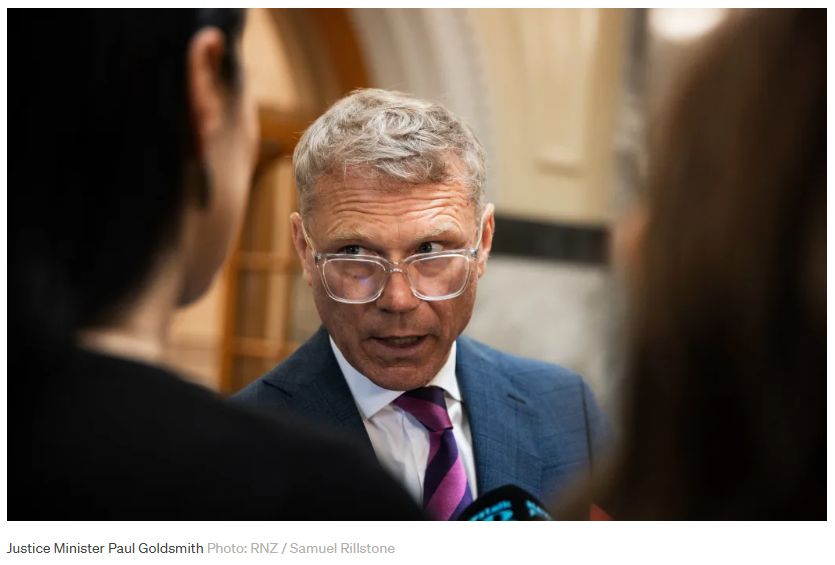
Justice
Minister Paul Goldsmith has ignored advice from officials
warning the remaining members of the ministerial advisory
group charged with tackling retail crime don’t have relevant
expertise in matters it will issue advice about.
Three
of the five members of the Ministerial Advisory Group for
Victims of Retail Crime resigned late last year and early
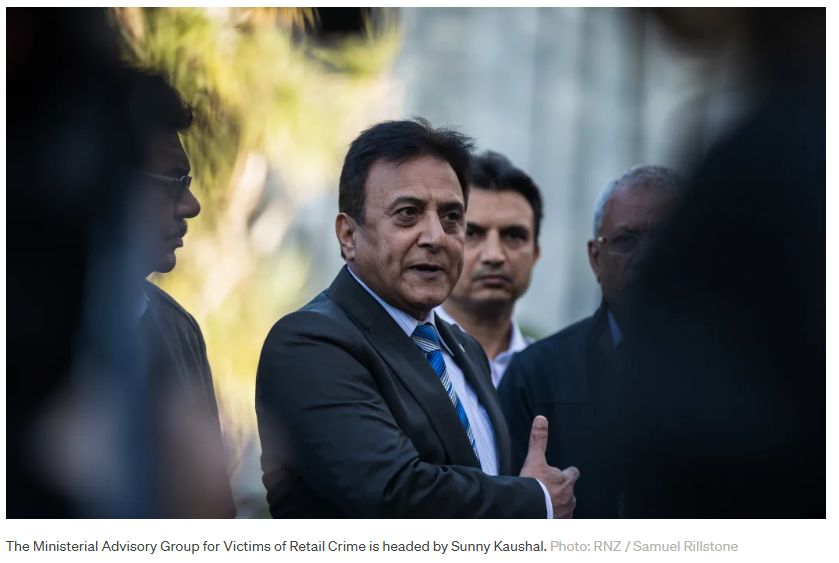
this year, leaving just chairman Sunny Kaushal and Hamilton
liquor retailer Ash Parmar.
Goldsmith confirmed last
month that the group, which has faced criticism for its
spending, will wind up in May, four
months earlier than planned.
Advertisement – scroll to continue reading
Before then the
remaining members are expected to in April deliver advice to
Goldsmith about the security industry, and facial
recognition technology and information
sharing.
Kaushal, who owns Auckland’s Shakespeare
Hotel and is an advocate for retail shop owners, says he’s
confident he and Parmar can deliver robust work.
But,
a 26 January briefing from Ministry of Justice officials to
Goldsmith and Associate Justice Minister Nicole McKee,
obtained by RNZ, has raised concerns.
‘Remaining
members do not hold subject matter expertise’
Group
member Michael Bell quit late last year. His resignation was
followed by Lindsay Rowles and Carolyn Young earlier this
year.
“The three members who resigned, brought
experience and expertise in the retail sector and in
security and crime prevention,” the briefing
said.
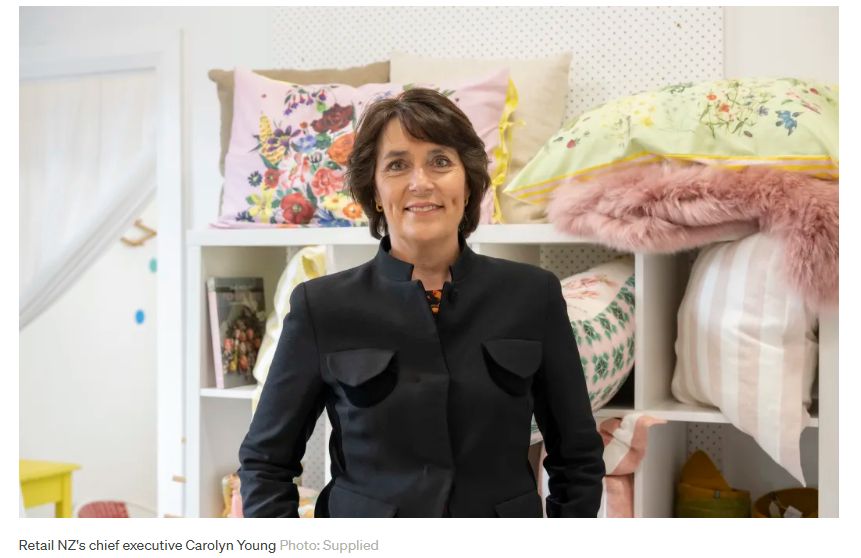
Young is Retail NZ’s chief executive. Officials
said she brought leadership and experience to the
group.
Bell,
who worked for Michael Hill, was a key member of the
jeweller’s security taskforce, which is “responsible for
monitoring retail crime trends nationally and globally, and
implementing prevention measures”.
Rowles had
expertise in security and crime prevention, having formed
and led Foodstuffs’ retail crime working group, which
included trialling facial recognition
technology
Continuing with just two group members came
with a warning: “We do not consider the current membership
meets the requirements established in the terms of
reference, as there are no members who bring experience and
expertise in security.”
Suggestions for a way forward
included terminating the group as soon as possible; letting
it run until September as planned; appointing new members to
the group to replace the three who resigned; or winding it
up early after it delivered in April reports on the security
industry and facial recognition technology and information
sharing.
This is the option Goldsmith chose,
announcing on 10 February the group would continue with its
current work before winding up in May.
“We consider
there are two primary risks with proceeding on this basis.
The first is that the advice provided by the MAG will be on
behalf of the two remaining members and will not reflect
discussions and endorsements of a fully constituted
membership with a breadth of expertise and experience
required by the terms of reference,” the briefing
said.
“This is particularly important given that the
remaining members do not hold subject matter expertise
relevant to the areas covered by the reports – security
industry, FRT, and information sharing.”
Chairman
says advice will be robust
Kaushal told RNZ he was
confident the group would deliver robust advice about the
security industry and facial recognition
technology.
He said all the group’s proposals were
developed after at least two rounds of feedback from the
likes of the retail sector, government agencies, local
councils and non-government organisations.
“In the
case of our FRT advice, we’ve consulted with privacy
experts, the Privacy Commission, UK regulators, and FRT
service providers both in NZ and the UK, along with
retailers and sector groups,” Kaushal said.
“In the
case of our security industry advice, we’ve consulted widely
across the sector in New Zealand, with regulators here, and
with industry bodies in Australia and Canada, along with
retailers and sector groups.
“Our policy process is
robust. It involves the MAG developing both an issues paper
and an options paper – both of which are consulted on before
final advice is prepared. We contract with experienced
policy professionals to support the MAG in developing its
advice.”
Kaushal said he was working with ministers on
making sure the group’s remaining advice was balanced and
considered a full range of sector views.
He said the
group’s record spoke for itself.
“In just 18 months,
we have delivered substantial and measurable progress in
strengthening law and order. Through the ministerial
advisory group, I have led seven major legislative-ready
reform proposals.
“Four have already been accepted by
the government to progress into law, including the Crimes
Amendment Bill currently before Parliament.”
That bill
includes extended powers for citizens’
arrests.
Goldsmith was asked about officials’ concerns
about the expertise of the group’s two remaining members.
His office said he had nothing further to
add.
Ministry deputy secretary, policy, Caroline
Greaney said: “The advice given stands, and the ministry has
nothing further to add regarding that.
“An approach to
mitigating some of these concerns is being worked through
now, but at this point there is nothing more to
say.”
New Zealand Security Association chief executive
Gary Morrison said it was “reasonably relaxed” about the
change in group personnel, and it had given feedback about
facial recognition technology 8-10 months ago, before the
resignations.
The association dealt with advisers to
the group and Morrison had found they’d taken a balanced
approach to issues.
‘Not played out as I
hoped’
Bell’s resignation letter said that due to the
significant time commitments of his job as Michael Hill
national retail manager, he couldn’t focus enough on the
group’s work.
Rowles was stepping down after his
appointment as Mitre 10 chief executive, a position
beginning this month.
Young’s letter said she decided
to resign after consulting with the Retail NZ
board.
In a covering letter to justice secretary
Andrew Kibblewhite she thanked ministry officials for their
support, but added: “… it certainly has not played out as
I had hoped and it is disappointing that we haven’t been
able to do more meaningful work with this group.”
She
later told RNZ the group was a “very
unpleasant environment” in which to work.
The
group was supposed to operate for two years to September. It
has an annual budget of $1.8 million, paid for from the
proceeds of crime fund.
It has delivered advice to the
minister on issues such as tougher penalties for
shoplifters, strengthening trespass laws, and introducing
new citizens’ arrest powers.
But, it has faced
criticism about its value for money, including the $230,000
Kaushal invoiced for work in its first 12 months, which was
allowed under the group’s payment guidelines; the central
Auckland office space it rents for $120,000 a year; and
the $24,000 spent on 22 well-catered stakeholder engagement
meetings around New
Zealand.
New Zealand’s public broadcaster, providing comprehensive NZ news and current affairs, specialist audio features and documentaries.
Radio New Zealand is a Crown entity established under the Radio New Zealand Act 1995. Radio New Zealand News are vital elements in our programming, providing impartial news and information to New Zealanders every day. Radio New Zealand (RNZ) provides listeners with exciting and independent radio programmes in accordance with the Radio New Zealand Charter.

