



Kate Newton
Climate Change Correspondent
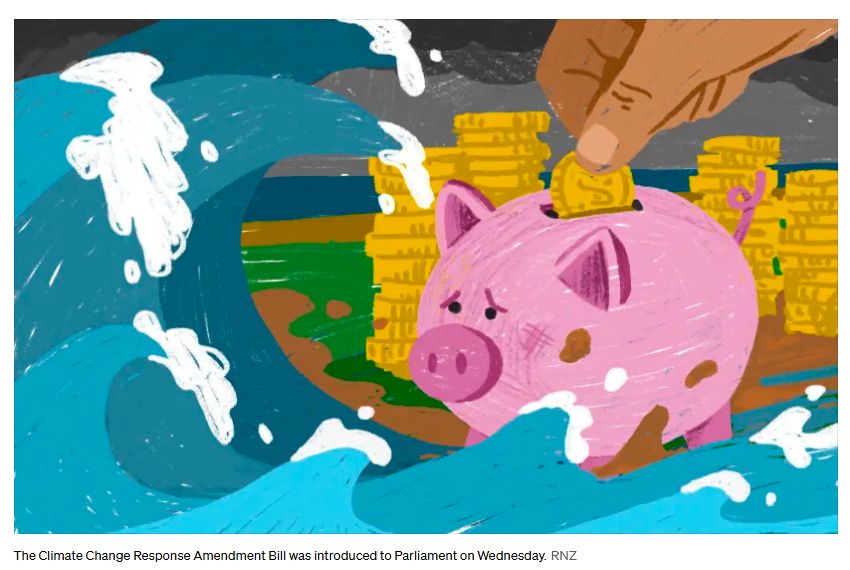
A
law change requiring councils to come up with climate
adaptation plans is unlikely to pass before the election,
the climate change minister says.
The Climate Change
Response Amendment Bill, introduced to Parliament on
Wednesday, proposes mandatory
adaptation planning for areas at high risk from climate
change hazards like flooding.
City and district
councils will need to plan at least 30 years into the future
and spell out the likely cost.
The government has
still not announced how the costs will be shared, saying
last year that those decisions would be deferred until the
next parliamentary term.
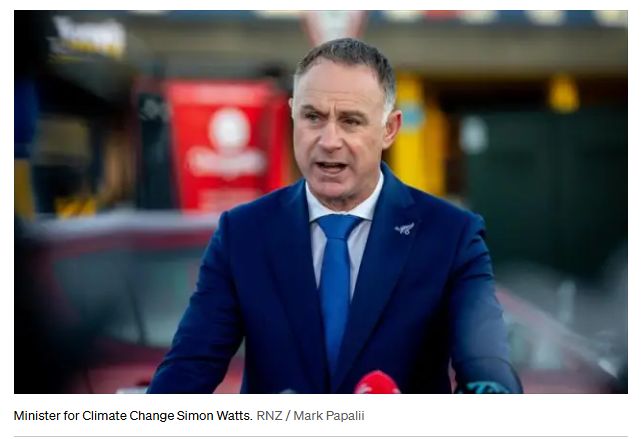
Climate change minister Simon
Watts told RNZ that he wanted the bill to go through a full
select committee process.
“Realistically, with
Parliament rising on 24 September, it won’t be passed before
the election – it’ll be passed after the election and put
into law.”
He was hoping for cross-party support and
had held “collegial conversations” with some opposition
parties about it.
Asked who would bear the costs of
whatever adaptation measures were included in the plans, he
said the government “was simply not at that
point”.
Advertisement – scroll to continue reading
“The first step is get the plans in place and
work through that.”
The government would “not be head
in the sand” about the potential costs,
though.
“Adapting to the impacts of climate change …
is significant,” he said.
“Everyone is aware that, how
do you fund this and who pays, are the two most complex and
politically charged and challenging areas.”
The
country was already incurring costs as a result of climate
change impacts.
“Those costs are most probably higher
than what they need to be, because of the lack of adaptation
planning and targeted investment in areas that may mitigate
that risk,” Watts said.
The country as a whole would
have to prioritise where and how adaptation
happened.
“There is a relationship between what we do
and what we can afford.”
At the moment, without
consistent adaptation planning, the government and councils
“don’t even have a rough estimate on the ‘what’ portion of
that”, he said.
That consistency would include
ensuring councils were using up-to-date climate models and
scenarios to develop their plans, he said.
Two years
ago, budget cuts prompted Earth Sciences New Zealand to make
half its team of climate modellers, who downsized global
climate models for use in New Zealand, redundant.
Some
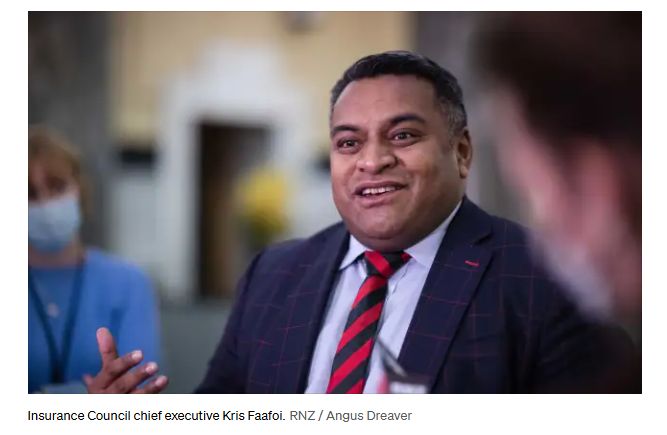
councils will find planning challenging – Insurance
Council
Insurance Council chief executive Kris Faafoi
said the proposed law was a step in the right
direction.
However, insurers wanted to see action as
well as just plans.
“While this is a great
development, we need the urgency and the activity from the
councils to identify some of these areas, to plan, and
importantly to fund these mitigations.”
Some
councils would find that a challenge, he said.
“That’s
a challenge they shouldn’t be facing alone – we should be
looking to make sure that they’re supported by everyone
who’s got some skin in the game here.”
Earlier this
year the council proposed that the Fire and Emergency levy
collected through insurance premiums should be redirected
into a pool of funding for climate adaptation and resilience
projects, with Fire and Emergency funded directly by
government instead.
The proposal met
with muted responses from both major
parties.
Whatever legislation was passed should be
done so with cross-party support to ensure certainty over
policy and funding, Faafoi said.
“These are not issues
that are going away.
“The councils and the communities
that will require a lot of work to keep them safe over the
next five, 10, 15, 20 years, will need to know that there’s
not going to be chopping and changing of attitudes at the
Parliament
end.”
New Zealand’s public broadcaster, providing comprehensive NZ news and current affairs, specialist audio features and documentaries.
Radio New Zealand is a Crown entity established under the Radio New Zealand Act 1995. Radio New Zealand News are vital elements in our programming, providing impartial news and information to New Zealanders every day. Radio New Zealand (RNZ) provides listeners with exciting and independent radio programmes in accordance with the Radio New Zealand Charter.

