

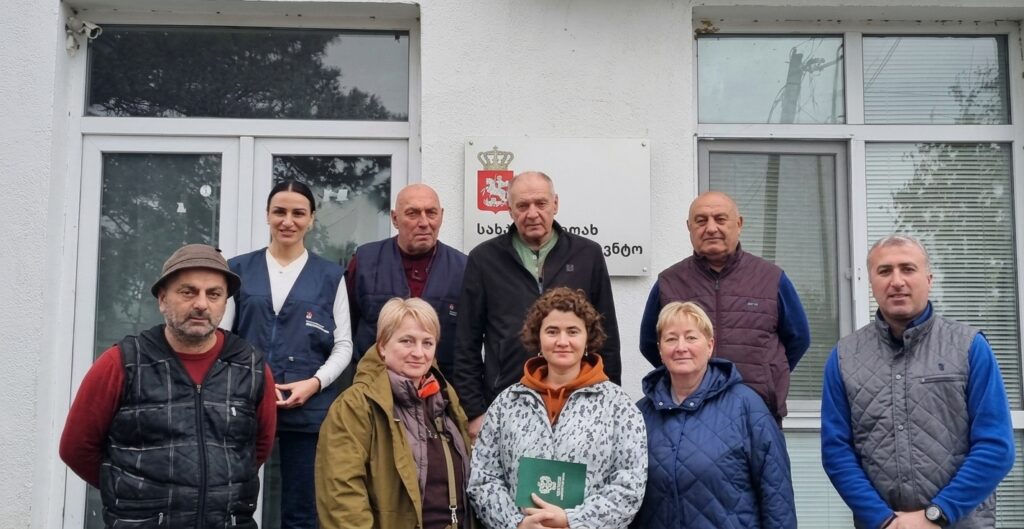
Russia’s Federal Service for Veterinary and Phytosanitary Supervision (Rosselkhoznadzor) said that its delegation had visited Georgia on November 2-6 “at the invitation” of the country’s National Food Agency to inspect laboratories and review the phytosanitary certification system for fruit exports to Russia.
“Representatives of the Service audited Georgian testing laboratories and examined the phytosanitary certification system for pome and stone fruit crops exported to Russia,” Rosselkhoznadzor said in a November 9 statement.
According to the agency, the delegation examined the work of Georgia’s State Laboratory of Agriculture, which tests plant products destined for the Russian market for pesticide and agrochemical residues, assessing the laboratory’s “organizational structure, equipment, staff qualifications, testing methods and the facilities’ compliance with requirements.”
“In addition, their Georgian counterparts demonstrated the procedure for determining the quarantine phytosanitary status of samples and the process for issuing phytosanitary certificates,” the statement said.
The delegation also visited five locations in Gori Municipality where pome and stone fruits are grown, stored, and prepared for export. Rosselkhoznadzor said it accordingly “will send the laboratory an audit report confirming its competence, testing methods, and test results.”
The statement cited the Georgian side as reporting that “it is developing a national plant quarantine system,” with Rosselkhoznadzor noting that “integrating the digital platforms of the two countries will optimize information exchange, increase mutual shipments of quarantine-regulated products, and enhance control over their safety.”
Georgia’s National Food Agency has previously said it is “actively cooperating” with the country’s trading partners on phytosanitary control and certification to promote Georgian agricultural exports and ensure safe trade. The agency said this cooperation includes “familiarization with phytosanitary control systems, laboratory capacities and mechanisms for controlling pesticide residues in export products, sharing experience, and developing common approaches.”
To deepen international cooperation, the National Food Agency said it plans to discuss mutual cooperation agreements with relevant agencies in Azerbaijan, Russia, Armenia, and Bulgaria by the end of the year.
In October, Russia, which remains a major destination for Georgian wine and other beverages, imposed import and sale restrictions on some alcoholic and non-alcoholic beverages from several Georgian producers, including Nabeghlavi mineral water, produced by Healthy Water; Coca-Cola produced in Georgia; beer from Georgian Beer Company; wines from Teliani Valley, Tbilvino and Wineman; and wine and cognac from Askaneli Brothers.
Later in the same month, pro-Kremlin businessman Mamuka Pipia said Russia had extended the restrictions to three more Georgian companies – wine producers GWS-Wine-Company, Shato Mukhrani and Winiveria – describing the move as a “second wave of sanctions.”
Russian Foreign Ministry spokesperson Maria Zakharova dismissed the claims that the restrictions were politically motivated, saying they were part of the routine work of Rospotrebnadzor, the national public health and consumer protection agency, to prevent imports from “unscrupulous manufacturers.” She said attempts to turn a “routine procedure” into a political issue were speculative, adding that “there is no political agenda” behind the restrictions.
Also Read:

