

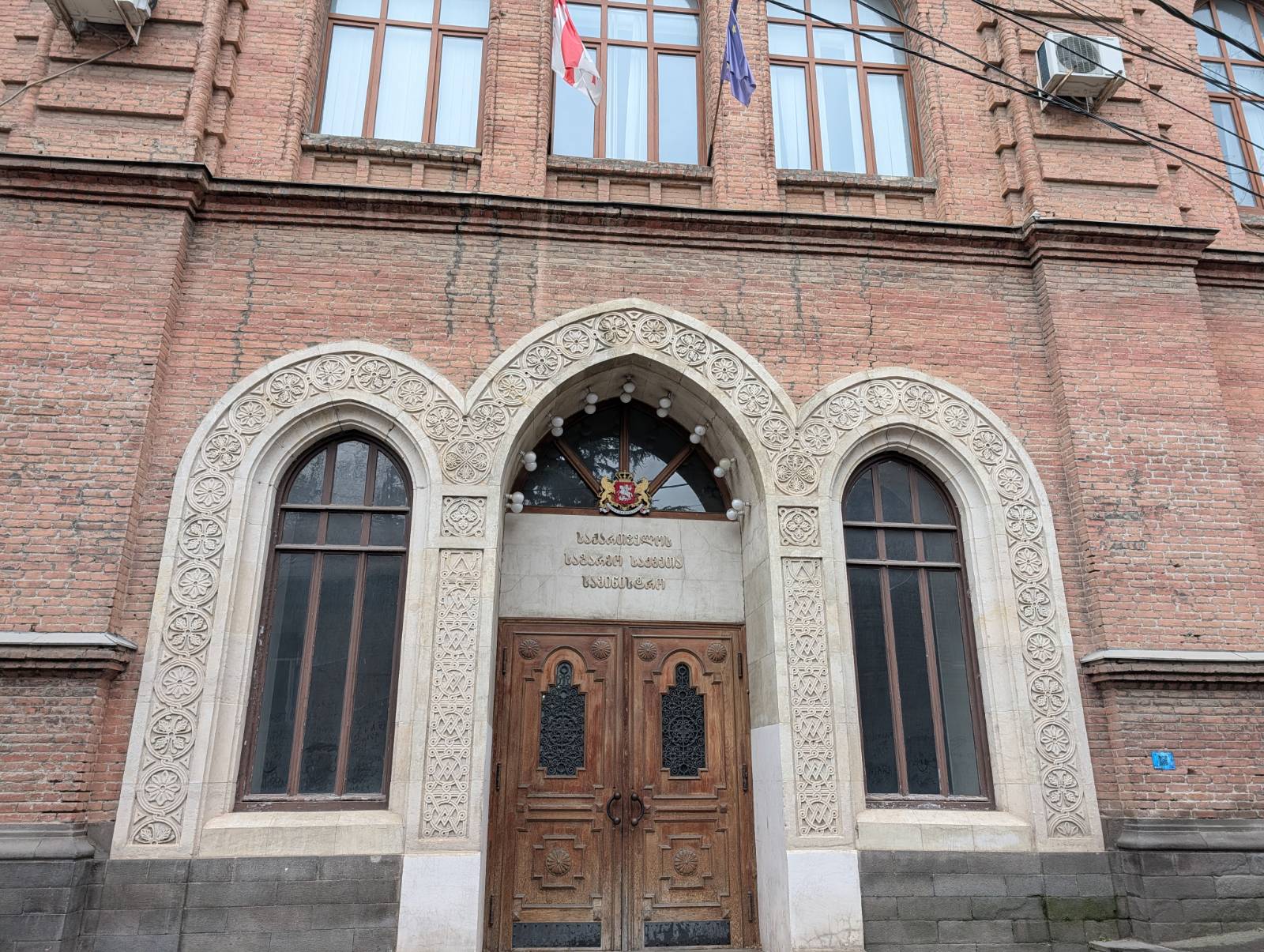
Georgia’s Foreign Ministry has expressed “regret” over the EU’s decision to conditionally include the Kulevi oil refinery in its 21st Russia sanctions package, saying there were “no factual or legal grounds” for the move and hoping the bloc will review the decision before it takes effect in six months.
The Council of the EU adopted the 21st sanctions package against Russia on July 23, introducing a conditional transaction ban on Georgia’s Kulevi oil refinery that will take effect in six months unless reassessed. The package also included sanctions on crypto-related service platforms based, among others, in Georgia. The move marked the first major inclusion of Georgian entities in EU sanctions imposed in response to Russia’s full-scale invasion of Ukraine.
The Council said the measure targeting Kulevi was introduced under a mechanism allowing restrictions on transactions with refineries in Russia and third countries that process or refine Russian crude oil and petroleum products.
In a statement issued on July 24, a day after the sanctions announcement, the Georgian Foreign Ministry said Georgia “fully observes” the EU sanctions regime, “understands the context of this regime,” and “takes all measures” to ensure that its territory is not used to circumvent sanctions. It said cooperation with EU institutions in this area was based on “transparency and openness,” adding that Georgian authorities “continuously ensure the timely provision of all necessary information and explanations” to EU institutions.
The ministry said “not a single case of circumvention of EU sanctions has been recorded on Georgia’s territory,” adding that Georgian authorities submitted “comprehensive information” and “relevant documentation” to the European Commission during preparations for the 21st sanctions package, which it said showed that “there were no factual or legal grounds whatsoever” for including the Kulevi refinery on the list.
The statement then said Georgia “hopes” that the Commission services and EU member states “will be guided by the principle of fairness” and “review” the decision during the six months stipulated by the measure. It ended by expressing Georgia’s readiness “to cooperate” with EU institutions and “to share” with them “all necessary information.”
The inclusion of the Kulevi oil refinery in the sanctions list came weeks after Black Sea Petroleum, which operates the refinery, announced that it will begin refining “crude oil of entirely non-Russian origin” starting in August-September, saying the shift will “open doors to high-margin markets” for its products.
The Kulevi refinery, a project inaugurated in 2024 by Georgian officials as the largest private investment project in Georgia’s post-independence history, first drew controversy in October 2025, when Russian oil company Russneft supplied its first oil cargo to the facility.
The facility has since attracted scrutiny over its potential to serve as a channel for re-exporting Russian oil under a Georgian designation, with questions mounting amid journalistic investigations suggesting that Russian oil products may be reaching European countries through Georgia, particularly in light of the recorded spike in Georgia’s oil exports.
The controversy also extended to Kulevi port, which is owned and operated by Azerbaijan’s SOCAR. In March 2026, the European Union considered including the port in its proposed 20th sanctions package against Russia, but ultimately dropped the measure, citing “positive commitments” made by the Georgian authorities and the port operator.
Also Read:

