

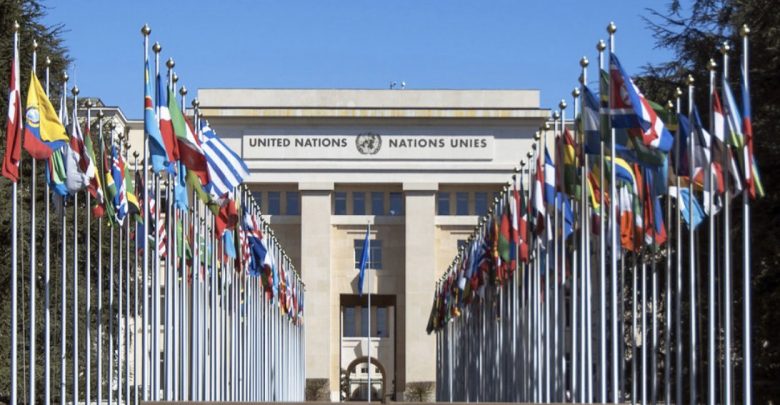
The 68th round of the Geneva International Discussions (GID), the multilateral forum on the security and humanitarian consequences of the 2008 Russia–Georgia war, took place in Geneva on 10–11 November. The co-chairs said the core agenda item, the return of internally displaced persons (IDPs) and refugees, was not discussed because some participants walked out.
Key points
- The co-chairs welcomed the continued functioning of the talks and noted that no major security incidents had been reported in recent months.
- Participants disagreed in their assessments of the security situation and held an in-depth discussion on non-use of force and international security arrangements.
- Participants backed the work of the Ergneti Incident Prevention and Response Mechanism (IPRM) and the resumption of the Gali IPRM, which has been suspended since 2018.
- The next, 69th round is scheduled for March 2027.
About the talks
The GID were established under the 12 August 2008 ceasefire agreement brokered by the European Union. They are co-chaired by representatives of the OSCE, the EU and the UN, and bring together participants from Georgia, Russia and the United States, along with representatives of the Abkhazian and Tskhinvali Region/South Ossetian sides in their personal capacities. Georgia and most of the international community regard both regions as Georgian territory occupied by Russia, while Russia recognises them as independent states.
Sessions are held in two working groups: the first on peace and security, the second on humanitarian concerns. The main issues are the implementation of the ceasefire agreement and the safe and dignified return of IDPs and refugees.
What the co-chairs said
In a joint communiqué, the co-chairs said all participants welcomed the talks as a unique platform for dialogue and a sign of commitment to a peaceful settlement.
In Working Group I, participants reviewed the security situation since the previous round in July 2026 and expressed diverging assessments of the overall environment, while noting the absence of major incidents. The co-chairs said they would keep consulting participants to bridge remaining differences on non-use of force and security arrangements.
In Working Group II, participants addressed crossings, documentation, livelihoods, missing persons and education, and discussed freedom of movement and external mobility, including possible steps for upcoming rounds.
The co-chairs said the item on the return of IDPs and refugees could not be discussed because of a walkout by some participants, which is the established practice of Russian Federation representatives and the Russian-backed authorities in the two regions. They reiterated their call on all participants to engage on every agenda item.
Russia’s position
The Russian Foreign Ministry said participants showed a general commitment to continuing work in the GID, which it called the only format for post-conflict relations between Tbilisi and Sokhumi and Tskhinvali. It highlighted the functioning of regular rounds, hotlines and the Ergneti IPRM.
Moscow again called for legal guarantees of non-use of force against the two regions, a border delimitation process and the resumption of the Gali IPRM. It said the two regions face risks from radical forces in Georgia and from NATO member states, which it accused of refusing to recognise the realities in the South Caucasus and building up military cooperation with Tbilisi.
The ministry also said that, in its view, Switzerland had abandoned its neutral status by joining EU sanctions on Russia, and that Moscow, with Sokhumi and Tskhinvali, continues to seek consensus on moving the sessions from Geneva to another venue.
Tskhinvali Region/South Ossetia
The delegation from the Tskhinvali region was led by First Deputy de facto Foreign Minister Andrey Tskhovrebov. Its representatives said the security discussions focused on the line separating the region from the rest of Georgia, which they described as relatively calm, and credited the border service and the IPRM with keeping the situation stable.
They said they favoured continuing work on a political document on non-use of force despite substantial differences between the parties, and accused the Georgian authorities of obstructing the investigation into the alleged enforced disappearance of three South Ossetian citizens. They said IDP return could be discussed again only if Georgia ends what they called the politicisation of the issue.
Abkhazia
The Abkhaz participants said the central security issue remains a legally binding document on international guarantees that Georgia will not use force against Abkhazia, and that they want the Gali IPRM, suspended since 2018, to resume and presented additional proposals to unblock it.
They also told participants about what they described as attempts by the Georgian side to obstruct performances by Abkhazian athletes at international competitions in Turkey and Spain, and about alleged pressure on an Abkhazian academic, Elchin Adzinba, in Turkey after her speech at a UN forum on minority issues in Geneva. In the second working group, the sides discussed freedom of movement and access to education.
Georgia’s position
The Georgian Ministry of Foreign Affairs had not published its statement on the 68th round when this article was written. After the previous round, led by Deputy Foreign Minister Lasha Darsalia, the ministry said the Georgian delegation had strongly criticised the May 2026 agreement between Russia and the Tskhinvali authorities, drawn attention to Russia’s military presence and human rights issues in both regions, and called for the Gali IPRM to resume without preconditions. Official statements are published on the Ministry of Foreign Affairs website.
What happens next
The 69th round of the Geneva International Discussions is scheduled for March 2027. This article will be updated if the Georgian Foreign Ministry comments on the 68th round.
Read more: More Georgia news

