



The
Government has told mayors around the country it’s deferring
decisions on amalgamating
councils until after the election.
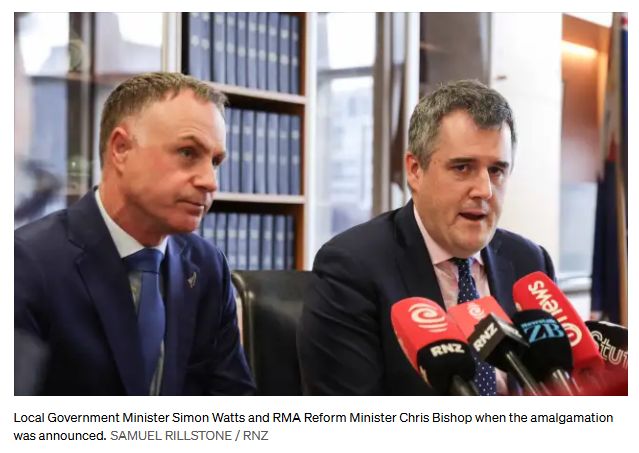
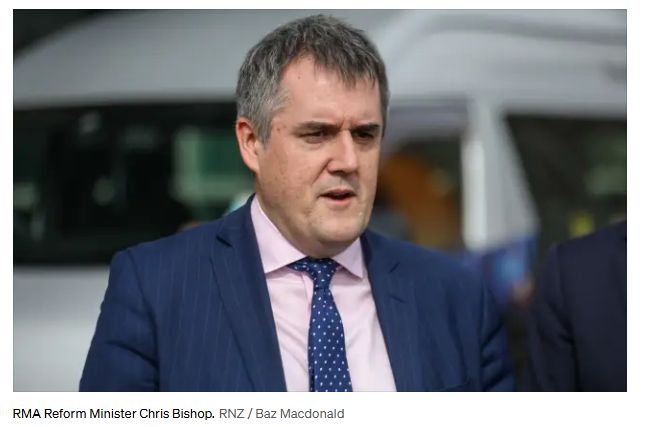
RMA Reform
Minister Chris Bishop and Local Government Minister Simon
Watts said they would be taking additional time before
deciding which proposals, part of the Head
Start local government reform process, should progress
to the detailed design stage.
“It is clear from the
response we received that there is genuine appetite for
change,” Watts said in a statement.
Eighteen proposals
were submitted in August against the Government’s objectives
for a simpler, more effective and accountable local
government system.
“While the overall quality of
proposals was high, none came with the unanimous view of the
region, and some needed further analysis before they can
progress. These are important gaps we must fill in prior to
making final decisions.”
Particular areas that
required further development included ensuring fair and
effective representation with streamlined governance, and
the transfer and delivery of regional functions, the
ministers said.
Advertisement – scroll to continue reading
“Rather
than asking councils to commit further time and resources to
finalise proposals now, the Government will now work to fill
in these gaps over the next few months. Cabinet will
consider these proposals in early-2027.”
Bishop said
the Government remained committed to local government
reform.
“The Government continues to expect proposals
endorsed by Cabinet to be developed in detail and considered
for final approval in 2027, with Head Start changes intended
to be in place ahead of the 2028 local government
elections.”
“Work is also continuing on the backstop
process for areas that do not progress through Head Start.
Decisions on that process will be informed by lessons from
the Head Start pathway, consultation feedback and further
advice from officials. We continue to expect decisions on
this in early 2027.”
Ministers
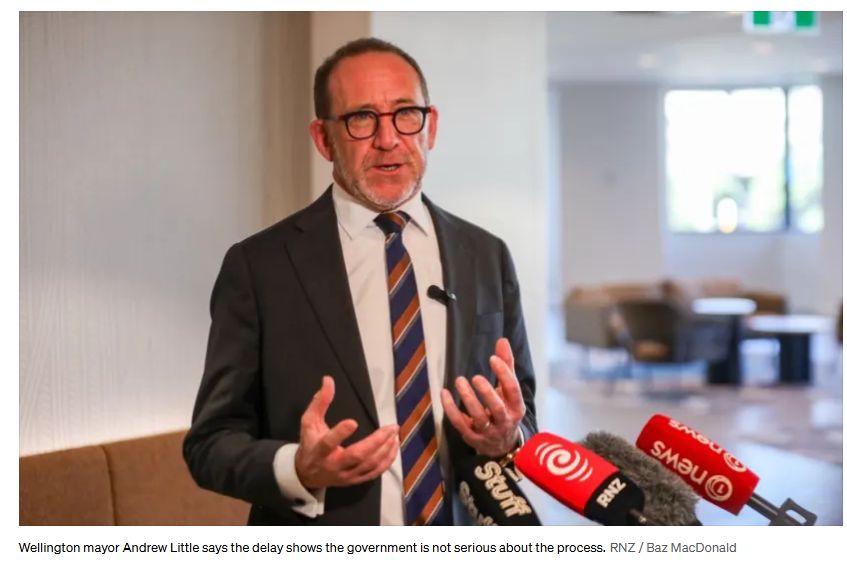
made promises they couldn’t keep – Wellington
mayor
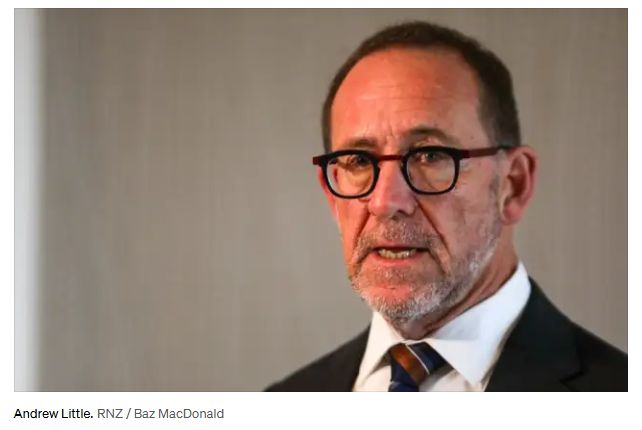
But Wellington
City mayor Andrew Little said the announcement showed
the Government was not serious about the
process.
Little, who is also co-chair of the
Wellington and Wairarapa Mayoral Forum, said councils across
the region put forward strong proposals that met the
Government’s requirements and would have worked, while
spending nearly $250,000 collectively to put forward a
proposal before the recent deadline – which was “significant
time and ratepayer money”.
Little told reporters
councils had done everything the Government had asked of
them, and they had “been let down”.
It was “poor
organisation” – the government had made a promise it
couldn’t keep, Little said, as it clearly didn’t have the
numbers to enact reform.
He said there had been mixed
views among residents and ratepayers on whether to
amalgamate or not, “but on balance people supported
it”.
The government’s attribution of the delay to the
fact that the proposals were not unanimous – an aspect that
wasn’t requested of them in the first place, Little said –
was “effectively shifting the goalposts”.
Millions
had been spent nationwide by councils in preparing headstart
proposals, he said.
If the government wanted change in
time for 2028, councils were “rapidly running out of time”,
Little said.
“Ministers asked us to move quickly. We
did exactly that. It is now clear the Government was not
ready to follow through, and didn’t have enough support
around the Cabinet table.”
Little said ministers made
promises they couldn’t keep and have now abandoned the
process.
“Wellington ratepayers are entitled to ask
why they were asked to pay for an exercise the Government
was not prepared to complete.
“At a time when councils
are doing everything possible to keep costs under control,
facing an arbitrary rates cap that will affect services and
facilities that communities rely on, spending nearly a
quarter of a million dollars on a process that goes nowhere
is unacceptable.”
He said the three-month deadline was
“totally unreasonable” and criteria continually
shifted.
“We met all of the government’s requirements
to get a proposal in before the deadline.
“The only
party that has not thought through their policy is central
government themselves. It claims it is wanting to simplify
local government, but today it has confirmed it has no plan
for how to achieve this.”
‘Communities
will not tolerate ratepayer money being spent on unclear
processes’
Local Government New Zealand (LGNZ) said
councils moved heaven and earth to meet an unrealistic
deadline for proposals, and now need certainty.
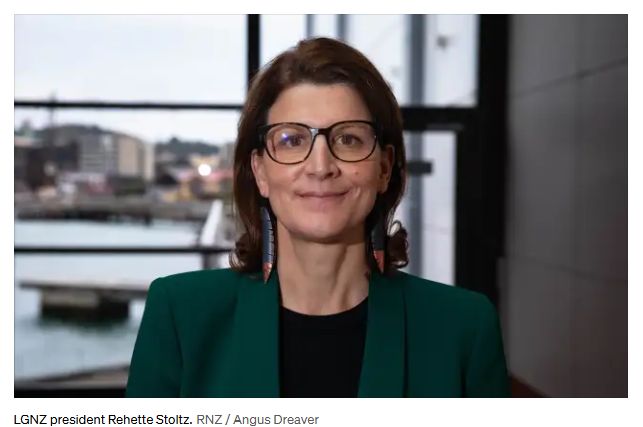
LGNZ
president Rehette Stoltz said the Government’s inability to
decide which proposals will progress has left councils
feeling frustrated.
“Councils were put through a
rushed process, only for the Government to now acknowledge
that the work could not be completed properly in the time
available,” she said.
“Communities will not tolerate
ratepayer money being spent on unclear processes that are
repeatedly reshaped after the work has been done. Before
councils do more work, they need certainty the goal posts
won’t be moved again.”
She maintained reform should be
locally led, not driven from the Beehive.
“Local
government reform is too important to be subject to a
constantly changing process.”
More
mayors react
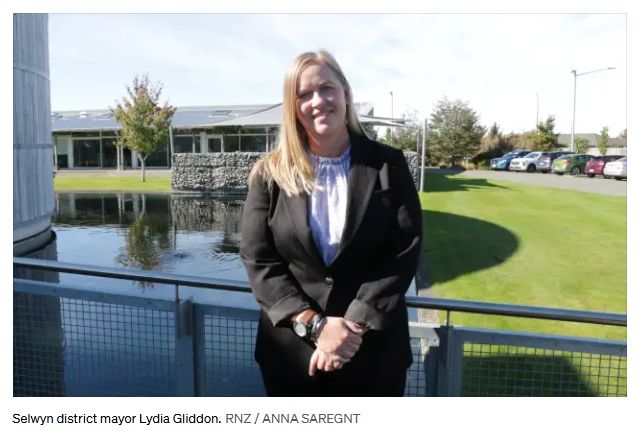
Selwyn district mayor Lydia Gliddon said
it was disappointing that councils had been asked to quickly
develop and submit proposals only for the decisions to now
be deferred.
“Selwyn invested significant effort into
this process, including consulting with our communities. We
owe it to those who took the time to share their views to
ensure their voices continue to be heard,” she
said.
The council remained committed to working with
the government to achieve the best outcome for its
communities.
“The position of Selwyn residents has
been very clear. Through our consultation, people told us
overwhelmingly that they wanted Selwyn to become a
standalone unitary authority, and we will continue to
support and advocate for that view going forward,” she
said.
“As New Zealand’s fastest-growing district,
Selwyn faces unique growth, infrastructure and service
delivery challenges.
“Our district is experiencing
growth at a scale few other parts of New Zealand are facing,
and it’s important any future local government arrangements
recognise those realities and give our communities a strong
voice.”
The Waitaki District Council straddles two
regional council boundaries, working across the different
planning systems, regulatory approaches and policy
frameworks.
Waitaki district mayor Mel Tavendale said
it created duplication, burdening ratepayers and the council
with added cost, time and pressure, which was
unsustainable.
She did not want to lose the momentum
for change after councils invested a lot of time, money and
effort to develop a solution on a tight deadline.
“The
need for reform has not gone away, and we are disappointed
because we did the work asked of us,” she
said.
“Waitaki put forward a credible, practical and
well-considered proposal in good faith that reflects
communities of interest and responds directly to the need
for greater scale, capability and
affordability.”
Tavendale said Waitaki wanted a seat
at the design table so that local communities could decide
their own future.
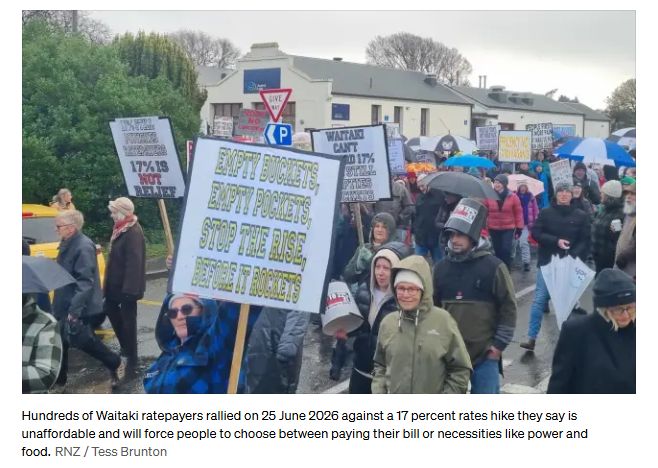
The council has faced flak after
originally proposing a 45
percent rates rise to plug a $14 million operating
deficit, prompting
backtracking, death threats and protest before settling
on an average district-wide rates increase of about 17
percent.
“Ministers
have been critical of Waitaki’s rates rises, but those
increases are being driven in part by a system that clearly
needs reform,” Tavendale said.
The mayors of Timaru,
Mackenzie, Waimate and Waitaki districts lodged a single
unitary authority proposal that would see a new region
stretch from Aoraki Mount Cook to the coast, and from
Ashburton to Waitaki.
Tavendale said it would create a
stronger regional voice and ensure rural communities
remained heard.
“The government also needs to consider
how it will support local communities through the change
process, so the weight of reform does not fall entirely on
ratepayers.”
Labour said the government’s plans for
council reform were an embarassing and expensive
distraction.
Government has delivered a ‘false
start’, Labour says
Local government spokesperson
Tangi Utikere said ministers Chris Bishop and Simon Watts
had promised a “head start”, but delivered a “false
start”.
“They gave councils three months to spend time
and money planning major structural change, only to pull the
plug on getting anything done before the
election.
“That’s a huge embarrassment for a
government that has spent months telling councils this was a
priority.”
He said Labour was not opposed to local
government reform.
“There are sensible conversations
to be had about councils working together, sharing services
and delivering better value.
“But timing matters –
local economies are struggling, businesses are under
pressure and construction workers and tradies are crying out
for work.”
Utikere said it was the “worst possible
time” to divert resources into an expensive structural
reorganisation that had gone
nowhere.
New Zealand’s public broadcaster, providing comprehensive NZ news and current affairs, specialist audio features and documentaries.
Radio New Zealand is a Crown entity established under the Radio New Zealand Act 1995. Radio New Zealand News are vital elements in our programming, providing impartial news and information to New Zealanders every day. Radio New Zealand (RNZ) provides listeners with exciting and independent radio programmes in accordance with the Radio New Zealand Charter.

