



Robin
Martin Taranaki Whanganui regional
correspondent
The
New Plymouth electorate stretches from Ōpunake on Surf
Highway 45 in Taranaki’s southwest to Waitara in the
northeast, bisecting Te
Papa-Kura-o-Taranaki and capturing the upmarket beach
settlement of Ōākura in the process.
At the 2018
census the electorate was predominantly European (84.4
percent) and Māori (18.8 percent), with the share of those
of Asian ethnicity (5.5 percent) about a third lower than
the New Zealand average. The Pacific peoples ethnic group at
2.3 percent is about one-quarter of the New Zealand average
of 8.1 percent.
Why is it interesting?
The New
Plymouth electorate is considered a marginal seat, but is
traditionally a two-horse race. It’s returned a National or
Labour MP since the mid 1930s, with the blue team holding a
margin over its competition from the centre
left.
Notable recent MPs are Labour’s Harry Duynhoven,
who held the seat for 18 years over two stints stretching
from 1987 through to 2008, and National’s Jonathan Young,
who served four consecutive terms through to 2020.
A
change in 2014 which saw the old southern boundary at Ōkato
extended to Ōpunake is said by some to favour
National.
Advertisement – scroll to continue reading
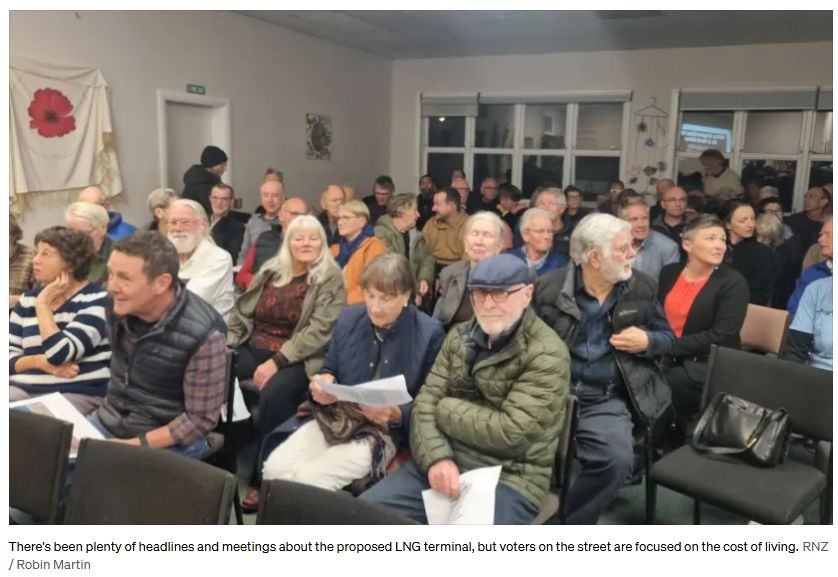
Hot local issues include controversy over
whether or not to build an LNG
import terminal at Port Taranaki (being promoted by
National, but not supported by Labour), the decline
of the oil and gas industry, and the resilience
of State Highway 3 heading north, but the cost of living
crisis has also hit hard especially in the urban centres
where jobs have disappeared.
What happened last
election?
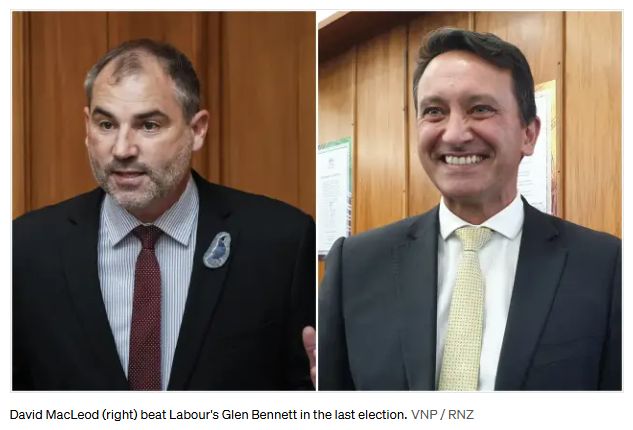
National’s
David MacLeod, of Ngāti Mutunga, Ngāi Tahu and Ngāti
Porou descent, is the incumbent MP after defeating Labour’s
Glen Bennett in 2023, securing a near 7000 vote majority in
the process.
Bennett, who came in on the wave of
enthusiasm for then Labour Party leader Jacinda Ardern, was
returned on the Labour list and is contesting the Coromandel
seat in November.
A sparkie by trade, MacLeod ran a
successful electrical business, served six years as a
farmer-elected director at Fonterra and was chair of the
Taranaki Regional Council from 2007 to 2022.
His first
term as an MP started controversially when it was discovered
he’d inadvertently failed to declare $178,000 in campaign
donations and the National Party stood him down from select
committee roles. The
matter was referred to police who dropped the investigation
and took no further action.
With candidates from
National, Labour, the Opportunity Party and an independent
standing, it’s hard to imagine anyone outside of the two
main parties winning the seat with the incumbent having the
inside running.
Who’s standing?
MacLeod, who
has since been reappointed to select committee roles, will
face two candidates also with experience in local body
politics, as well as an independent candidate who described
himself to the Taranaki Daily News as a “serial
campaigner”.
Lawyer and former two-term New Plymouth
District councillor Amanda Clinton-Gohdes is standing for
Labour.
A high-profile councillor, Clinton-Gohdes was
tipped by some as a possible mayoral candidate when the
incumbent Neil Holdom didn’t stand in 2025, but instead she
stood for council only, losing her seat in the
process.
Clinton-Gohdes has said she has unfinished
business in politics and many of the issues she worked on at
council – housing and Taranaki’s economic transition for
example – require action from central
government.
Independent consultant and small business
owner Sarah Lucas is standing for the Opportunity
Party.
A former Inglewood Community Board member and
chair of Community Board Executive at Local Government NZ,
Lucas stood for the New Plymouth mayoralty in 2025, making
an impact with her impressive performance at the candidates
debates.
Unfortunately, that did not translate into
votes, with Lucas finishing third some 8200 votes behind Max
Brough, who won the mayoral chains. Adding insult to injury,
Lucas lost the race for the Kōhanga Moa (Inglewood) ward
seat by about 120 votes.
Lucas, Opportunity Party
spokesperson for internal affairs, local government and
regional development, is number seven on the party’s list
and pushed hard for the party vote at a recent New Plymouth
electorate candidates’ debate in the city.
According
to the Taranaki Daily News, over about 30 years
independent candidate Rusty Kane has unsuccessfully stood in
17 elections for council, health boards and central
government across Taranaki, Auckland and
Tauranga.
Kane, who told the publication he’d been a
“complete failure” thus far, has relaunched the Independent
Taranaki Party for the election.
He says the aim is to
return a New Plymouth MP who can advocate for the electorate
without having to toe a party line.
What do the
locals say?
At the Blagdon shop in the working class
suburb of Spotswood, people ducking in and out the superette
and local bakery have one issue on their minds – the cost of
living.
Keegan is waiting for his partner on the
footpath. He reckons prices have got out of
hand.
“It’s shocking, it’s absolutely shocking. You
can work your absolute arse off and still only make ends
meet.
“It’s impossible to actually get a head start if
you’re the little person.”
Charlie is wrangling her
preschooler into the car.
“I’m working two jobs and my
partner’s working fulltime trying to send him to kindy and
it’s still the bare minimum really.
“You’re basically
living to work, not working to live. That’s basically what
it is at the moment.”
Across town at Sporty’s Cafe and
Bar in Fitzroy there’s more evidence of disposable income,
but tradie Sean is still not happy.
“Why is it so
expensive to live in one of the greatest nations in the
world? Why are we working our arses off just to pay rent?
Why are council rates through the roof? Why are families
struggling?”
He knew where he laid the blame.
“I
don’t think there’s anybody that really looks after the
region and its economy. Labour shut the place down with the
oil and gas bans.”
Sean was pinning his hopes on NZ
First leader Winston Peters calling the shots following the
election.
A candidates debate hosted by Climate
Justice Taranaki had a focus on the environment and the
proposed LNG terminal, but even here the cost of living
crisis was on people’s minds.
A migrant from India,
Harry, thought life in New Zealand was too
expensive.
“House pricing and the cost of living, it’s
a bit over what I’m expecting, so I wish the next government
will try to normalise [it].”
A man, who preferred not
to give his name, was worried about economic
disparity.
“I think just equity across our communities
I’m not seeing it. I’m seeing a big divide between the haves
and the have nots.”
Back in Fitzroy, Dina, a care
worker from the Philippines who had recently moved to New
Plymouth, had a different perspective.
“New Zealand
gives us a lot of opportunities here and [is] still the
safest country and for us, migrants, we can still give our
best to ourselves and the country and they help us a
lot.”
New Zealand’s public broadcaster, providing comprehensive NZ news and current affairs, specialist audio features and documentaries.
Radio New Zealand is a Crown entity established under the Radio New Zealand Act 1995. Radio New Zealand News are vital elements in our programming, providing impartial news and information to New Zealanders every day. Radio New Zealand (RNZ) provides listeners with exciting and independent radio programmes in accordance with the Radio New Zealand Charter.

