



Checkpoint
RNZ’s weekday drive-time news programme from
4-6pm.
A
“horrendously high” number of babies in Fiji are dying due
to HIV related complications, says a health researcher, as
the prevalence of the disease grows there.
The New
Zealand government website SafeTravel says people travelling
to Fiji should avoid activities that could increase their
risk of infection.
In March this year, it was
estimated 9000
Fijians were living with HIV and officials said high
risk drug use was adding to the rapid rise.
Victoria
University senior health researcher Sharon Mclennan told
Checkpoint the situation in Fiji was “pretty bad” and had
been driven partly by increased drug use.
“You see a
lot of needle sharing going on, and that has been the fuse
that lit this incredible increase in HIV.
Years of
underfunding of the health service had also contributed to
the problem, she said.
Mclennan said there had been a
rise in mothers testing positive and babies being born with
HIV.
“About one baby per week is being born and around
about one baby per month is dying of HIV related
complications… it’s horrendously high, it’s very
high.”
Advertisement – scroll to continue reading
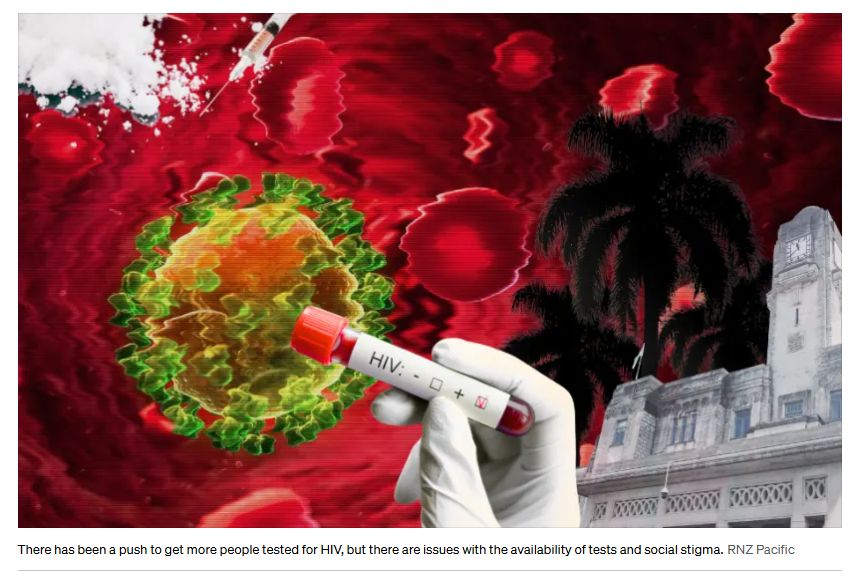
Mclennan said there had been a push to get more
people tested for HIV, but there remained issues with the
availability of tests and social stigma.
“People don’t
want to talk about it, because then they’ll be found out for
behaviours that are not socially acceptable and they may get
shunned or questioned.”
Fiji did not have a needle
exchange programme, Mclennan said, but it was being
discussed and planned for.
New Zealand had a role to
play in helping Fiji deal with the problem, Mclennan
said.
“Last year New Zealand gave $4 million towards
Fiji’s Ministry of Health for support for HIV, we can
certainly step that up. We can step up technical
assistance.”
That included supporting Fijian people
and their families living in New Zealand, she
said.
“There’s a lot of movement between here and the
islands… and so making sure that our pacific populations
know and are aware of HIV testing and treatment services
here.”
Most New Zealanders travelling to Fiji were
unlikely to be at risk, she said.
“I think the risk if
you’re travelling for a family holiday over the school
holidays is pretty low. But it’s still good to see that the
government is taking notice and providing New Zealanders
with some advice.”
A Ministry of Foreign Affairs and
Trade spokesperson said New Zealanders travelling to Fiji
should get comprehensive travel insurance, and register
their details on
SafeTravel.
New Zealand’s public broadcaster, providing comprehensive NZ news and current affairs, specialist audio features and documentaries.
Radio New Zealand is a Crown entity established under the Radio New Zealand Act 1995. Radio New Zealand News are vital elements in our programming, providing impartial news and information to New Zealanders every day. Radio New Zealand (RNZ) provides listeners with exciting and independent radio programmes in accordance with the Radio New Zealand Charter.

