

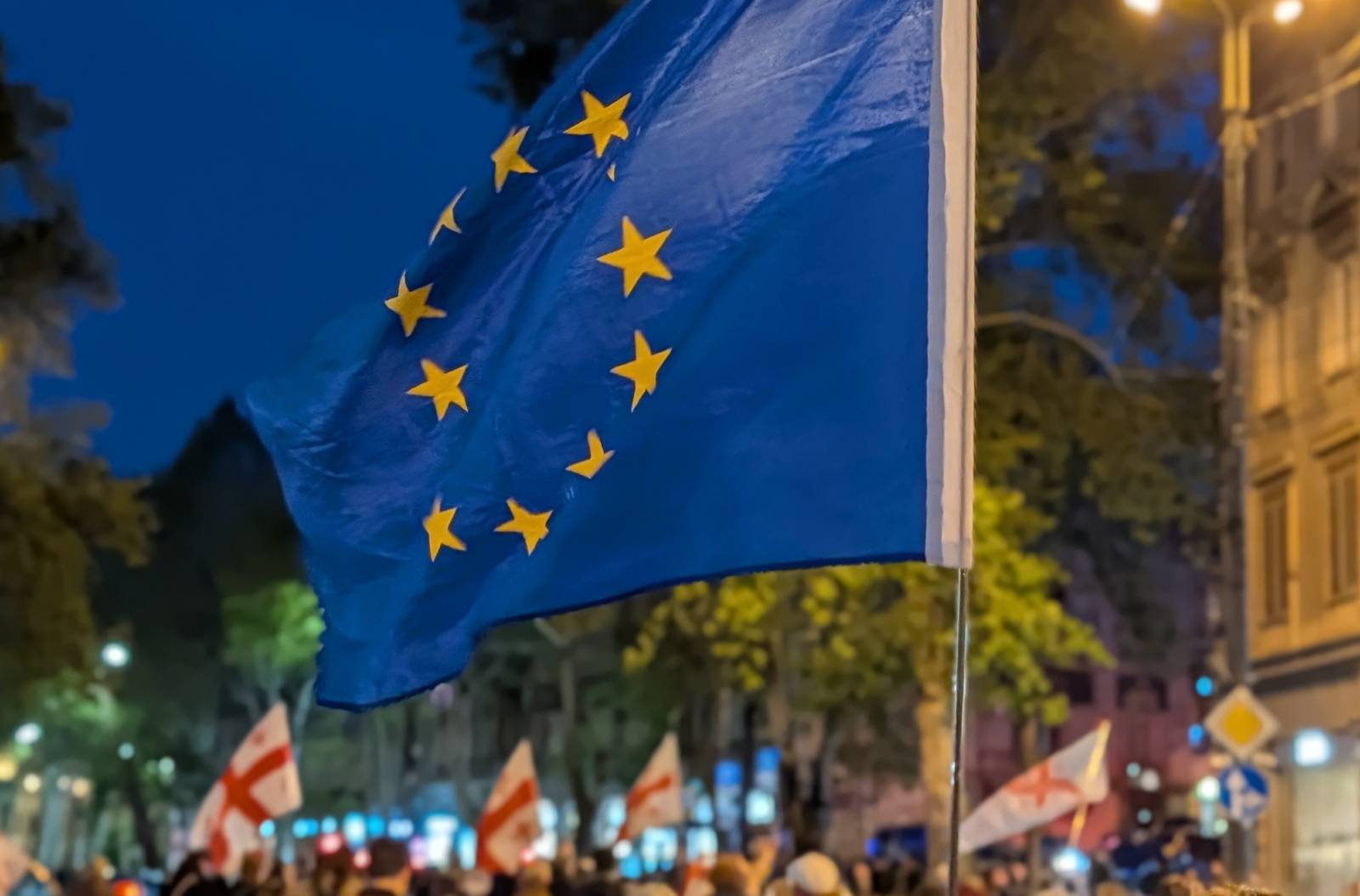
The European Union’s annual report noted “severely curtailed” human rights in Georgia while drawing attention to reduced bilateral political contacts and dialogue between Brussels and Tbilisi amid what the document described as “significant democratic backsliding.”
The EU Report on Human Rights and Democracy in the World, published on August 11, contains two documents, with one of them focusing on individual countries, including Georgia. The document reviews key developments in Georgia in 2025 regarding human rights and democracy, as well as the state of EU policies and bilateral ties with the country.
“The state of democracy in Georgia was marked by significant backsliding,” the report says. “The Georgian authorities imposed repressive measures against civil society, media representatives and opposition leaders that severely undermine democratic decision-making and processes and effectively abolished civic participation and the system of checks and balances.”
The document lists developments such as “widespread” ill-treatment of protesters by law enforcement forces, “environment of impunity” regarding perpetrators, as well as “concerns about the right to fair trial” over detentions, arrests, and sentencing of protesters and journalists. It also refers to reports of abuse from law enforcers towards women protesters, reports of “intimidation, threats and verbal and physical assault, arbitrary detentions” towards journalists and media workers, as well as the laws that “negatively affected the right to freedom of expression and the ability of the media to operate freely.”
“Human rights were severely curtailed by repressive actions and laws that infringe upon fundamental rights, including equality and nondiscrimination, the freedom of expression, assembly and association, as well as the right to privacy, family life, liberty and security,” the report says.
The report also notes that authorities used the justice system “as a tool of repression and political persecution” by freezing bank accounts of several CSOs in 2025, adding that “political pluralism has been at risk” over the ruling party’s efforts to ban several opposition parties.
“The politically motivated persecution against civil society and arrests of opposition leaders went against basic democratic values,” the report notes.
EU Policies, Financial Engagement, Multilateral Context
According to the report, the bloc has “consistently urged the Georgian authorities to reverse the democratic backsliding,” among others, listing measures the EU invoked in response to Tbilisi’s moves, including Georgia regressing on visa liberalisation benchmarks. The measures included the EU suspending visa-free travel for Georgian diplomatic passport holders, a policy that took effect early in 2026.
“There was no political dialogue between the EU and Georgia in 2025 due to the continued serious democratic backsliding by the Georgian authorities. The EU continued to downgrade bilateral contacts. The EU-Georgia Human Rights Dialogue has not taken place since June 2023,” the report noted, referring to 2024 conclusions by the European Council that Tbilisi’s actions “have de facto led to a halt of the pre-accession process.”
In the face of such developments, the report says that the bloc “continued to halt financial assistance directly benefiting Georgian authorities in 2025” while “EUR 24 million has been contracted for civil society and independent media since October 2024 under NDICI bilateral and thematic funding.”
According to the report, civil society also benefits from increased support through the regional Eastern Partnership Civil Society Facility, while the EU also continued to support the Public Defender’s Office in enhancing institutional capacities.
The report further noted that the Georgian authorities “did not invite an observation mission from the Office for Democratic Institutions and Human Rights (OSCE/ODIHR) in time to allow a meaningful observation of the municipal elections in October 2025,” and that Georgia failed to address “any of the important OSCE/ODIHR recommendations from previous elections.”
“While good cooperation in international fora is generally maintained, Georgia did not align with some international and EU initiatives,” the report concludes.
The relations between Georgia, which became the EU candidate country in 2023, and Brussels worsened amid the Georgian Dream government’s anti-democratic moves and anti-EU discourse. The EU said in November 2025 that Georgia is a candidate country “in name only” and moved to suspend visa-free travel for Georgian holders of diplomatic and service passports.
Also Read:

