



Nik Dirga
Digital Explainer Editor
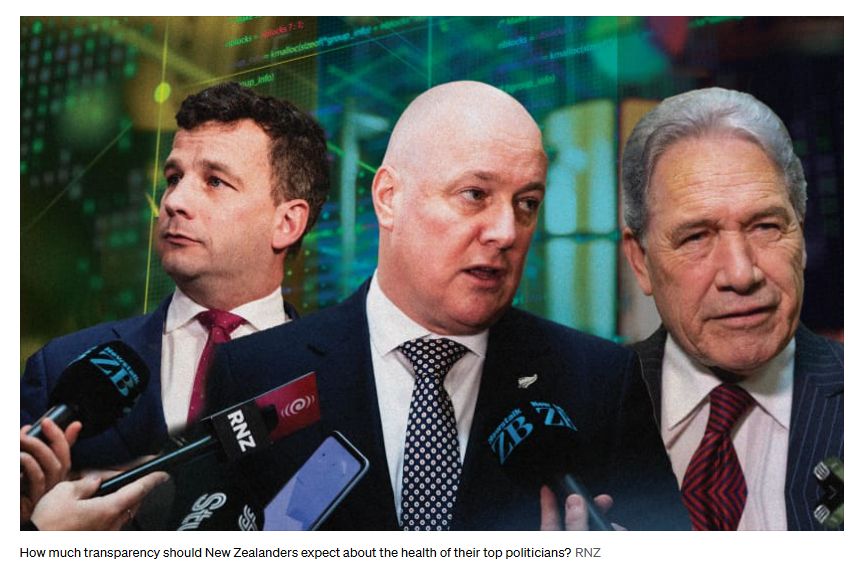
Explainer
– Top US politicians are keeping their health struggles
hidden. What are the rules for New Zealand
MPs?
America has seen a steady stream of stories about
politicians who have not been forthcoming about health
issues that have kept them off the job, sometimes for
months.
The former Senate Majority leader Mitch
McConnell, 84, revealed this week after
several weeks of speculation about his health that a
fall had led to a lengthy hospital stay. Another
congressman, New Jersey Republican Tom Kean, vanished
from Congress for four months, with no information given
about why, before returning to announce he had been dealing
with severe depression.
The issues aren’t just along
America’s polarised party lines – California Senator Dianne
Feinstein, a Democrat, faced
questions about severe cognitive issues before dying in
office at age 90 in 2023.
Advertisement – scroll to continue reading
And of course, the health of
the last two US presidents – Democrat
Joe Biden, who left office at age 82, and Donald Trump,
who
just turned 80 years old – is often in the news. There
have been many
health cover-ups in American presidential history. Polls
show American voters concerned about their leaders’ age and
health transparency.
Could we ever see the same kind
of situation developing here?
What are the rules about
politicians disclosing their health issues in New Zealand –
or are there any?
Are there any rules about
disclosing the health of our politicians?
Short
answer – No.
The Parliamentary Service office
confirmed there’s no process in place.
New Zealand has
no general mechanism that requires an MP to step down
because they have become medically unable to do their job
and there is no fitness-for-office test or compulsory health
assessment.
“Everyone’s health information is their
personal information including MPs’ health information and
medical records,” the office of the Privacy Commissioner
told RNZ.
“This is protected from disclosure under the
Privacy Act and the Health Information Privacy Code but can
be released with the MP’s authorisation.”
Otago
University Professor Nick Wilson was
part of a team who examined how health issues affected
several former prime ministers, published in the New Zealand
Medical Journal.
He agreed in terms of a requirement
to disclose health, there is “essentially none.”
“No
one is compelled to disclose their personal information
unless there is a specific requirement,” the Privacy
Commissioner’s office said. “For example, the Cabinet Manual
covers required disclosures about MPs’ interests, but this
does not extend to health information.”
There have
been complaints about American politicians like McConnell or
Biden not being transparent, but New Zealand recently
generally has a stronger record of voluntary disclosure when
politicians have been ailing.
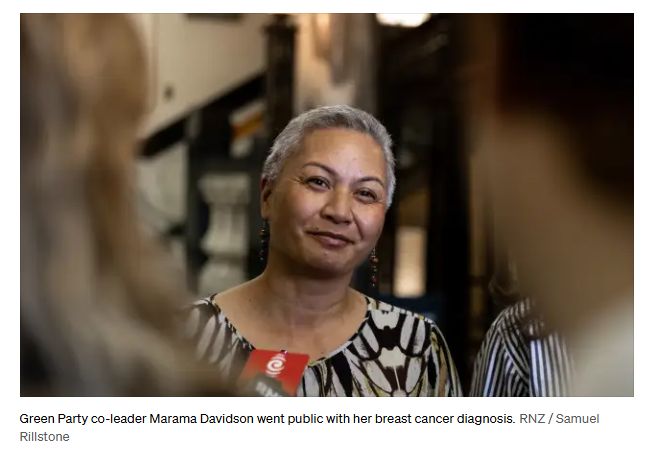
Politicians
including Green
Party co-leader Marama Davidson, former Labour MP Kiri
Allan and the late National MP Nikki Kaye have been
forthright about their cancer battles while in
office.
New Zealand also has a somewhat
younger-skewing demographic than America, where complaints
of a “gerontocracy” of leadership by the elderly are
frequent. The average age of the US Congress is older –
nearly 58 for the House of Representatives and 64 for the US
Senate.
The average
age of the current Parliament is 49 years, one month,
ranging from the youngest, Te Pāti Maori MP Hana-Rawhiti
Maipi-Clarke, now 23, to NZ First leader Winston Peters, 81,
who first entered Parliament in 1978.
On the other
hand, the oldest US senator, Iowa’s Chuck Grassley, is
nearly 93 years old and will be 95 at the end of his current
term.
“The US political system seems to have
dysfunctional processes that favour politicians staying
around well into their 70s and 80s – creating what seems to
be a gerontocracy,” Wilson said.
“NZ is much more like
other democracies with more youthful
politicians.”
There’s no mandatory retirement age for
MPs, although there are for
judges and some public figures.
“Compulsory
retirement ages have been generally unlawful in NZ under the
Human Rights Act 1993’s age discrimination provisions,”
Wilson said.
Have we ever had issues with prime
ministers and their health?
Yes, although not in
recent years.
Five prime ministers or premiers have
died in office – John Ballance (1893), Richard Seddon
(1906), William Massey (1925), Michael Joseph Savage (1940)
and Norman Kirk (1974).
Kirk, who died at only 51
years old, suffered from rapidly deteriorating health in his
final years, including heart disease, diabetes and surgery
for painful varicose veins.
The true extent of Kirk’s
health was still somewhat kept from the public, as Kirk
himself wanted to keep working and was frustrated by his
tragic decline as rumours swirled around him.
Wilson’s
study found poor health could have an impact on the whole
country. The case studies looked back at several prime
ministers who suffered health issues that affected their job
such as Sir Joseph Ward, who resigned just six weeks before
his death in 1930.
Ward’s “second term as PM between
1928 and 1930 was marked by his poor and hasty decisions,
frequent absences from Parliament as the result of illness
and attempts by close associates to minimise the extent of
his sickness and general debility.”
“All of these
figures were reluctant to accept limitations to their
authority, despite urgings from associates who considered
them no longer able to make sound decisions or too ill to
carry out their work,” the study concluded.
Health
struggles and other debilitating conditions can take many
forms. Former Prime Minister Robert Muldoon notoriously
called a
snap election while reportedly under the influence of
alcohol, a decision which changed the path of the
country.
What happens if a politician has a health
condition that prevents them from serving?
A member
can voluntarily choose to resign or seek leave.
An MP
who is unwell may seek permission to be absent or choose to
resign, but that is a matter for the member, Parliament
Services said.
If the Speaker grants permission, the
member can be absent without affecting their party’s votes
in the House, in accordance with Parliament’s rules under Standing
Order 39.
The Electoral Act 1993 lays out what
happens if a parliamentary vacancy is created – whether
through resignation, disqualifying criminal convictions or
death.
A by-election can be held, although if the
vacancy happens close to a general election it may be
bundled into that.
The only health-related exception
that could force an MP out of office is a rather obscure
section of the Electoral Act, Section
56, which deals with members “becoming mentally
disordered”.
In the law this means where the member is
subject to compulsory treatment or detention under the
Mental Health (Compulsory Assessment and Treatment) Act
1992, according to Parliament Services.
That process
requires two medical examinations six months apart, with the
results reported to the Speaker and laid before the House
before the seat is vacated. It does not extend to physical
illness or general incapacity.
There’s no record of
Section 56 ever having been used.
Should politicians
be required to take a health test?
Wilson said while
privacy is important, he believes that in the future some
kind of health screening of top leaders could be
useful.
The American president has a
regular health checkup but it’s not mandatory and
there’s no requirement as to how much information is
disclosed.
“For leaders/deputy leaders of a country
like NZ – I think it would still be desirable for some
formal process to exist,” Wilson said, noting a prime
minister might have to deal with war, disaster or a pandemic
and it could be useful for the public to know they were up
for the job.
“This requirement could be to give health
information to an independent panel that could then make an
assessment around if the health issue is potentially
impeding their ability to do their job.”
Wilson said
such a panel could review leaders’ health information
annually and assess their fitness to serve.
“If an
acute health event occurred – then an extra assessment could
be required within a certain time frame (eg, a few weeks).
Perhaps a NZ-based citizen jury could deliberate on this
issue and make recommendations.”
Wilson said he didn’t
think other MPs should need to have their health tested,
however.
But he pointed to several examples throughout
history where the questionable health of a leader had a big
impact on events.
“If an impaired leader stays in
power they can make decisions that have bad consequences,”
he
said.
New Zealand’s public broadcaster, providing comprehensive NZ news and current affairs, specialist audio features and documentaries.
Radio New Zealand is a Crown entity established under the Radio New Zealand Act 1995. Radio New Zealand News are vital elements in our programming, providing impartial news and information to New Zealanders every day. Radio New Zealand (RNZ) provides listeners with exciting and independent radio programmes in accordance with the Radio New Zealand Charter.

