



Lauren
Crimp Political reporter
Tuwhenuaroa
Natanahira Māori news journalist
Business
leaders say workers could end up wearing the cost of
KiwiSaver changes the National Party plans
to bring in if it’s re-elected in November.
The
party want to make the savings scheme compulsory,
automatically enrol babies, pay a contribution to people on
parental leave, and extend employer contributions to include
workers over 65 years old.
Simplicity chief economist
Shamubeel Eaqub told RNZ the impact on businesses would be
“very minor” because most working people are already
contributing.
“Those who are not contributing,
typically they’re in low income and, quite often, in
precarious or part-time work. The impact on business is
likely to be very minor and at the edge.”
“The cost of
employing somebody includes the cost of KiwiSaver, whether
the person has KiwiSaver or not, shouldn’t matter. It’s only
whether that money goes into a KiwiSaver account or into the
employee’s bank account.”
Advertisement – scroll to continue reading
He said maintaining
contributions for people over 65 would make the system
fairer.
“We are seeing more and more older people
continuing to work and I think it’s only fair that we don’t
have ageist policies that stop people getting the most
benefits that their job should entail.” Eaqub
said.
New Zealand-based recruitment agency Tribe
Recruitment Group’s chief executive Bruce Pilbrow told RNZ
smaller businesses would likely struggle with the extra
cost.
“It’s one of those things that’s tricky, isn’t
it? Because in some ways you can see it’s great, potentially
for the future of people in New Zealand, as people can now
work a lot longer than 65.
“But the real push is that
there is a real cost for businesses today, and how do they
factor that in as they move forward, especially when they’re
employing people.”
Pilbrow
said more businesses may consider total remuneration
packages instead – that is, making the contribution as part
of someone’s overall salary, rather than a percentage on
top.
Eaqub said those kind of contracts should be
banned.
“Total remuneration packages are not
consistent with the aims of Kiwisaver, and the way that the
policy was designed. It was not meant to be a way to
underpay workers.
“We don’t have good data on it, but
we know that it’s a relatively minor practice, and it’s very
much about making sure that just because you are in low
income, that you don’t end up having even lower income
because your KiwiSaver contribution is suddenly just
missing,” he said.
National said it was open to
considering phasing out the practice, and finance
spokesperson Nicola Willis said it would consult widely with
employers and employees about it.
“The question that
we want to explore more broadly, is if you were to decide
that you couldn’t take that approach in future, what would
the transition arrangements be for those who have already
struck an employment agreement on the basis that those kinds
of arrangements are permitted.”
She said the policy
would have implications for people who currently had total
remuneration packages because those would not have taken
into account compulsion or increased contribution
rates.
Willis said that would need to be worked
through in government, and could require a law
change.
‘No such thing as a free
lunch’
Advocacy group BusinessNZ’s top economist John
Cask told RNZ the extra money to pay for an increase in
employee and employer contributions will have to come from
somewhere.
“There’s a lot of people that are already
committed to KiwiSaver, and it’s improved over the years so
the idea of encouraging more savings is generally considered
to be positive, but I think we’ve got to realise here
there’s no such thing as a free lunch.
“If it’s 12
percent – six percent funded by the employer, six percent by
the employee – given that businesses in New Zealand have to
face international pressures, this could be offset by other
things, whether it’s increased training, reduced training,
or actual wages and salaries to pay to employees,” he
said.
Cask said the “broader” issues New Zealand was
facing was the increasing “unsustainable” cost of
superannuation.
“We’re currently spending around about
$23 billion per annum on New Zealand superannuation … by
the end of the decade, it’s going to be over $30
billion.
“The real difficult issue is addressing who
actually gets NZ superannuation in the future. Are you going
to asset test it? Are you going to income test
it?
“Irrespective of changes made to KiwiSaver, it is,
I think, imperative sooner rather than later that we have to
address the whole issue of the sustainability of NZ
superannuation and whether it should be a universal payment
or targeted,” he said.
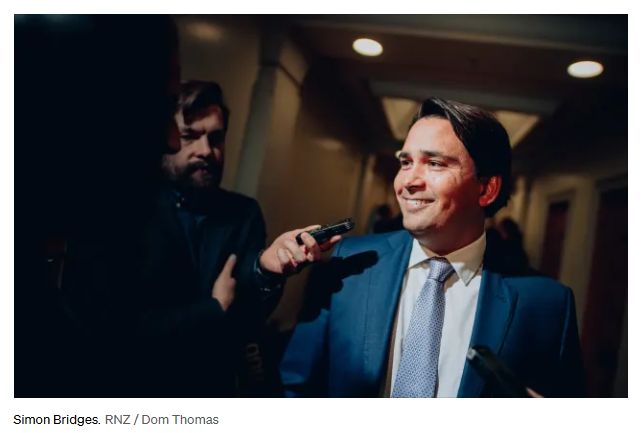
Former
National Party leader and Auckland Business Chamber chief
executive Simon Bridges told RNZ that while a strong
collective nest egg would make the nation wealthier, pushing
minimum contributions up would be steep for
some.
“Twelve percent is high and that does create
real issues that shouldn’t be underplayed for individuals,
self-employed, small and medium businesses.
“Right at
the moment – appreciating it’s not coming in today – [there
are] a series of events where the cost of living is very
difficult, where cash flow, a variety of other issues the
self-employed, small and medium businesses make it really…
at higher contributions, that’s even tougher, that’s less
money they have to, as individuals, pay down their
mortgages, as business people to keep their business going
and potentially grow it.
“I do think, in the long
term, it makes a lot of sense but 12 percent is high,” he
said.
In 2011, the previous National government
rejected compulsory KiwiSaver membership with Finance
minister Bill English saying it would put too much pressure
financial pressure on people.
Bridges said the party’s
renewed stance was a recognition of an ageing population and
superannuation affordability.
“The National Party is
clearly seeking to tap into a zeitgeist led by the financial
services sector, but also by those concerned around ageing
demographics, affordability of superannuation, and very
legitimate, in fact, strong issues for a major political
party to be concerned about,” he said.
Director of the
Salvation Army’s social policy and parliamentary unit,
Bonnie Robinson, said while the idea of supporting more
people to save for their retirement was a “noble” one, the
reality for many low-income earners was that that they were
already struggling to meet the basics.
She said about
55 percent of children who lived in material hardship were
in households where people were in employment.
“So
we’ve already got a lot of people on low incomes from
employment struggling day-to-day.
“To ask them to
effectively reduce their income by potentially 6 percent –
even if that’s phased in – they’re just not going to be able
to afford it without increased support.”
Robinson said
what was needed was a policy that supported people on low
incomes to be able to afford to save for their
retirement.
New Zealand’s public broadcaster, providing comprehensive NZ news and current affairs, specialist audio features and documentaries.
Radio New Zealand is a Crown entity established under the Radio New Zealand Act 1995. Radio New Zealand News are vital elements in our programming, providing impartial news and information to New Zealanders every day. Radio New Zealand (RNZ) provides listeners with exciting and independent radio programmes in accordance with the Radio New Zealand Charter.

