



Analysis
– Forget about today and turn your attention to tomorrow
– that’s the message from National this election year as it
sets itself up as the party focused on the future.
If
you hadn’t heard already, ‘Building the Future’ is one of
the key slogans of National’s campaign pitch.
It’s an
idea and promise the party has focus-grouped – successfully,
they believe – and will be emblazoned in the memory-bank of
anyone who even loosely follows politics.
This year’s
Budget was built on it, with no lolly scramble or
sweeteners, instead a prize
of the books being back in surplus for the first time in
a decade in a few years’ time.
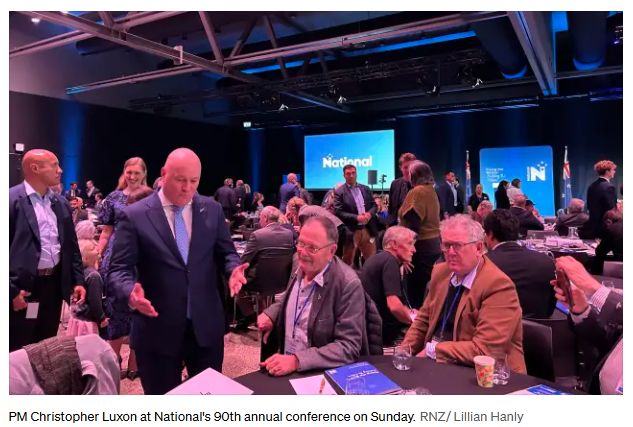
The
party’s suite of KiwiSaver pledges announced at its 90th
annual gathering of the party, this year in Lower Hutt, fits
perfectly into its future vision.
There’s certainly
nothing targeted or temporary about the announcements – two
of the three T’s (the other being timely) the government is
abiding by this year when it comes to relief during the
ongoing cost of living and fuel crisis.
Advertisement – scroll to continue reading
The package
includes compulsory
KiwiSaver for all workers from July 2028, enrolling
babies automatically and giving them a $1500 kickstart
payment, a government contribution to parents on paid
parental leave, and making employer contributions compulsory
for those over the age of 65 who choose to keep
working.
Find a political party in Parliament who
doesn’t agree with some, if not all, of those pitches.
(Spoiler: you won’t, such is the broad support for expanding
and incentivising people to save for their own
retirement).
A previous iteration of a National
government once scrapped the country’s then-compulsory
retirement savings scheme, but Christopher Luxon wasn’t
interested in debating that, saying he was looking
forward.
What Sunday’s announcement did was lay the
groundwork for what comes next – the party’s superannuation
changes.
Finance Minister Nicola Willis used an
unusual amount of her time on Budget Day talking about
superannuation, going as far as to say political parties who
don’t do anything about the entitlement age are robbing
future generations for the sake of their own political
expediency.
She said that while her associate finance
minister and coalition partner Shane Jones sat next to her,
firmly in the knowledge his party would support no such
thing.
The maths on the retirement security blanket is
increasingly not adding up, but at the same time, nobody
wants to be the first cohort of New Zealanders to miss out
on it.
That’s meant any messing around with the
entitlements in recent decades was a sure road to ‘political
suicide’, but Willis is hoping she’s found a sneaky way to
ease the pain.
By making such sweeping changes to
KiwiSaver in the first instance and pointing people to the
extra money they and their loved ones will receive from
birth through to retirement is a savvy way of laying the
foundation for upping the super age.
If young people
today, who know they will be hit by a raised super age in
the future, can also see they’ll get extra contributions
while they’re having a family, their kids will get a nest
egg from birth, and they’ll keep getting employer
contributions if still working at 65, then maybe, just
maybe, they can stomach a lift in the pension age.
Any
party planning to campaign on raising the age must find a
way to sell it, because simply saying the country can’t
afford it isn’t going to persuade people in an election
year.
National is hopeful pairing it with a boost to
KiwiSaver will help voters see the light.
Personal
responsibility is one of the key pillars of the National
Party’s existence, which makes forcing people to join
KiwiSaver a tad off-brand.
Yet the standing ovations
at the party’s conference were bigger, longer and louder –
the kind not seen since the John Key days – as each part of
the policy was rolled out on Sunday.
The biggest
applause was saved for the paid parental leave contributions
– a ‘mum and dad’ vote-winner that had people on their feet
as Luxon declared, “being a parent shouldn’t come at the
expense of your retirement savings”.
As Willis said
when speaking to media after the announcement: “this is a
policy whose time has come”.
They’ll both find out in
November how many people
agree.
New Zealand’s public broadcaster, providing comprehensive NZ news and current affairs, specialist audio features and documentaries.
Radio New Zealand is a Crown entity established under the Radio New Zealand Act 1995. Radio New Zealand News are vital elements in our programming, providing impartial news and information to New Zealanders every day. Radio New Zealand (RNZ) provides listeners with exciting and independent radio programmes in accordance with the Radio New Zealand Charter.

