

The International Monetary Fund (IMF) Executive Board described Georgia’s economy as “resilient” despite elevated “global uncertainty,” including the ongoing conflict in the Middle East, expecting economic growth to remain “strong, though moderating,” at 6.5% in 2026, while projecting inflation to stay above the National Bank of Georgia’s (NBG) target until mid-2027.
In a June 10 press release regarding the conclusion of its Article IV Consultation with Georgia, a regular review assessing member countries’ economic performance, the IMF lauded Georgia’s economic performance, saying real GDP grew by 7.5% in 2025 and “remained strong” in early 2026, while inflation rose above target, reaching 5.9% in April 2026 “due to higher energy prices.” It added that “fiscal and external buffers have strengthened, with reserves reaching the IMF’s adequacy threshold and public debt declining below 35% of GDP.”
Assuming the conflict in the Middle East is resolved soon, the IMP projects growth to “moderate to 6.5% in 2026, gradually converging to its medium-term potential rate of 5% by 2028.” Inflation is expected to return to target by mid-2027, while public debt is projected to “remain near current levels with continued prudent monetary and fiscal policies.”
“Amid elevated uncertainty and recurring external shocks, policy priorities include bringing inflation back to target, building further reserve buffers, and advancing structural reforms to sustain strong growth and create more jobs,” the IMF said.
The Fund’s Executive Directors commended the Georgian authorities for their “good macroeconomic performance underpinned by sound macroeconomic management, strong growth, improved fiscal and external buffers, and a sound financial sector,” highlighting “the importance of preserving macroeconomic stability while advancing reforms to sustain growth and spur job creation.”
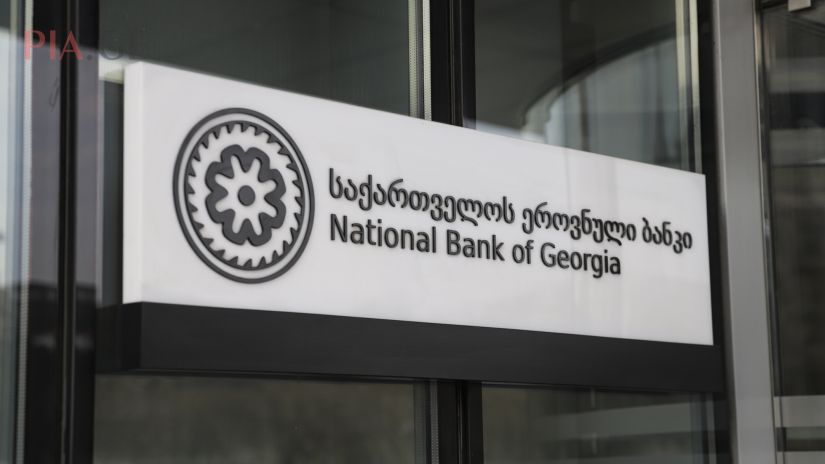
Directors advised that monetary policy should remain “appropriately tight” and that international reserves should continue to be accumulated “as conditions allow.” They also called for strengthening the governance framework of the National Bank of Georgia to “reinforce institutional credibility and policymaking, in line with international best practices.”

Regarding fiscal policy, the Directors said Georgia’s “medium‑term fiscal plans remain appropriate to keep public debt at prudent levels,” emphasizing the need to “streamline tax expenditures, strengthen mining taxation and further improve tax administration, while enhancing spending efficiency to create room for priority spending.” They also said “targeted support should be provided to vulnerable groups if downside risks materialize,” and called for reforms of state-owned enterprises “to reduce fiscal risks.”
The IMF also welcomed the “resilience” of Georgia’s banking system, but called for “continued vigilance amid evolving risks, including rapid credit growth, unhedged foreign exchange exposures, non‑bank financial activities, and digital assets.” Directors encouraged further efforts to strengthen “bank resolution, crisis management arrangements, consolidated supervision, and digital‑asset oversight.”
The Executive Board further stressed the need to address “longstanding structural constraints to sustained inclusive growth and job creation,” encouraging reforms aimed at reducing “high youth unemployment, persistent skills mismatches, and weak work incentives, including strengthening vocational education and public employment services, better aligning social assistance with work incentives, and supporting high‑productivity sectors.”
They also supported continued investment in logistics, trade facilitation, infrastructure, and deeper regional integration to strengthen competitiveness, stressing “the need to strengthen anti‑corruption and judicial institutions, while maintaining a predictable market‑friendly policy environment.”
The IMF said that the next Article IV consultation with Georgia is expected to take place “on the standard 12-month cycle.”
Also Read:

