



Johnny
Blades RNZ Pacific senior journalist
Bougainvilleans
may have to wait even longer than expected on whether Papua
New Guinea’s parliament will approve their vote for
independence.
But in a message from a West Papuan
living in PNG, Bougainvilleans are being urged to stay
patient and trust the process – because unlike West Papuans,
they actually have a genuine process in play.
The
result of Bougainville’s 2019 referendum – in which 97.7
percent of Bougainvilleans voted for independence – was
finally tabled in PNG’s parliament last month.
The
parliament has the final say on whether to ratify
Bougainville’s overwhelming vote for independence.
The
date for parliament’s decision on the matter is set to be
announced next month, but all signs point to a longer-term
process for Bougainville’s future.
Given that it took
almost seven years just for the result to formally make it
to the national parliament, the patience of Bougainvilleans
has been remarkable.
But as noted by the regional
member for Bougainville in the parliament, Peter Tsiamalili
Jr, the tabling of the result is not the end of the
process.
“It marks the beginning of Parliament’s
direct and solemn consideration of the question placed
before it by the people of Bougainville,” he said, adding
that constant dialogue was the way forward, no matter what
gets decided in the short term.
Advertisement – scroll to continue reading
“This matter must
never be reduced to partisan politics. It must not become a
contest between government and the opposition, nor should it
become a source of division between Bougainville and the
rest of Papua New Guinea.”
While it remains unlikely
at this time that a majority of PNG’s MPs would vote to
grant Bougainville independence, Prime Minister James Marape
and others have indicated that a longer timeframe could come
into play.
They suggest PNG wouldn’t necessarily give
a final answer of yes or no to Bougainville in the short
term, but rather push the decision back over a period of
years, possibly a decade or so, to give Bougainville time to
build its economy and services in order to be able to stand
on its own feet, before the decision is
revisited.
‘Some level of comfort’
A
complicating factor is that the Autonomous Bougainville
Government, through its president Ishmael Toroama, has said
Bougainville’s plan is to declare independence in 2030, no
matter how PNG’s parliament votes.
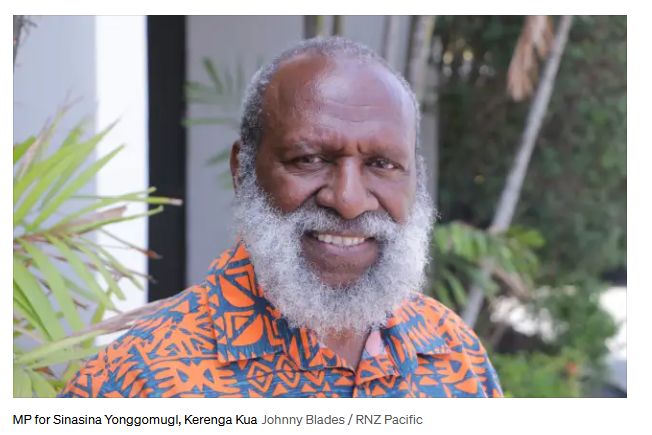
But the MP for
Sinasina Yonggomugl, Kerenga Kua, noted that the Burnham
Accord, signed in New Zealand last year by both PNG and
Bougainville, saw both parties agree to be bound by any
decision of parliament. They also agreed to maintain ongoing
dialogue.
“So that is an assurance, some level of
comfort to all of us to know that firstly, people should not
react unilaterally to any outcomes. People should not resort
to violence. We should all cooperate to maintain peace,
harmony, good order, good governance, and then we talk. We
sit down, and we talk about what we will do going
forward.”
Speaking
to RNZ Pacific, Kua cited a poem read by the MP for Central
Bougainville Timothy Masiu in July in parliament, likening
the Bougainville issue to the tide – it comes today, then it
comes tomorrow, and then the day after – the issue does not
just stop.
“So it is within his contemplation as a
leader of Bougainville that we might not be able to resolve
it successfully to the satisfaction of the people of
Bougainville.
“However, we must not give up hope. We
keep coming back. We keep talking about it. Keep coming
back, refresh the issues, recharge the issues, keep talking
about it until hopefully one day it gets
resolved.”
West Papua comparison
Some
commentators have noted the parallels between
Bougainvilleans’ long quest for independence and that of
West Papuans.
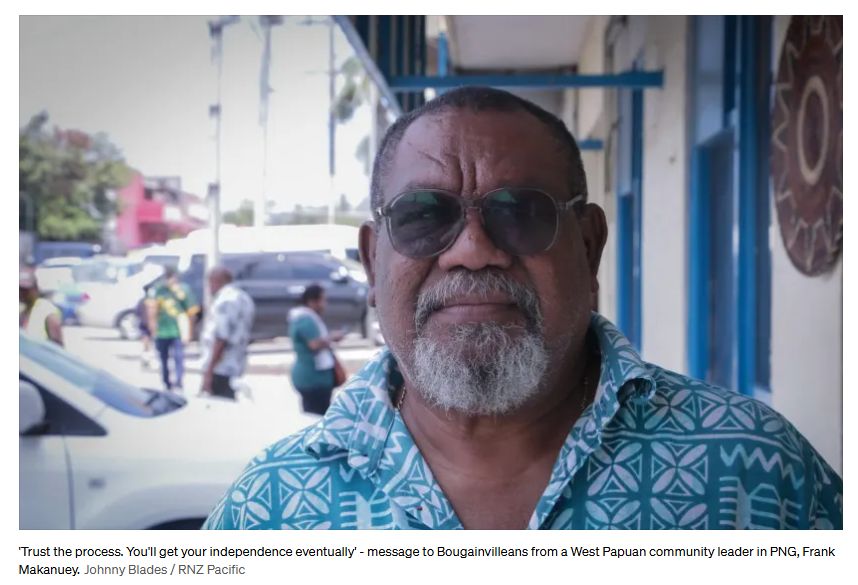
But a West Papuan community leader who
lives in PNG, Frank Makanuey, said the parallels are limited
– he argued that while Bougainville has standing to
negotiate a “secessionist” outcome, under Indonesian rule
West Papuans lack standing due to failures to apply
international law, as evidenced by the dubious 1969 Act
of Free Choice.
“The Bougainville leadership must
be proud that they have standing to negotiate independence
from a secessionist point of view, and I do not have that as
a West Papuan person. I do not have standing at all,”
Makanuey said.
“The PNG government has come this far
to resolve the Bougainvillean issue. It has come like
halfway. It’s prepared to go halfway, in my opinion. Just
follow the process, trust the process. You’ll get your
independence eventually.”
Makanuey warned that
threats, unilateral timelines and declarations from
Bougainville’s leadership are creating resentment among
Papua New Guinea politicians.
“But (Bougainille) must
understand that we need to change the constitution for them
to be able to (change their political status),” he told RNZ
Pacific.
“I think they also have to understand
international law in this regard. This is a secessionist
movement, and it’s not an outright independence that’s
normally accorded under the international law where it says
all peoples have the right to
self-determination.
“This isn’t about that. This is
about a group of people wanting to break away from a
government they agreed to in the first place, to be part of
in the first place.”
In the meantime, Bougainville’s
government faces sizeable challenges, not just in keeping
the expectations of its people grounded in reality, but also
in maintaining peace.
A violent
attack on a mining company at Panguna just over a week
ago came as a setback after many years of peace and suggests
that frustrations are growing over the future of
Bougainville.
New Zealand’s public broadcaster, providing comprehensive NZ news and current affairs, specialist audio features and documentaries.
Radio New Zealand is a Crown entity established under the Radio New Zealand Act 1995. Radio New Zealand News are vital elements in our programming, providing impartial news and information to New Zealanders every day. Radio New Zealand (RNZ) provides listeners with exciting and independent radio programmes in accordance with the Radio New Zealand Charter.

