



The
Tonga Meteorological Service has declared drought across all
major islands that make up the kingdom, including Tongatapu,
Niuatoputapu, Ha’apai and ‘Eua.
Niuafo’ou, a remote
northern island, is still on a drought warning, while
Vava’u, in the central division, is on a drought
alert.
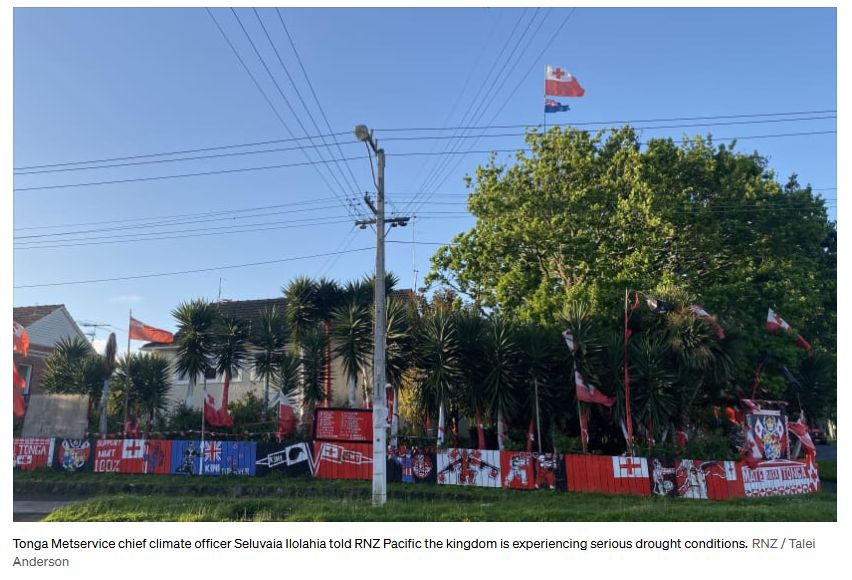
Tonga Metservice chief climate officer Seluvaia
Ilolahia told RNZ Pacific the kingdom is experiencing
serious drought conditions.
She said the government is
working with stakeholders to ensure communities receive
vital information and access the support they
need.
“The National Disaster Office, we work very
close, and they are also very close to other organisations,
for example the work Red Cross and other NGOs especially
when it comes to responding to the needs of the community.
And the also reach out to the islands when they are
distributing water.”
She said there has been some rain
in Vava’u but in other areas it’s been below
average.
The metservice is also reminding people that
the impacts of El Niño may continue even after the event
has ended.
Ilolahia said warnings will be in place for
the next three months.
“El Niño is still very strong
and, like the forecast, it’s probably going to peak around
November to December.
Advertisement – scroll to continue reading
“But what we want to stress to
the community and people to understand are that the impacts
might come later, even after the event, we will still feel
it.”
Seluvaia Ilolahia said the public is responding
very seriously to the warnings being given
out.
WMO
The World Meteorological Organisation
(WMO) said sea-surface temperatures in the central and
eastern tropical Pacific are forecast to increase to record
levels during October-November-December 2026, reflecting the
strengthening of the El Niño event which will drive weather
patterns and impact economies, ecosystems and communities
across the globe.
El Niño is already causing
disruption and devastation from droughts and floods in
various parts of the world.
The monthly Global
Seasonal Climate Update from the WMO said that El Niño
will continue to intensify ahead of its forecast peak in
December.
It is likely to bring above-average
temperatures to much of the globe and shift rainfall
patterns, increasing the risk of drought and floods in
different
regions.
New Zealand’s public broadcaster, providing comprehensive NZ news and current affairs, specialist audio features and documentaries.
Radio New Zealand is a Crown entity established under the Radio New Zealand Act 1995. Radio New Zealand News are vital elements in our programming, providing impartial news and information to New Zealanders every day. Radio New Zealand (RNZ) provides listeners with exciting and independent radio programmes in accordance with the Radio New Zealand Charter.

