



Layla
Bailey-McDowell Māori news journalist
Coco Lance
RNZ Pacific digital journalist
Young people care
about politics. So why aren’t they enrolling to
vote?
With less than a week until enrolment closes for
the 2026 general election, rangatahi were urging
their peers to sign up and have their say, warning
politicians they risked alienating a generation that already
feels unheard.
More than 166,000 New Zealanders aged
18 to 24 were not enrolled to vote, despite many saying they
were deeply concerned about issues such as the cost of
living, climate change and education.
Make It 16
national secretary Malak Tamimi, 17, told RNZ it’s not
because young people didn’t care, it’s because they didn’t
feel listened to.
“Young people often don’t see
themselves in the policies that are made or they don’t see
themselves being heard by the politicians and the people
making decisions about our futures,” she said.
Advertisement – scroll to continue reading
“I
think the moment that more politicians and everyone in
Parliament can actually consider young people, genuinely
listening to understand them rather than just to put them as
a checkbox, that’s when young people will begin to be more
engaged in society, when the system is catered for
them.”
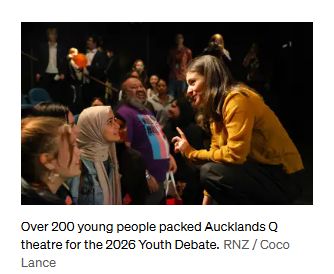
Around 200 young people packed Auckland’s Q
Theatre on Tuesday night for a youth-led
election debate. The free kaupapa was organised by Make
It 16, Gen-Z Aotearoa, Tomorrow Together, Social Change
Collective, On A Roll and other youth organisations across
the country.
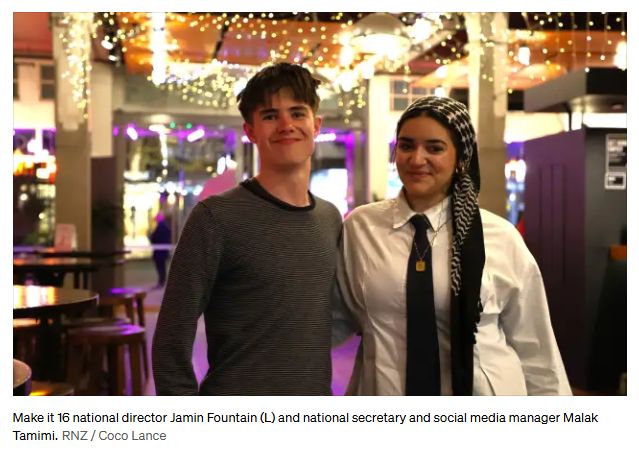
Tamimi
said the turnout showed that rangatahi were
willing to engage when they were given the
opportunity.
“Unfortunately, it’s gotten to a point if
rangatahi don’t do it themselves, then no one else will
create that space where we are heard, where we are
seen.”
Make It 16 national director Jamim Fountain,
17, said the debate was also about the many young people who
were still too young to cast a ballot.
“It shows that
there are so many young people, including us, that don’t
have a say this election,” he said.
“It further
emphasises that people need to make sure that they are
voting with the young people that can’t vote in
mind.”
The pair continue to campaign for the voting
age to
be lowered to 16.
Looking
after future generations
Climate change, education
and the cost of living were among the major kaupapa
discussed at the Youth Debate.
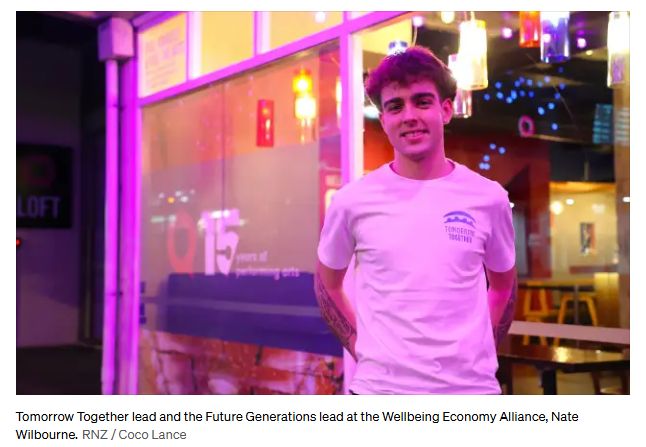
Tomorrow Together,
Future Generations lead at the Wellbeing Economy Alliance,
Nate Wilbourne, 18, said many of the biggest issues facing
Aotearoa required decision-making beyond a single electoral
cycle.
“In New Zealand at least, our politicians are
incentivised to act only in short-term
thinking.
“What’s the quick economic and monetary
benefits, but actually not the impacts of today’s decisions
on future generations, our mokopuna, our grandkids, our
children.”
Tomorrow Together was campaigning for a
Future Generations Act that would require governments to
consider the long-term impacts of their policies.
He
said issues such as climate change, housing and healthcare
could not be solved through short political
cycles.
“The issues that are affecting us today
deserve long-term thinking.”
Education and feeling
heard
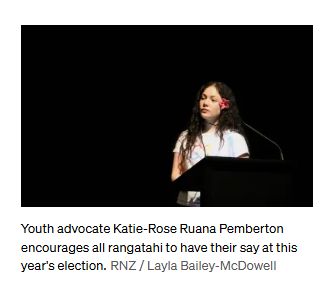
One of the first questions of the night came
from Katie-Rose Ruana Pemberton, a 20-year-old
neurodiversity advocate and actor, who asked what the
political representatives would do to better support
neurodivergent students.
She said she was hoping for
more detailed answers and stronger commitments.
“But I
did have some MPs come up to me afterwards and say, ‘Hey, I
really struggled to answer that because there isn’t a lot in
our policy’.
“And I think that is the most beneficial
and important thing from tonight.
“It’s not always
about knowing everything or enforcing the best policy. But I
think having an open mind and being open to learning more
and having a heart in the right place is what matters
most.”
Pemberton said voting remained important,
especially for communities whose voices were often
underrepresented.
“If you’re impacted by climate
change, education, cost of living, then it’s totally
relevant to you.
“If you can vote, it is your
right.”
She
said voting was one way to ensure the issues that were
impacting your community were seen and heard.
“I come
from South Auckland and cost of living is a current crisis.
We’re struggling every day … we’re just making ends meet
and it’s not a common story. But the more that we stand up
and we vote, the more impact that you have now on this
election can help benefit us.”
Why
aren’t more young people voting?
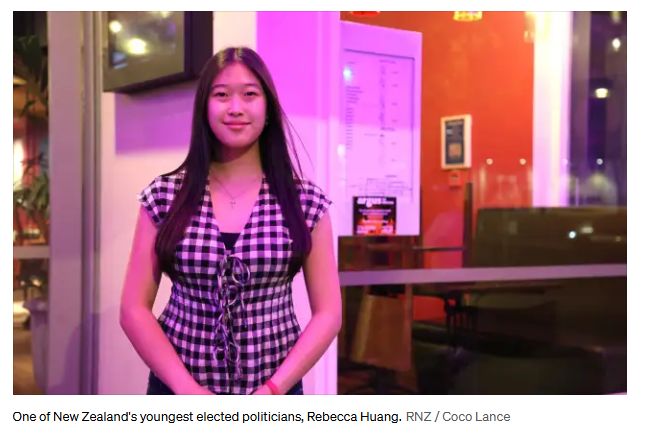
Upper Harbour Local
Board member Rebecca Huang, who was elected at 19 and was
now 20, believed many young people felt disconnected from
politics because they did not believe it would deliver
meaningful change.
“A lot of young people are
disenfranchised right now.
“They either think
regardless of what party gets in, nothing’s going to happen,
or regardless of what party gets in, what happens is not
going to be good for me.”
Huang said the lack of young
voices in politics only reinforced that feeling.
“The
common denominator is when there’s not enough young people
around the table, there’ll never be enough
representation.”
She said some young candidates were
being treated as “tokens” rather than being given genuine
influence.
“They’re kind of there as a token of,
‘yeah, we appreciate youth. We think youth are
represented’.”
‘This is your opportunity’
The
message from all rangatahi was to enrol and make their
voices heard.
“Young people are going to be defining
the future of this country,” Fountain said.
“If you
want your voice heard, make sure you get enrolled because
this is your opportunity.”
Tamimi said every vote
mattered.
“Young people are affected by every single
policy that is passed.
“Mental health, cost of living,
all of these issues are directly impacting our
lives.
“If we don’t get a say in these decisions, then
we are more likely to not be seen in the outcomes that
happen.”
Huang said if young people wanted change in
their community, “they have to start within
themselves”.
“They have to make the choice to vote. I
always go with the saying that if you don’t vote, you can’t
complain.
“But
if you put your vote in and that’s what you believe in, then
you’re bettering yourself.”
Eligible voters had until
25 October to enrol, otherwise they would not be able to
cast their vote come 7
November.
New Zealand’s public broadcaster, providing comprehensive NZ news and current affairs, specialist audio features and documentaries.
Radio New Zealand is a Crown entity established under the Radio New Zealand Act 1995. Radio New Zealand News are vital elements in our programming, providing impartial news and information to New Zealanders every day. Radio New Zealand (RNZ) provides listeners with exciting and independent radio programmes in accordance with the Radio New Zealand Charter.

