



Layla
Bailey-McDowell Māori news journalist
Youth
and housing advocates are urging whānau to haere ki te
pōti, saying political decisions can have a real impact on
youth homelessness.
Only 62 percent of 18 to
24-year-olds are currently enrolled to vote for this year’s
general election, and the figure is even lower for rangatahi
Māori, with only 50 percent enrolled.
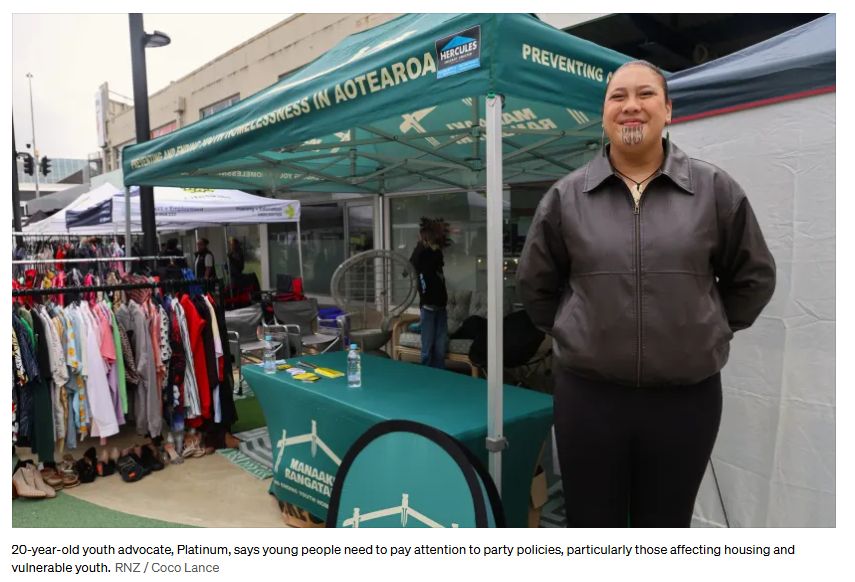
Twenty-year-old
youth advocate, Platinum, said young people need to pay
attention to party policies, particularly those affecting
housing and vulnerable youth.
“I think it’s so
important that rangatahi get out there and enrol to vote
especially if you’re 18, even if you’re younger than 18,
just doing your research on what policies are being pushed
through,” she told RNZ.
“It is important that we’re
seeing the right people come into power through the next
election who are actually going to fix these problems
[homelessness] because at the end of the day I wouldn’t want
my cousin or my whānau who’s as young as 14 on the
road.”
Platinum said all political parties could do
more to address homelessness in Aotearoa, but particularly
youth homelessness.
“There are not enough houses for
our whānau right now and that is so sad.”
She
disagreed with the saying that being homeless “is a
choice.”
Advertisement – scroll to continue reading
“I think some people would rather do the
rough sleeping than be in an unsafe environment and that’s
sad, that’s why we’re here, we need to get our whānau out
of those environments but not into a situation where they
don’t have a home, don’t have a place.”
Research shows
that more than half of people experiencing homelessness in
New Zealand are under
the age of 24.
Māori are disproportionately
impacted by homelessness, with over 28.8 percent of people
experiencing homelessness having Māori whakapapa, despite
accounting for 17.1 percent of the
population.
Research by the Coalition to End Women’s
Homelessness found Wāhine
Māori make up over 50 percent of the total homeless
population and account for at least a third to a
majority of those experiencing severe housing deprivation.
In OECD
countries, women “typically account for 22 percent of
people experiencing homelessness, on average,” the coalition
said.
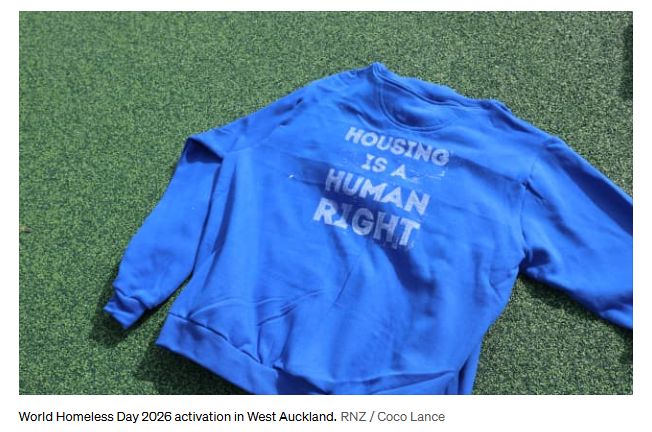
Platinum
was a part of the World
Homeless Day activation on Saturday organised by Youth
Homelessness Collective Manaaki Rangatahi.
It brought
together many different housing and youth services based in
Tāmaki Makaurau, offering many different services for free,
including hair cuts, kai packs, clothing and health checks.
The Electoral Commission were also in attendance, checking
enrolments and helping whānau to enrol to vote.
A key
kōrero throughout the day from all whānau from was to make
your voices heard and “haere ki te pōti.”
Platinum
said the government were focussing on the “wrong things,”
pointing to the Summary Offences (Move-on Orders) Amendment
Bill which passed
its third reading, under urgency, and became law on 24
September.
The legislation, brought forward by Justice
Minister Paul Goldsmith and the coalition government, gives
police the power to issue move on orders to people if they
are being disorderly, begging or rough sleeping. Anyone
disobeying the order will face a fine or possible jail
sentence.
“I think they are not looking at the bigger
problem which is the unsafetiness of actually being
homeless,” Platinum said.
“It’s important that we see
that homelessness isn’t just about the home itself it’s
about the environment, it’s about the people it’s about the
community everything plays a part into homelessness, housing
insecurities, overcrowding housing, moving from places to
places that’s all considered homelessness.
“So it’s
important that we get that out there and actually show
everybody the reality of what some of our youth are living,
the situations that they’re in. A home is supposed to be a
whare haumaru, it’s supposed to be a safe space and a place
where we feel protected and feel heard and seen and
everything.”
At the World Homeless Day activation, RNZ
spoke to many rangatahi and frontline workers who have seen
first hand the reality of youth homelessness in New Zealand.
One teenager RNZ spoke to was homeless from the age of 12 to
16. She was sleeping in stolen cars and abandoned
houses.
One frontline worker said he had recently
helped a 12-year-old the night before the event, and said
the homeless youth they help everyday are in his words,
“getting younger.”
New Zealanders must be enrolled by
25 October to vote in this year’s general
election.
New Zealand’s public broadcaster, providing comprehensive NZ news and current affairs, specialist audio features and documentaries.
Radio New Zealand is a Crown entity established under the Radio New Zealand Act 1995. Radio New Zealand News are vital elements in our programming, providing impartial news and information to New Zealanders every day. Radio New Zealand (RNZ) provides listeners with exciting and independent radio programmes in accordance with the Radio New Zealand Charter.

