



Taiha
Molyneux Māori News Editor
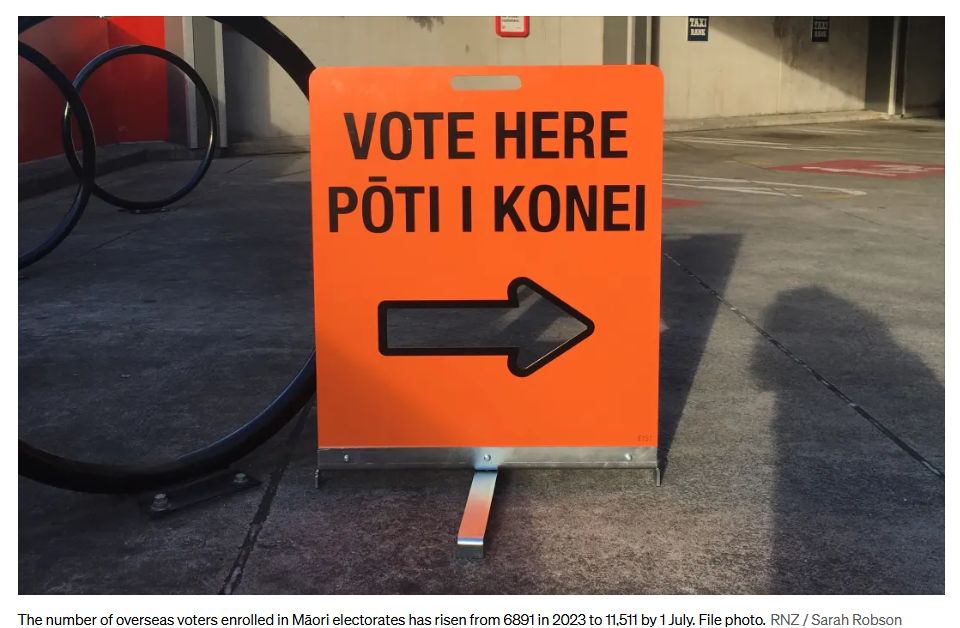
Overseas
enrolments across the Māori electorates has surged 67
percent since the 2023 election, with advocates in Australia
saying political upheaval at home is drawing previously
disengaged Māori into the political
process.
Electoral Commission figures show the number
of overseas voters enrolled in Māori electorates rose from
6891 in 2023 to 11,511 by 1 July.
Tāmaki Makaurau had
the largest number of overseas enrolments, with 1920, while
Waiariki recorded the biggest numerical increase since the
last election, gaining 820 voters.
Queensland-based
enrolment advocates Rachael Marie Johnstone and Nicole
Orzecki say they have seen a noticeable surge in Māori
interest, particularly among younger voters.
Ngāti
Wehiwehi descendants Rachael and her sister Nicole have
spent years helping whānau in Australia understand their
rights and navigate the enrolment process.
Rachael
told RNZ that despite living and working in Australia for
more than 20 years, she has maintained her connection to
home.
“I’ve always voted and have always encouraged my
kids to do the same. Three of them are old enough to vote
and they’re enrolled. It doesn’t matter where we are in the
world, we know where home is.”
Advertisement – scroll to continue reading
After navigating the
complex citizenship and voting entitlement process for their
own whānau, the sisters began using what they learned to
help others do the same through events and online
campaigns.
“Most of the time, it’s just a matter of
breaking things down into simple steps and cutting all the
words and noise out. We share information relevant to
communities here in one place.
“I get so many people
messaging to say, ‘I didn’t know I was allowed to vote,’ and
some will get stuck and message me, and I just guide them
through or show them where to go next. It’s basic and
simple, but it works.”
Political upheaval driving
participation
Johnstone and Orzecki believed the
political battles playing out in Aotearoa had made more
Māori overseas realise that opting out of the democratic
process can have significant consequences.
Orzecki
said the political climate, greater mobilisation across te
ao Māori and a changing Parliament had made politics feel
more relevant.
“If anything, I feel more activated in
the most recent couple of years than I probably have my
entire life,” she said.
“Young people and women, young
women, strong women, smart women with not just something to
say, but really positive contributions.
“I find it
very inspiring.”
She said her perspective of
Parliament had changed from seeing it as an institution
that, for many years, appeared dominated by older Pākehā
men.
“Parliament was full of white old men for a long
time. And that’s changed.
“Now you’ve got young Māori
women and men in that space who carry their identity with
pride. They challenge ignorance, they speak a language that
was beaten out of our people, and they raise and stand up
for issues that I care about.”
For Māori living
across the Tasman, voting was also about retaining a say in
the future of a country they or their whānau may eventually
return to, she said.
“If I wanted to return to New
Zealand, I can because I have a say in the shape of what the
future looks
like.”
New Zealand’s public broadcaster, providing comprehensive NZ news and current affairs, specialist audio features and documentaries.
Radio New Zealand is a Crown entity established under the Radio New Zealand Act 1995. Radio New Zealand News are vital elements in our programming, providing impartial news and information to New Zealanders every day. Radio New Zealand (RNZ) provides listeners with exciting and independent radio programmes in accordance with the Radio New Zealand Charter.

