



Giles
Dexter Political reporter
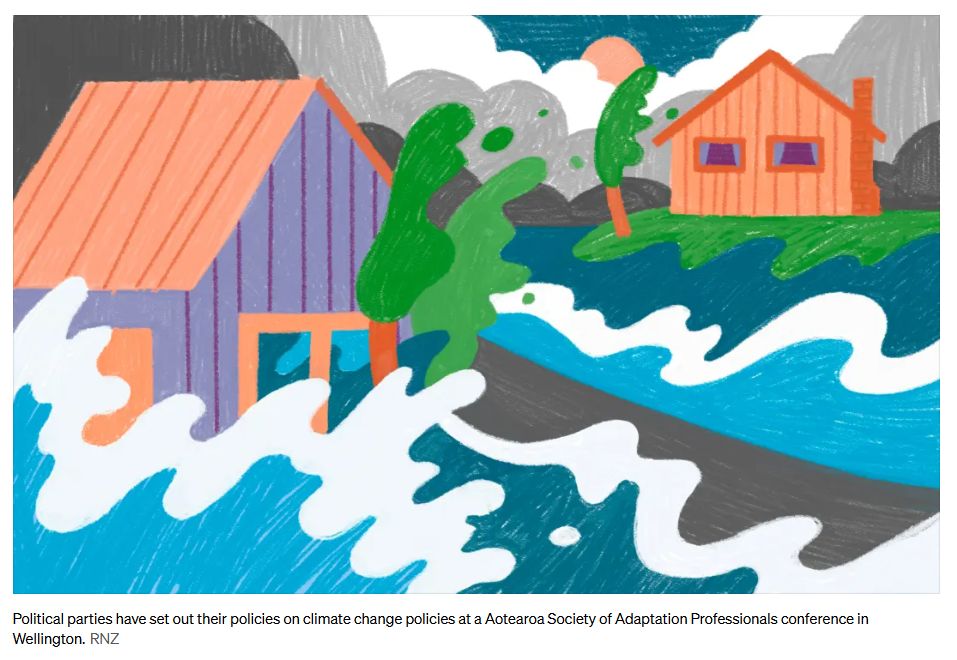
Political
parties have made their pitch on how they will deal with
climate adaptation if they are part of the next
government.
Speaking to the Aotearoa Society of
Adaptation Professionals conference at Te Papa in
Wellington, representatives from National, Labour,
Opportunity, the Greens, New Zealand First, and ACT set out
their party’s climate change policies and credentials, and
addressed the looming questions, particularly around “who
pays?”
National says certainty matters
The
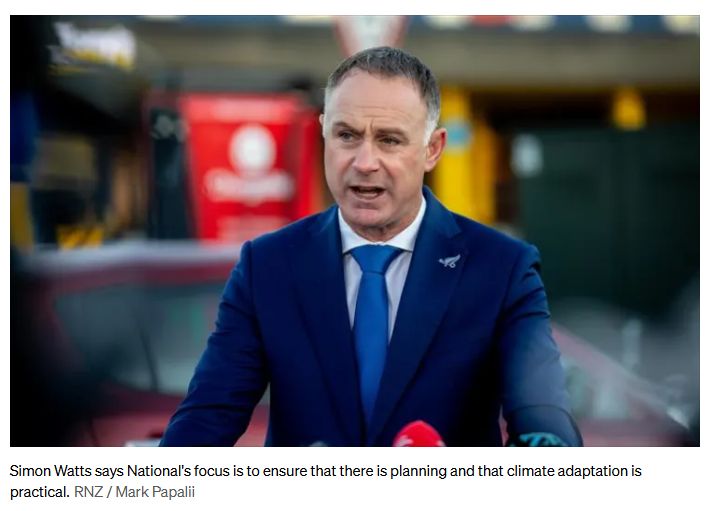
climate change minister Simon Watts, a registered paramedic,
was asked whether he could “resuscitate” collaboration
across climate change policy.
“Not mouth to mouth,” he
responded.
Watts said the recent report
into the Tauranga landslide had put the matter of
climate adaptation front of mind.
He said National’s
focus was to ensure climate adaptation was practical, that
there was planning ahead, and that New Zealanders had
certainty about the future.
Advertisement – scroll to continue reading
“Communities want to know
what the risks are that they face, what those risks mean to
them, and how decisions will be made moving forward. And
that is why adaptation is a key pillar of our government’s
climate strategy,” he said.
Watts
pointed to the first ever National Adaptation Framework,
which he said provided an enduring approach.
“It helps
communities prepare for the impacts of climate change and
also keep costs to society as low as possible. It’s
obviously, whether you’re a homeowner, or a business owner,
or a farmer, or investor, or part of local council, the
certainty aspect really matters, and people deserve to
understand the risks that they face and have confidence in
the decisions that they’re looking at.”
If re-elected,
Watts said National would develop national standards for
river gravel extraction and other on-farm quarrying, which
he said would make it easier to undertake practical
resilience projects.
‘Who pays’ needs to be a mix –
Labour
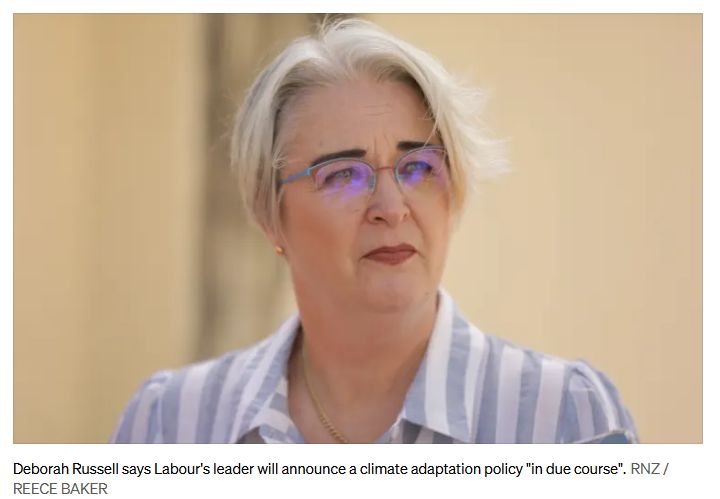
Labour’s climate change spokesperson Deborah
Russell, who said she was a “climate nerd”, did not come to
the table with any election policy, saying Labour leader
Chris Hipkins would announce a climate adaptation policy “in
due course.”
Instead, she offered a “steer” on
Labour’s thinking, and what it had previously done in
government.
Russell said when last in government,
Labour had commissioned a report from an expert working
group on managed retreat, which she said the current
government had put aside.
Parliament’s Finance and
Expenditure committee carried an inquiry into climate
adaptation, which Russell said the government had more or
less ignored, instead setting up an independent reference
group.
She
said the select committee’s findings, as well as the working
group’s managed retreat report, were “the best direction” to
head in.
Russell said the independent reference group
had recommended that the beneficiary of any climate
adaptation should pay.
Labour’s policy, she said,
would be “a mix of the beneficiary pays, the exacerbator
pays – those who exacerbate climate pay – the public pays –
that’s central and local government – and we also need to be
talking to banks and insurance companies about what work
they can do with us as government to ensure that we help
people to prepare for climate change”.
She confirmed
that while it was “frustrating” the government had thrown
out Labour’s resource management reforms, Labour would not
“flip out” what the government was doing for the sake of
it.
Opportunity calls for enduring
framework
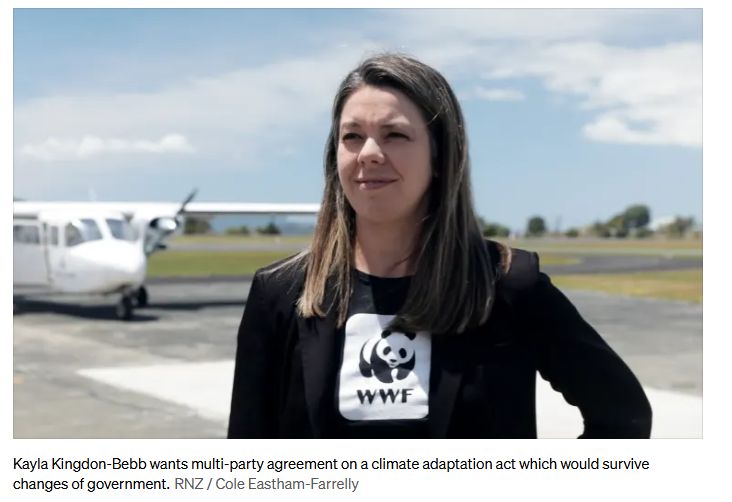
Kayla Kingdon-Bebb from the Opportunity
Party said climate adaptation was exactly the kind of issue
where rebuilding the political centre mattered, and it could
become a model for evidence-based policy making.
She
called for a multi-party agreement on the foundations of
climate adaptation, embodied through a climate adaptation
act that would survive changes of government.
“The
decisions we make today about infrastructure, housing, and
land will shape New Zealand for generations, and yet, as
we’ve seen, our political cycle largely operates on a
three-year time horizon,” she said.
Kingdon-Bebb said
there was no shortage of climate risk assessments, hazard
maps, or adaptation plans, but what was missing was an
enduring framework that allowed difficult decisions to be
made.
“We see adaptation not as a cost, but as an
investment in resilience – protecting homes, businesses,
ecosystems, and public finance, while strengthening New
Zealand’s capacity to prosper in a changing climate. The
greatest challenge we face is not technical capability, it
is governance.”
On
who pays, she said adaptation required a shared
responsibility model, with central government contributing
where risk exceeded local capacity or affected nationally
significant assets, and local government continuing to
invest in community resilience.
“Property owners
should bear some responsibility where risks are foreseeable.
Insurers should provide transparent risk signals, and
infrastructure providers must embed resilience into
long-term planning,” she said.
Greens decry ‘stupid
partisan politics’
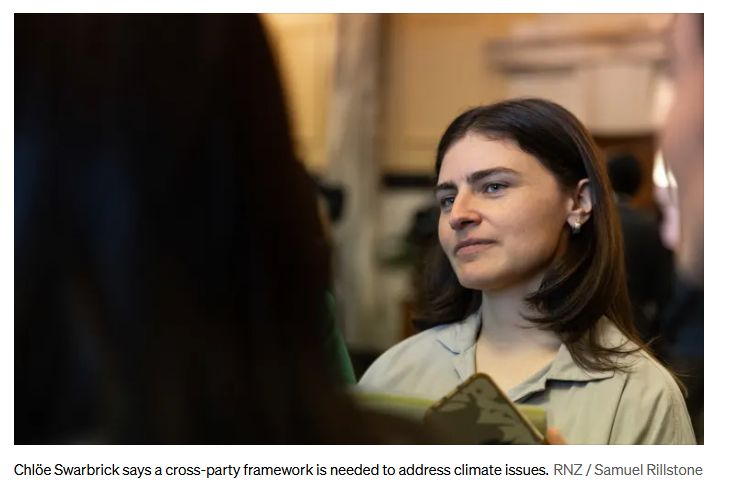
Green Party co-leader Chlöe
Swarbrick said everyone wanted to see if parties could put
aside “stupid partisan politics” and develop a cross-party
framework, but the Westminster Parliamentary system was not
set up for that.
Describing adaptation as a “ticking
time bomb of a problem,” Swarbrick said the chopping and
changing was only a recent phenomenon, and her first six
years of Parliament had seen a “golden era of political
consensus on climate action” with the establishing of the
Zero Carbon Act and Climate Change Commission.
She
said the current government had overseen the “systematic
disestablishment” of both of those “foundational pieces” of
climate infrastructure.
Swarbrick
said good adaptation was also good mitigation, and there
needed to be more integrated thinking.
“I know
politicians love to talk about silos and breaking them down,
but this is our opportunity, because at the end of the day,
we are an incredibly beautiful country. And climate action,
both mitigation and adaptation, when operating hand in hand
can also deliver a lower cost of living, more resilient and
sustainable infrastructure, cleaner air, cleaner soil,
cleaner water, and healthier, happier, safer communities.
And surely, that’s the very point of politics.”
She
called for more green infrastructure, more meaningful
relationships between central and local government, and a
framework that recognised and actively embedded te Tiriti o
Waitangi.
New Zealand First says economic development
should come first
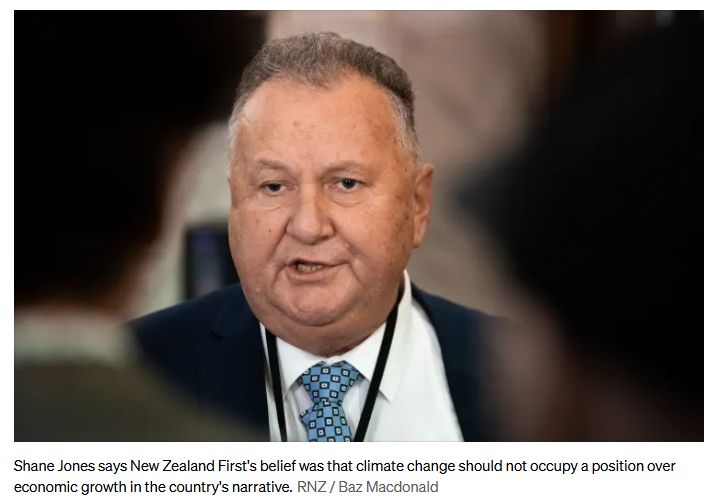
Representing New Zealand First,
Shane Jones said he had not come to the conference to look
for votes, and delivered the shortest speech of the
morning.
“I accept there’s not a single person in this
room who is likely to vote for Matua Shane,” he
said.
To a smattering of boos, Jones said he was there
to confirm attendees’ “worst prejudices,” and that New
Zealand First’s belief was that climate should not occupy a
position in the country’s political narrative over economic
growth.
“We believe that climate narrative has assumed
the resonances, the features, of a secular
religion.”
He reiterated New Zealand First would
campaign on taking New Zealand out of the Paris
Agreement.
ACT
declares climate emergency over
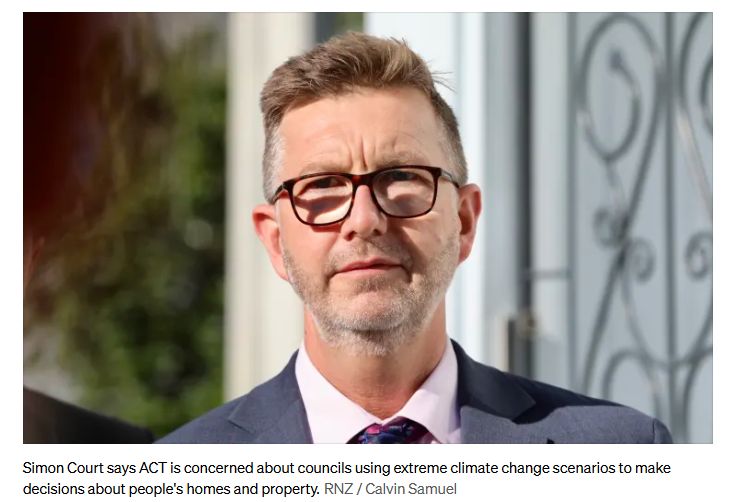
ACT’s Simon Court
said he would not try and upset people the way Jones had,
but declared the “climate emergency’s over, and slogans
don’t create solutions”.
Court,
who before entering Parliament was a civil and environmental
engineer, said climate change was going to exacerbate some
of the risks people who were exposed to them faced, such as
those living near rivers, flood plains, and
coasts.
But he said governments needed to be careful
in how they responded.
“I’m really concerned about
councils using extreme climate change scenarios to make
decisions about people’s homes and communities and property,
as though those scenarios are actually forecasts, or are
actually fact.”
Court said adaptation should not be a
reason to tell people what they could and could not do with
their property, or hold them back through “fear and risk,”
and councils should be looking at alternatives before
reaching for the planning rulebook.
“Could coastal
protection work, could roads and houses be raised? Could
stormwater and stop banks be
upgraded?”
New Zealand’s public broadcaster, providing comprehensive NZ news and current affairs, specialist audio features and documentaries.
Radio New Zealand is a Crown entity established under the Radio New Zealand Act 1995. Radio New Zealand News are vital elements in our programming, providing impartial news and information to New Zealanders every day. Radio New Zealand (RNZ) provides listeners with exciting and independent radio programmes in accordance with the Radio New Zealand Charter.

