


Lillian
Hanly Political Reporter
Labour
has released its 2026 manifesto, titled What Better Means
for New Zealand, collating the policies its offering this
election.
The 101 page document states that ‘better’
means: lower power bills, affordable healthcare, good jobs,
growing the economy, a fair go and “real action” on the cost
of living.
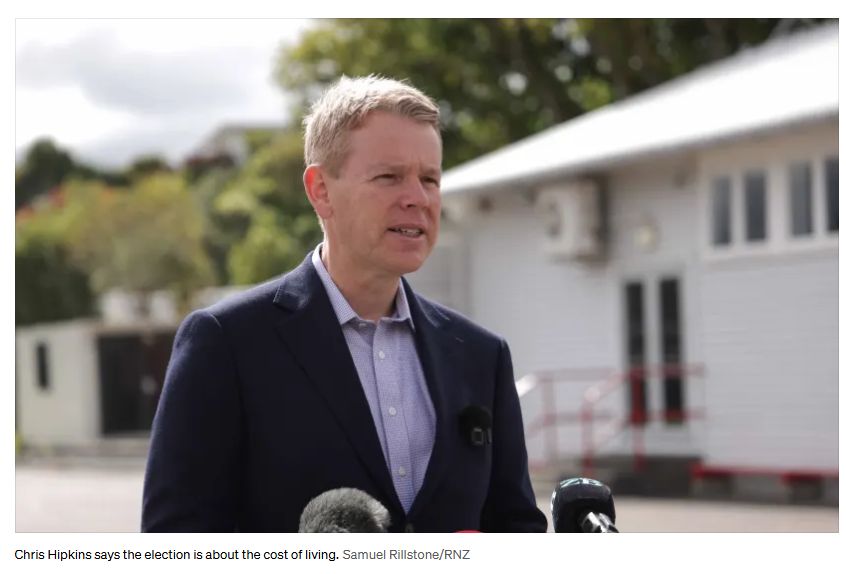
“This election is about the cost of living.
Christopher Luxon promised to fix it. He hasn’t,” Labour
Leader Chris Hipkins said.
“People are working hard
and still going backwards. Everything costs more. Food and
fuel prices are soaring, power bills are up nearly 30
percent, and GP fees are up 21 percent.
“New Zealand
can’t afford three more years of National.”
Most of
the party’s policies have already been announced, but the
document lists them in one place, and provides all their
specific commitments from restoring pay equity legislation
to restoring the gateway test, referring to the distinction
between an employee and a contractor.
Its key promises
were focused on the cost of living, highlighting their plans
to cap public transport fares, remove upfront solar costs,
ban price gouging, cut student loan balances, and provide
three free GP visits a year.
“Getting the cost of
living under control will be my number one priority as your
next Prime Minister,” Hipkins said.
Advertisement – scroll to continue reading
There were also
sections on jobs, healthcare, the economy, Māori
opportunity, and foreign affairs.
Labour has promised
it will increase benefits by “whichever is higher”:
inflation or average wage growth through
indexation.
The party said it would “end the health
hiring freeze” and “require Pharmac to proactively seek out
medicines New Zealanders need”.
In promising to lower
everyday bills, Labour said it would “begin a review of
structural reform of the electricity market in our first 100
days and introduce legislation to enact reform within six
months”.
It would also “ban total-remuneration
contracts in our first year so employer KiwiSaver
contributions are genuinely additional”.
In a section
on homes, it promises to “work towards eliminating
homelessness” and “set a clear goal to reduce rough
sleeping”, as well as “regulate property managers to ensure
that neither tenants nor landlords are
exploited”.
Labour said it would reinstate Section 7AA
of the Oranga Tamariki act, “so tamariki Māori and
rangatahi remain connected to whānau, whakapapa and
identity”.
It will also require school boards to give
effect to Te Tiriti and put Māori wards on the same footing
as other council wards.
In education, Labour wants to
lift achievement in English and maths “while building
critical thinking, creativity and problem-solving,” and
pause curriculum changes that haven’t been implemented yet,
“giving schools breathing room and experts time to assess
what should proceed”.
Labour would also “move away
from excessive standardisation and high-stakes
testing.”
Its section on law and order promises to
keep the ban on gang patches in place, review legal aid
funding and reduce the number of victims of crime by
introducing evidence-based crime prevention and early
intervention programmes that tackle the causes of
offending.
On immigration, Labour promises to set
clear, long-term goals through a government policy
statement, and require people to spend four years in New
Zealand before qualifying for permanent residence.
The
section on climate change said it would work with industry
to increase bioenergy, offshore wind and geothermal
generation, reinstate the ban on offshore oil and gas
exploration, and reiterated the coalition’s proposed LNG
import facility won’t proceed under Labour.
It
promises to restore same day enrolment, and introduce a
mandatory code of conduct and register of paid
lobbyists.
On trade and foreign affairs, Labour would
“maintain strong, constructive, and respectful relationships
with both the United States and China” and “work with
Pacific partners to advance the Blue Pacific Ocean of
Peace”.
It would also introduce economic sanctions on
Israel and intervene in support of South Africa’s case at
the International Court of Justice under the Genocide
Convention.
“Every commitment in our plan is costed
and funded,” Hipkins said.
“We’ll work within the same
Budget allowances as National, but make different choices
about what matters most to
families.”
New Zealand’s public broadcaster, providing comprehensive NZ news and current affairs, specialist audio features and documentaries.
Radio New Zealand is a Crown entity established under the Radio New Zealand Act 1995. Radio New Zealand News are vital elements in our programming, providing impartial news and information to New Zealanders every day. Radio New Zealand (RNZ) provides listeners with exciting and independent radio programmes in accordance with the Radio New Zealand Charter.

