



Russell
Palmer Political reporter
The
Electoral Commission is hoping staff training and resources
will help prevent potential disenfranchisement after
enrolment changes brought in by the government.
The
non-partisan, independent Commission launched its
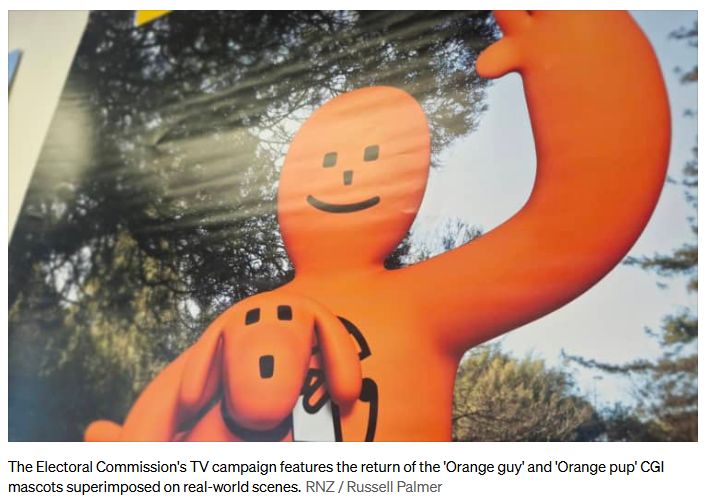
advertising campaign on Monday, including a new TV advert
featuring the return of the ‘Orange guy’ and ‘Orange pup’
CGI mascots superimposed on real-world scenes.
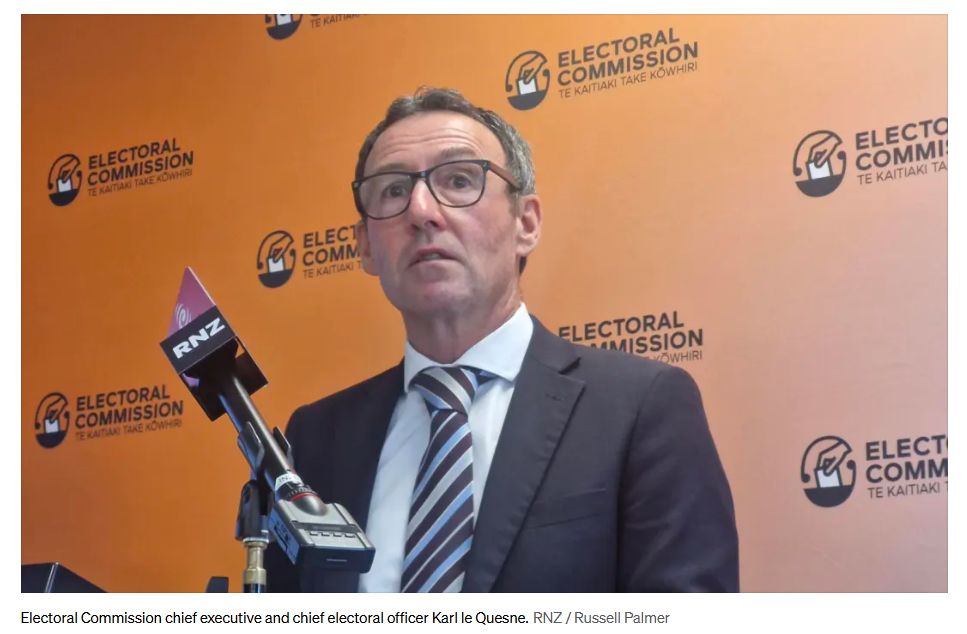
CEO and
chief electoral officer Karl le Quesne said that was
different to previous campaigns, and “that’s really just to
grab people’s attention”.
“There’ll be other more
tailored and targeted messages, we’ll be doing this on
radio, television, social media, streaming platforms,
digital billboards, every way we can,” he
said.
“Everyone can play a role in enrolment whether
you’re a parent, a grandparent, an uncle, an auntie, a
sports coach – particularly for younger people, you can all
check in with those young people.”
Board
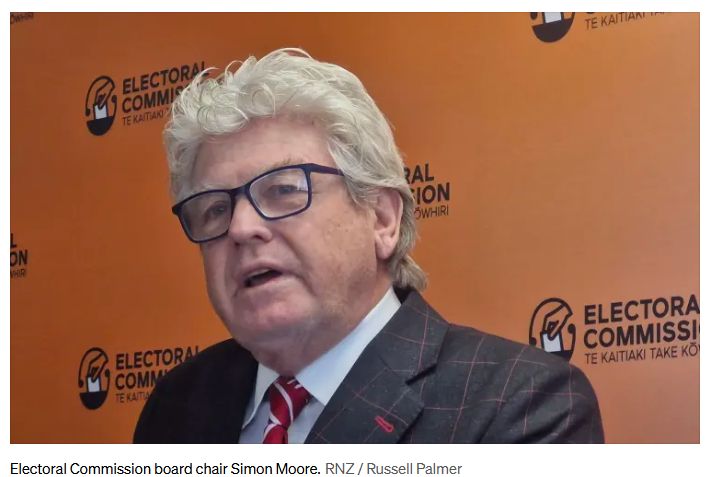
chair Simon Moore said the main message was that New
Zealanders needed to get enrolled before the cutoff date of
25 October – one of a series of “significant changes” under
the new
enrolment rules.
Advertisement – scroll to continue reading
“Right now we’ve got 3.6 million
people enrolled, so that’s round about 89 percent of
eligible voters. Not bad, but we don’t think it’s good
enough,” Moore said.
He said of the roughly 440,000
people unenrolled, about 200,000 or 45 percent were under
age 25, “so that’s the cohort that we really need to be
getting the attention of”.
Le Quesne also highlighted
the youth enrolment rate, saying reaching 18 year olds
“where young people are out in the communities” was “the key
message”.
“The other really important message, and I
keep repeating this every time I possibly can, be enrolled
by 25 October if you want to vote. Our second message is, do
it by 4 October if you can, because that means you make it
on the printed roll and it’ll go a bit easier in the voting
place for you.”
He
also defended the Commission’s plan not to record the number
of people turned away from voting places due to not being
enrolled as reported by Newsroom
last week.
“When we had a look at that question, it
became clear that it’s quite difficult. There’s quite a lot
you would need to work through to be clear about what you
were recording so our judgement is, the best way to get a
handle on that is our post-election survey,” he
said.
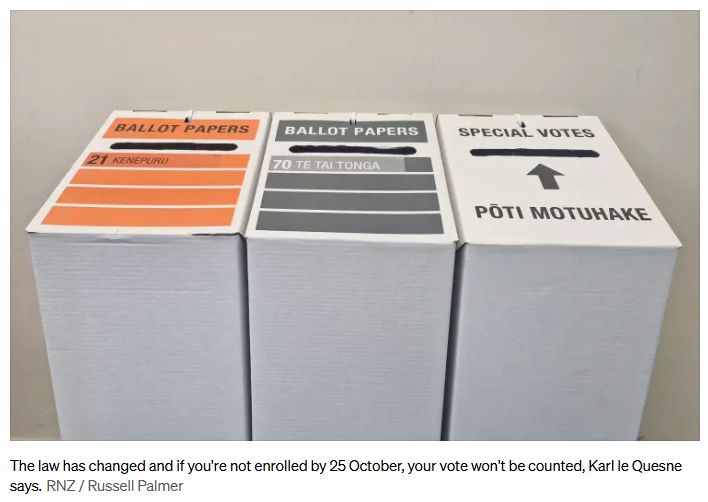
“The law has changed and if you’re not enrolled
by 25 October, your vote won’t be counted.
“If there’s
any doubt at all we will offer a special vote, but I
actually think a lot of people when they realise ‘I’m not
enrolled, my vote won’t be counted’, they’ll decide ‘okay,
well, I’m not going to vote this time’. But we’ll make sure
people get information around what they need to be do to be
enrolled for next time.”
Asked
if he was concerned that approach could turn people off
voting – including in the target youth vote age group – he
said: “that’s why we’ll be putting a lot of emphasis on our
staff and their training and some resources and tools that
they’ll have to work through those questions”.
“We’re
always concerned around youth enrolment and turning out to
vote … there has been a law change this year. We have to
follow the law, but we’re doing a lot to get that message
out to people and give them that opportunity.”
“The
government’s been clear that they … want the process to be
sped up as quickly as possible. Part of that involves
reducing the number of special votes because that’s what
takes so long to count.”
He denied feeling pressured
by the government to turn people away and speed up the
process, saying it was “not part of any discussions I’ve
had”.
Le Quesne said the Commission “can’t put our
finger on one particular thing” causing the steady
decline in youth enrolment rates over recent years, but
noted the rate did tend to increase as the election date
neared.
“One of the things we’re going to be doing
from next year is automatic enrolment updates, and that’s
where we use data matching with other government agencies to
identify people who aren’t enrolled and to contact them, and
again get that message around
enrolling.”
New Zealand’s public broadcaster, providing comprehensive NZ news and current affairs, specialist audio features and documentaries.
Radio New Zealand is a Crown entity established under the Radio New Zealand Act 1995. Radio New Zealand News are vital elements in our programming, providing impartial news and information to New Zealanders every day. Radio New Zealand (RNZ) provides listeners with exciting and independent radio programmes in accordance with the Radio New Zealand Charter.

