



Coco Lance
RNZ Pacific digital journalist
Layla
Bailey-McDowell Māori news journalist
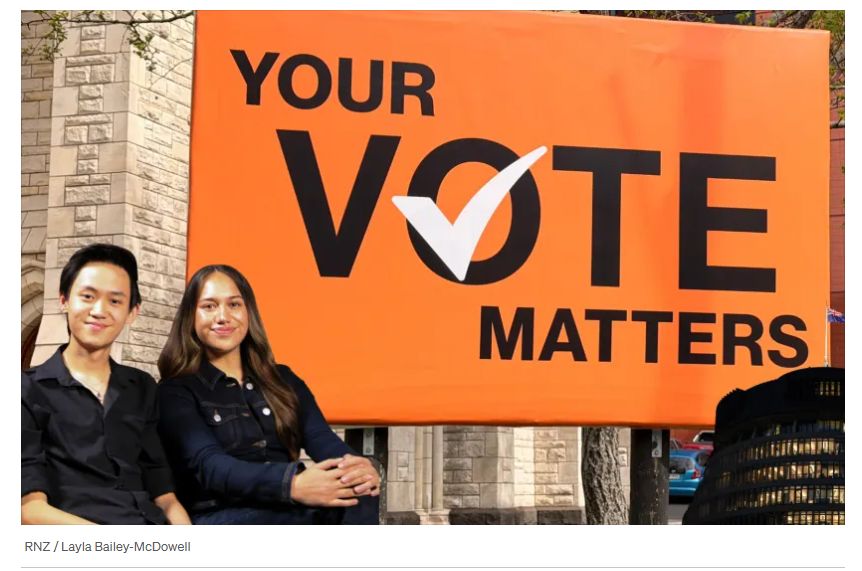
“Baddies
vote.”
That’s the message from two University of
Auckland student leaders who say young people need to have a
greater say in the decisions shaping their
futures.
Matthew Lee and Rhiannon Te Paea say a lack
of political education, limited engagement from politicians
and a feeling that their voices do not matter are among the
reasons young people are disengaging from the voting
system.
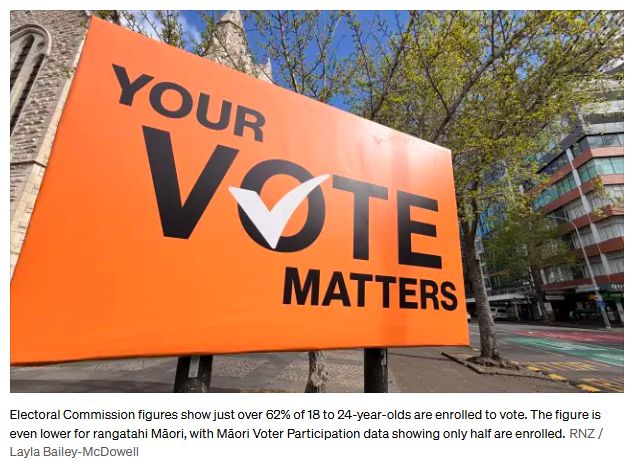
Electoral
Commission data revealed that as of 1 September, just
62.16 percent of 18 to 24-year-olds were enrolled to vote,
leaving more than 166,000 people in that age group off the
electoral roll.
Māori voter participation (MVP) Data
also showed that only 50.4 percent of rangatahi Māori were
enrolled.
Lee and Te Paea, who are both involved
in student leadership at the University of Auckland, say the
figures reflect a wider problem with how young people
experience politics.
Advertisement – scroll to continue reading
Lee said he was surprised by the
enrolment figures but understood why many young people felt
disconnected from the political system.
“Young people
have been used as a tool by politicians to score points with
each other,” he told RNZ.
“They use us as a tool, but
they also don’t really meaningfully engage with young
people. They like to think that they know better than
us.”
Lee said he had been told by politicians that
young people did not yet live in the “real
world”.
“Well, it’s like, I pay my taxes. I live in
this country. I’ve lived in this country. I was born in this
country. How much more in the real world do you want me to
be in?”
He said attitudes like that could push young
people away from politics, particularly when they already
felt their opinions carried little weight.
Te Paea
said there was also a misconception that rangatahi Māori
who were not enrolled did not want to vote.
“I think
for a lot of us rangatahi Māori, we’re just so keen to
vote. Engari, how do we vote? How do we enrol?”
She
said supporting young people to participate required more
than telling them to sign up.
She drawed on the Māori
concept of tuakana-teina, saying older generations had a
role in helping younger people understand the
process.
“There is some obligation from our tuakana to
really stand up and take that role for their teina to
support them in enrolling, to have wānanga, to have and
host marae wānanga in which our teina are taught how to
enrol, how to become politically literate, how to become
politically informed as well.”
Te Paea said politics
could sometimes feel distant from everyday life,
particularly when it was viewed as politicians making
decisions inside Parliament.
But its effects were felt
in communities, from the quality of local waterways and the
environment surrounding marae to the rising cost of
living.
Lee said many young people understood those
pressures but questioned whether voting would change
anything.
“Everyone understands that it is so
difficult to live in Auckland now as a young person,” he
said.
“The message that I’m getting from young people
is just, why should I vote? Because it wouldn’t change a
thing anyways.”
Lee encouraged rangatahi to think
about who turns up to vote.
“You have to remember who
was actually voting this election, right? If young people
don’t vote, landlords will be voting, and CEOs will be
voting, and the super rich will be voting. So we need to
make sure that it’s not just their voice that counts,
because our voice counts as well.”
“Everyone has the
right to vote. Everyone has equal power and equal say in our
democracy. Young people just need to make sure that we are
represented in those polls as well.”
Should civics
education be mandatory in kura?
Both students say
political education needs to start well before young people
turn 18.
Lee said New Zealand lacked mandatory civics
education, leaving some young adults unfamiliar with how
Parliament works, how to enrol and how to make an informed
voting decision.
He believed schools should teach
students about democracy, the MMP system and the different
ways people could participate in political processes.That
could include mock elections, learning how to contact an MP
or starting a petition.
“Democracy is not a simple
concept, to be honest,” he said.
“We have a
responsibility to make sure that our young people know this
political system that we exist in.”
Te Paea said her
own political education came largely through her upbringing
in Tairāwhiti, her connection to Ihumātao, her marae, iwi
and the communities around her, rather than the
classroom.
“Reflecting on my own journey with
politics, I would say that the school education system never
really had anything to do with my learning of the whole
political sector in general. I think reflecting on my
upbringing in Tairāwhiti, we’re very political people. You
know, Tā (Sir) Āpirana Ngata is one of our pivotal idols,”
she said.
“I think there is a huge gap within the
education system related to teaching our tauira and our
rangatahi about policy and politics, even
legislation.”
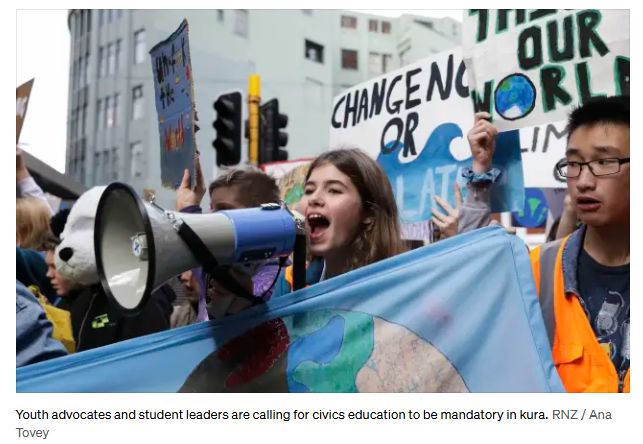
Both said young people were not
necessarily apathetic.
Lee pointed to youth-led
movements, including school climate strikes and community
campaigns, as evidence that young people cared about issues
affecting their futures.
“We just need to give them
the education and the tools to learn how to use their
passion and then turn it into real action as well,” he
said.
Both
questioned whether politicians were meaningfully consulting
young people when developing policies that would affect them
for decades.
Lee said young people needed to be
involved in decision-making because they would inherit the
consequences of decisions made today.
“If you don’t
vote, your voice doesn’t count. So you’re just guaranteeing
the fact that your voice won’t matter, right?”
“If you
vote, then at least you’re making a difference or, you know,
at least you’re contributing to that,” he said.
“And
if one person feels like their voice doesn’t matter, chances
are many other people don’t as well. It just starts with
one. It starts with one person realising that their voice
has power and then the next and then the next.”
Both
encouraged young people to talk to friends and whānau about
enrolling and voting, rather than treating participation as
an individual responsibility alone.
Te Paea said
rangatahi also had an obligation to future
generations.
“We do have an obligation to our
mokopuna, to our tamariki, to the generation that is to
come. And therefore that forces us to make rangatira
decisions. And this is one of those decisions that we’re
just going to have to make.
We have to stand up and we
have to vote because at the end of the day, how do we be
good ancestors?”
“And so get out there and vote. But
yeah, baddies vote.”
“Hot people vote,” Lee
added.
The 2026 general election will be held on 7
November. Under the new rules, eligible voters must enrol or
update their details by midnight on October 25 to vote, with
voting places opening for advance voting on October
26.
People who are not enrolled by the deadline will
not be able to vote in this
election.
New Zealand’s public broadcaster, providing comprehensive NZ news and current affairs, specialist audio features and documentaries.
Radio New Zealand is a Crown entity established under the Radio New Zealand Act 1995. Radio New Zealand News are vital elements in our programming, providing impartial news and information to New Zealanders every day. Radio New Zealand (RNZ) provides listeners with exciting and independent radio programmes in accordance with the Radio New Zealand Charter.

