
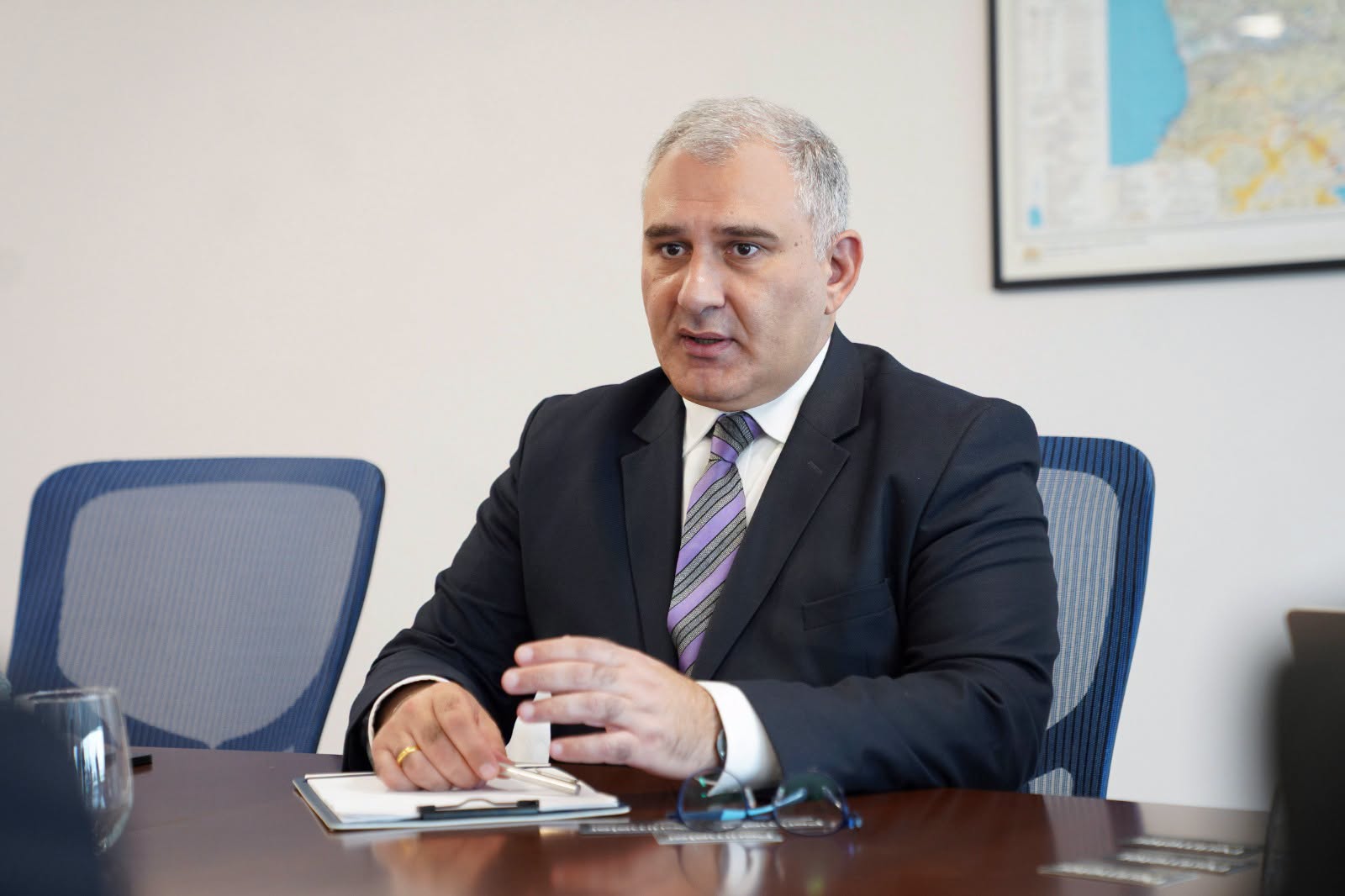
Up to 35,000 families have stopped receiving subsistence allowances under Georgia’s largest social assistance scheme after authorities reviewed up to 80,000 families, Georgian Dream Health Minister Mikheil Sarjveladze said during an October 6 press briefing, stressing that in most cases their financial circumstances had improved.
The numbers come months after authorities announced a review of families for subsistence allowance after the Covid-era moratorium and following concerns over the high number of people dependent on the scheme, 710,000 as of February, in a country of less than four million.
These were the beneficiaries of Georgia’s Targeted Social Assistance scheme, the country’s main social assistance program, which provides a subsistence allowance, monthly cash support, to the poorest households based on their assigned welfare score.
“More than 30,000, up to around 35,000, is the number of families that have stopped receiving subsistence allowances because, fortunately, in the majority of cases, their circumstances have improved,” Sarjveladze said in response to a journalist’s question.
The minister said the government is continuing to review families receiving the assistance to determine whether they still meet eligibility criteria.
“The financial situation of each family is constantly changing,” Sarjveladze said. “This means that the state must monitor as carefully as possible who needs this support and who may no longer need it, as well as who meets the relevant criteria and who does not.”
He said the beneficiary database remains subject to constant change, with new families being added and others removed as their circumstances change.
Sarjveladze also said the government expects to save tens of millions of GEL once the review is completed and the database is updated, though he did not provide a precise figure or timeline.
Sarjveladze’s latest remarks follow his February 20 announcement that authorities would begin an active review of families registered as socially vulnerable to ensure that state assistance goes only to those who qualify. At the time, he said more than 185,000 families, or about 710,000 people, were receiving subsistence allowance, while nearly 400,000 families, or around 1.3 million people, were registered in the Unified Database of Socially Vulnerable Families.
The minister argued at the time that the growing number of beneficiaries was no longer consistent with what he described as Georgia’s economic progress. He also attributed the increase partly to a moratorium on eligibility reviews introduced amid the COVID-19 pandemic, saying the database continued to include families that no longer required state assistance.
The review was set to prioritize households considered more likely to no longer meet eligibility requirements, including families that had received monthly income of at least GEL 2,000 over the preceding three months. Sarjveladze said the government’s objective was to ensure that “only those families and individuals who, under current legislation, genuinely qualify for state financial support remain in the database.”
Also Read:

