
The United Kingdom has sanctioned several Georgia-linked individuals, including the former and newly installed leaders of the Russia-occupied Tskhinvali region and four pro-Kremlin figures, as part of a new package targeting individuals and entities involved in activities threatening “the sovereignty, territorial integrity and independence of Ukraine.”
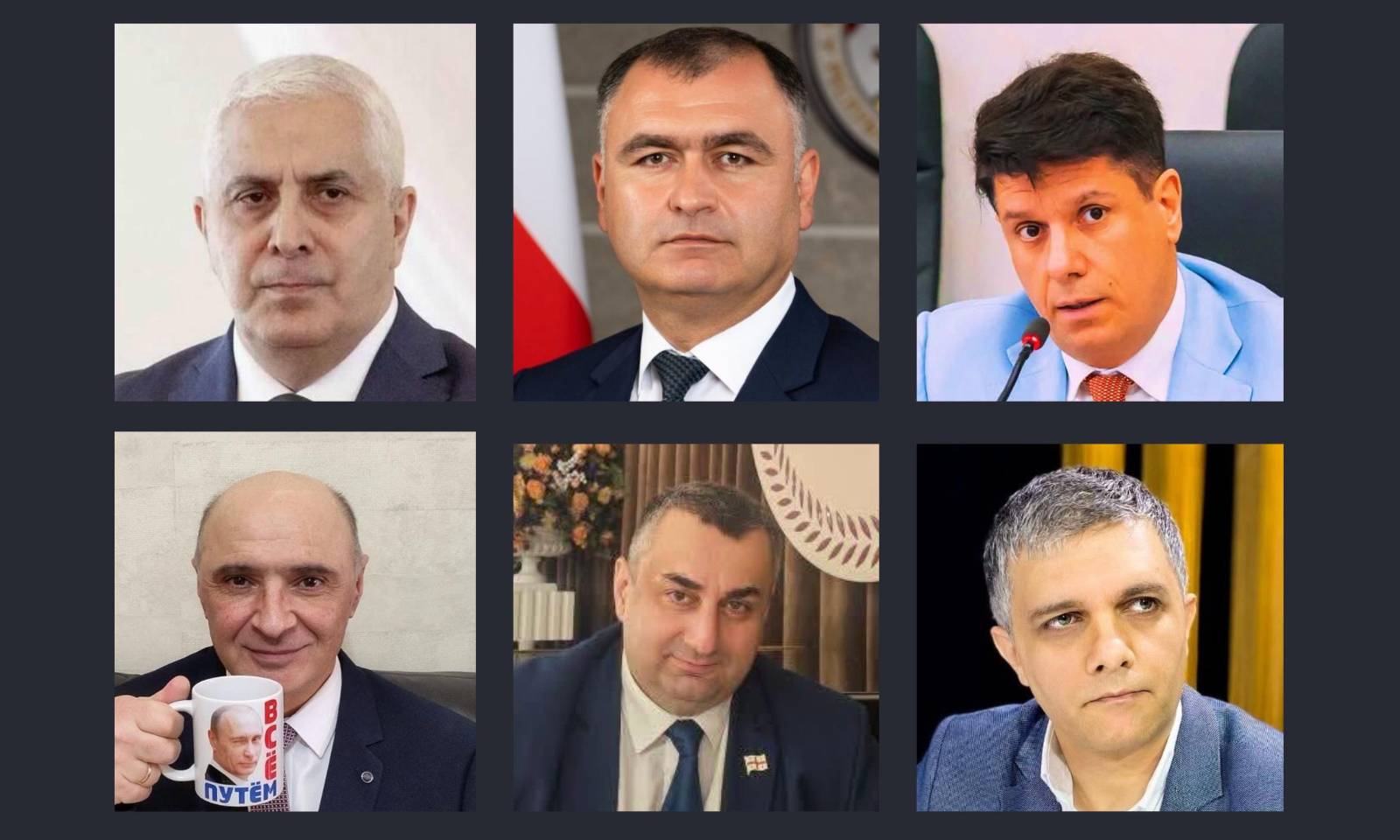
The sanctioned individuals include Alan Gagloev, the former de facto leader of Tskhinvali region; Marat Kambolov, who was recently “elected” the region’s new de facto leader; Mamuka Pipia, international secretary of the pro-Kremlin Solidarity for Peace party; Giorgi Iremadze, a pro-Russian commentator and member of the party’s political council; Nikoloz Mzhavanadze, founder of the Russian-language, pro-Russian Sezoni TV channel; and Paata Abuladze, a pro-Kremlin figure reportedly related of Tbilisi Mayor Kakha Kaladze.
“Today’s package includes seven individuals – including four Georgian nationals – involved in spreading pro-Kremlin disinformation, from legitimising Russia’s occupation of Ukrainian territory to serving in Russian-installed authorities in occupied South Ossetia,” The UK Foreign, Commonwealth and Development Office’s October 1 statement said.
The package comprises 23 individuals and entities and eight ships. The 23 individuals and entities will be subject to asset freezes, trust services sanctions and director disqualification sanctions. The individuals will also face travel bans. The eight ships will be subject to shipping and trade sanctions, according to the statement.
The UK has also sanctioned Sergey Tolmachev, a regional “deputy governor” of Russia’s occupied Sevastopol and Zaporizhzhia, according to the British Embassy in Tbilisi.
“Russia’s aggression against Ukraine is part of a broader pattern of disregard for the sovereignty, territorial integrity and internationally recognised borders of its neighbours, including through its continued occupation of Georgia’s regions of Abkhazia and South Ossetia,” the Embassy said.
The Embassy also said the UK “condemns Russia’s ongoing attempts to consolidate its unlawful control over Georgia’s occupied regions,” including the so-called “presidential election” held in Tskhinvali on September 18 and “further steps towards de facto annexation.”
“We remain steadfast in our support for Georgia’s sovereignty and territorial integrity within its internationally recognised borders and will continue to hold Russia accountable for its actions,” it added.
Pipia, Iremadze, Mzhavanadze and Abuladze were among the group who last year met with Denis Pushilin, head of the Russian-installed authorities in occupied Donetsk. The Solidarity for Peace party has been campaigning for the restoration of diplomatic relations between Georgia and Russia, which Tbilisi severed following Russia’s August 2008 invasion of Georgia.
The UK has sanctioned three Georgia-registered companies “operating Russia-focused exchanges seeking to evade sanctions” as part of its broader crackdown on crypto and illicit finance networks exploited by Russia to circumvent UK sanctions in May.
In February, London imposed sanctions on Georgian pro-government TV channels Imedi TV and PosTV over “Russian disinformation,” citing their role in spreading “deliberately misleading information” about Russia’s full-scale invasion of Ukraine.
Two Georgia-linked figures, former controversial Prosecutor-General Otar Partskhaladze and right-wing political figure Levan Vasadze, are also under the British sanctions, citing their support of Russia’s war in Ukraine.
UK Statement of Reasons
According to a sanctions notice published by the UK Foreign, Commonwealth and Development Office, all six Georgia-linked individuals have been subjected to asset freezes, travel bans, trust services sanctions and director disqualification sanctions.
Regarding Alan Gagloev, the notice said that the UK’s Secretary of State considers that there are reasonable grounds to suspect that he “is an involved person under the Russia (Sanctions) (EU Exit) Regulations 2019,” saying that he “is or has been involved in obtaining a benefit from or supporting the Government of Russia by working as an adviser to the President of the Russian Federation.”
On Marat Kambolov, the notice said that he has “obtained a benefit from the Government of Russia by working as a director (whether executive or non-executive), trustee, or other manager or equivalent, of the Kurchatov Institute between 2015 and 2025, which is carrying on business in the Russian Energy Sector.” It identified the institute as a “Government of Russia-affiliated entity.”
The notice said Mamuka Pipia “is or has been involved in providing support or promoting any policy or action which destabilises Ukraine or undermines or threatens the territorial integrity, sovereignty or independence of Ukraine,” citing his role as leader and international secretary of the Solidarity for Peace party.
It said he led a delegation of Georgian politicians who met with the head of the so-called “Donetsk People’s Republic” and subsequently publicised the visit, and that he has promoted “Russian disinformation narratives.”
Giorgi Iremadze was sanctioned on the same grounds for undermining Ukraine’s sovereignty, with the notice citing that he was also part of the Georgian delegation which met with the Donetsk de facto leader and “subsequently publicised the visit.”
The same grounds were cited for Nikoloz Mzhavanadze, whom the notice described as “the founder of a Georgian Russian-language TV channel.”
On Paata Abuladze, the notice said that the UK’s Secretary of State considers there are reasonable grounds to suspect that he is an “involved person under the Russia (Sanctions) (EU Exit) Regulations 2019,” accusing him of supporting or promoting actions against Ukraine, noting that he, in his capacity as “a Georgian political and military observer,” also was present during Donetsk’s meeting.
Also Read:

