

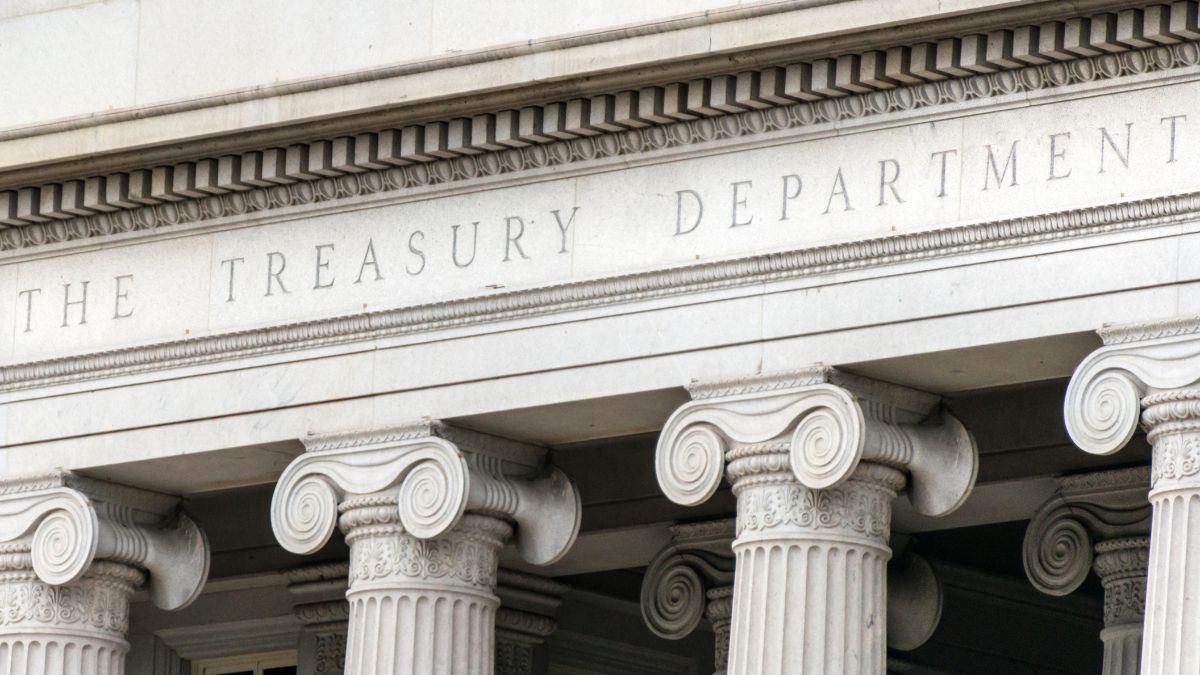
The U.S. Treasury Department sanctioned Georgia-based SHPS Shelbit, stating that the company and its owner, Siavash Kayvanpour, were involved in cryptocurrency transactions linked to Iran’s Islamic Revolutionary Guard Corps (IRGC) and sanctions evasion, while the National Bank of Georgia later said the company was not a regulated virtual asset service provider in Georgia and had never applied for registration.
The Treasury’s Office of Foreign Assets Control (OFAC) announced the sanctions on August 7 as part of a broader action targeting cryptocurrency exchanges and networks it said were used by the Iranian regime to launder money, evade sanctions and support the IRGC and other terrorist groups.
According to OFAC, Kayvanpour, who was born in Iran and also holds citizenship of Dominica and Afghanistan and resides in the United Arab Emirates, “operates a multi-nation network of companies that support illicit digital currency activity.” Through SHPS Shelbit, a company based in the Republic of Georgia, he operates the Shelbit Exchange.
“Digital currency addresses belonging to the IRGC have sent the equivalent of over $1 million in digital assets to Shelbit Exchange digital currency addresses,” the OFAC said, adding: “More than the equivalent of $2 million has also been transferred from Shelbit Exchange addresses to IRGC digital currency addresses.”
The U.S. Treasury further said that cryptocurrency addresses belonging to or controlled by Kayvanpour transferred more than $2 million in digital assets to Nobitex, an Iranian cryptocurrency exchange previously designated by the United States.
OFAC also said that “Shelbit services a large Persian-language gambling website network,” through which “tens of millions of dollars” in digital assets were laundered. Kayvanpour and several companies he owns or controls in the UAE and Poland were also sanctioned.
OFAC designated Kayvanpour under Executive Order 13224 for providing material, financial, or technological support to the IRGC and Nobitex, and also designated several companies he owns or controls, including Georgia-based SHPS Shelbit.
The sanctions block the property and interests in property of designated persons under U.S. jurisdiction and generally prohibit U.S. persons from conducting transactions involving them.
The National Bank of Georgia (NBG) said on August 9 that SHPS Shelbit had never applied to register as a virtual asset service provider and was therefore not regulated by the NBG. It added that, according to the Business Registry, the company’s registration had been canceled.
The NBG stressed that virtual asset service providers operating in Georgia must be registered with the central bank and said its regulatory framework is designed to prevent entities associated with illicit activities from entering the market.
Meanwhile, U.S. Representative Joe Wilson, a staunch critic of the Georgian Dream government, reacted to the sanctions announcement in a post on X on August 8, writing: As suspected, Iranian terrorists are using Georgian companies to evade sanctions, launder money, and undermine American interests. Georgian Dream facilitates the illicit expansion of Iranian terror networks yet it makes demands of America?” Wilson has repeatedly raised concerns over Iran’s alleged influence in Georgia and accused the Georgian Dream of pro-Iranian stances.
The U.S. sanctions came weeks after the European Union included four Georgia-based crypto-related service platforms in its 21st package of sanctions against Russia. Three of the platforms had previously been sanctioned by the UK over what London described as “Russia-focused exchanges seeking to evade sanctions.” Following the EU sanctions, the National Bank of Georgia said the sanctioned platforms were not subject to its regulation, in a statement similar to its latest clarification regarding Shelbit.

